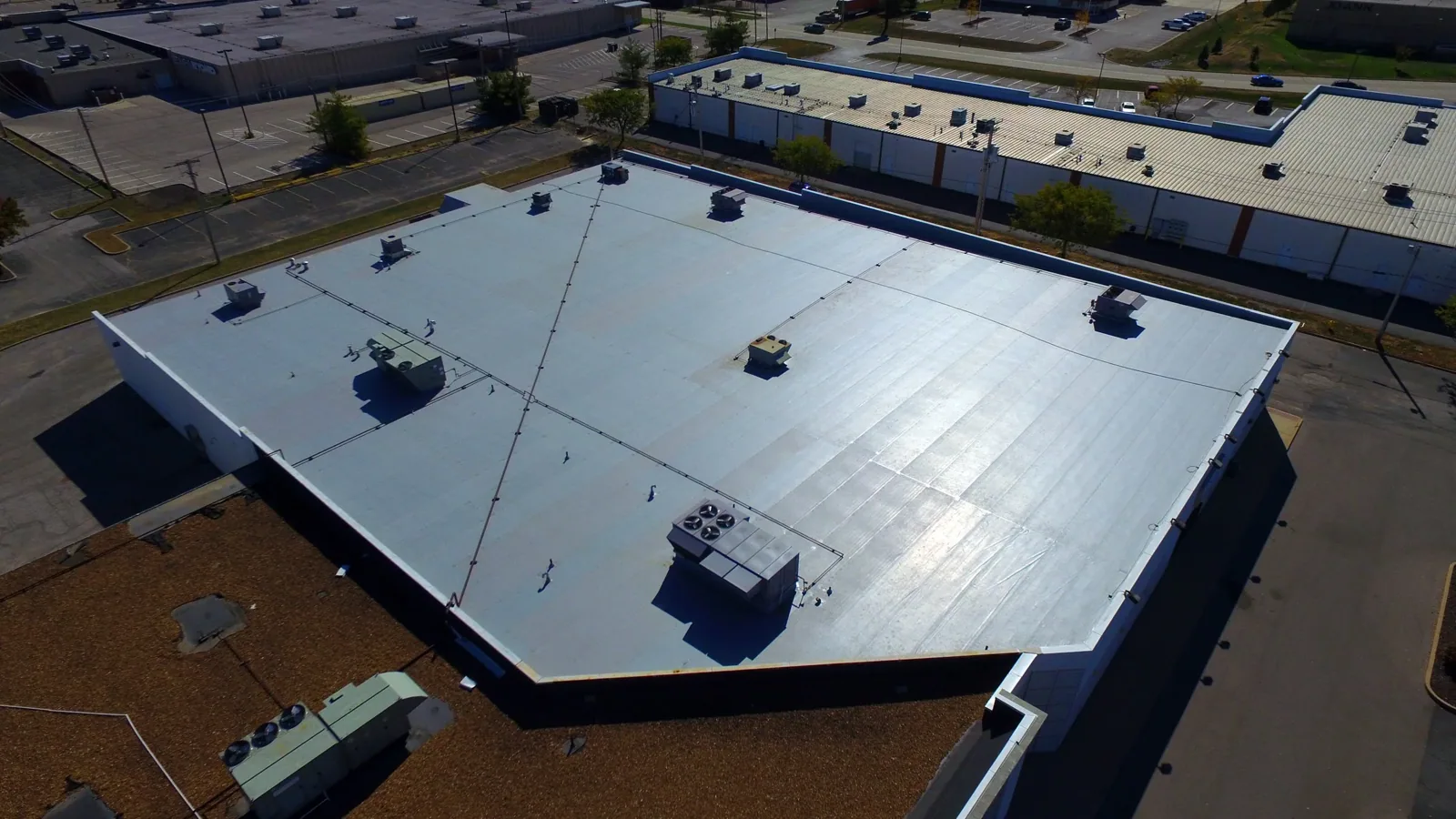

On a retail roof, a reflective membrane still needs a clean welded joint. Its lighter surface changes solar behavior, not the need for correct construction. The roof field, flashing and insulation must work as one assembly. Commercial Roofing Edmond installs reflective commercial roofing in Edmond, OK. We evaluate the existing layers and the proposed replacement or restoration. Cooling benefits depend on the material, building and operating conditions. The facility director needs that decision connected to usable roof construction. Color alone does not determine how the completed assembly will perform.
Oklahoma generally experiences long, hot summers. That statewide exposure makes roof-surface heating a relevant consideration in Edmond. Broadway Corridor contains commercial and office uses alongside housing. Downtown Edmond has occupied businesses on walkable streets. Those facilities need a roof choice that suits both the summer exposure and actual operations. We compare reflective materials with the construction required beneath them. The proposal should describe those materials and the work needed to install them.
A reflective surface can reduce the solar energy absorbed by roofing. Its thermal emittance also affects how heat leaves the surface. Those material properties are different from insulation performance. Roof color cannot repair missing or wet insulation beneath it. We examine the existing layers before discussing the thermal assembly. A building's interior loads and mechanical operation also affect energy use. Roof material selection is one part of that larger relationship.
Expected benefits vary with climate, assembly and the building's use. We do not assign a fixed energy saving to every reflective roof. Existing insulation and equipment can change the consequence of surface heating. Insulation improvements may deserve consideration alongside the covering choice. An appropriate energy assessment can evaluate a specific building where needed. We describe the roofing option without replacing that assessment with a blanket claim. The director can then compare the assembly against actual operational priorities.
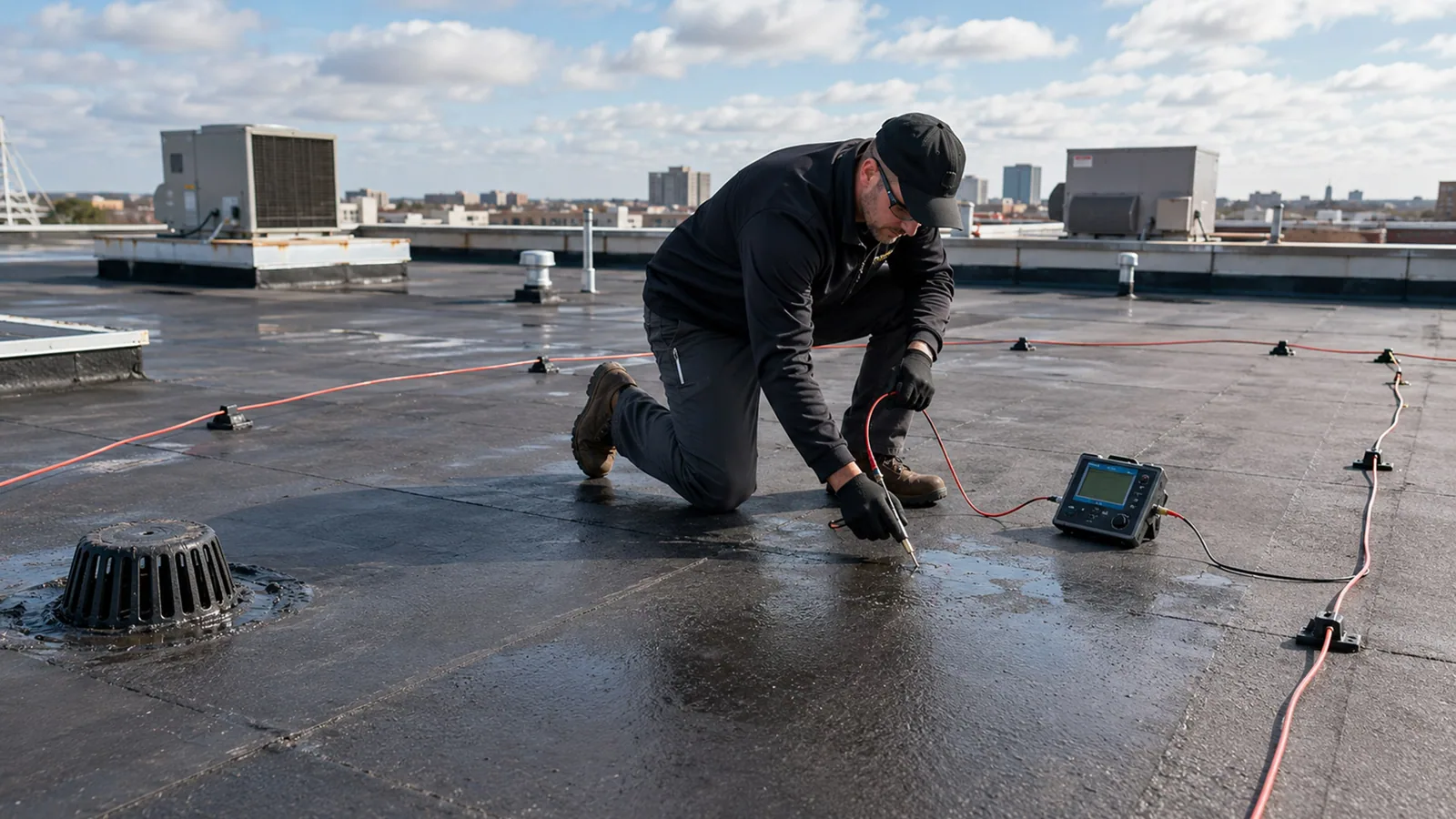
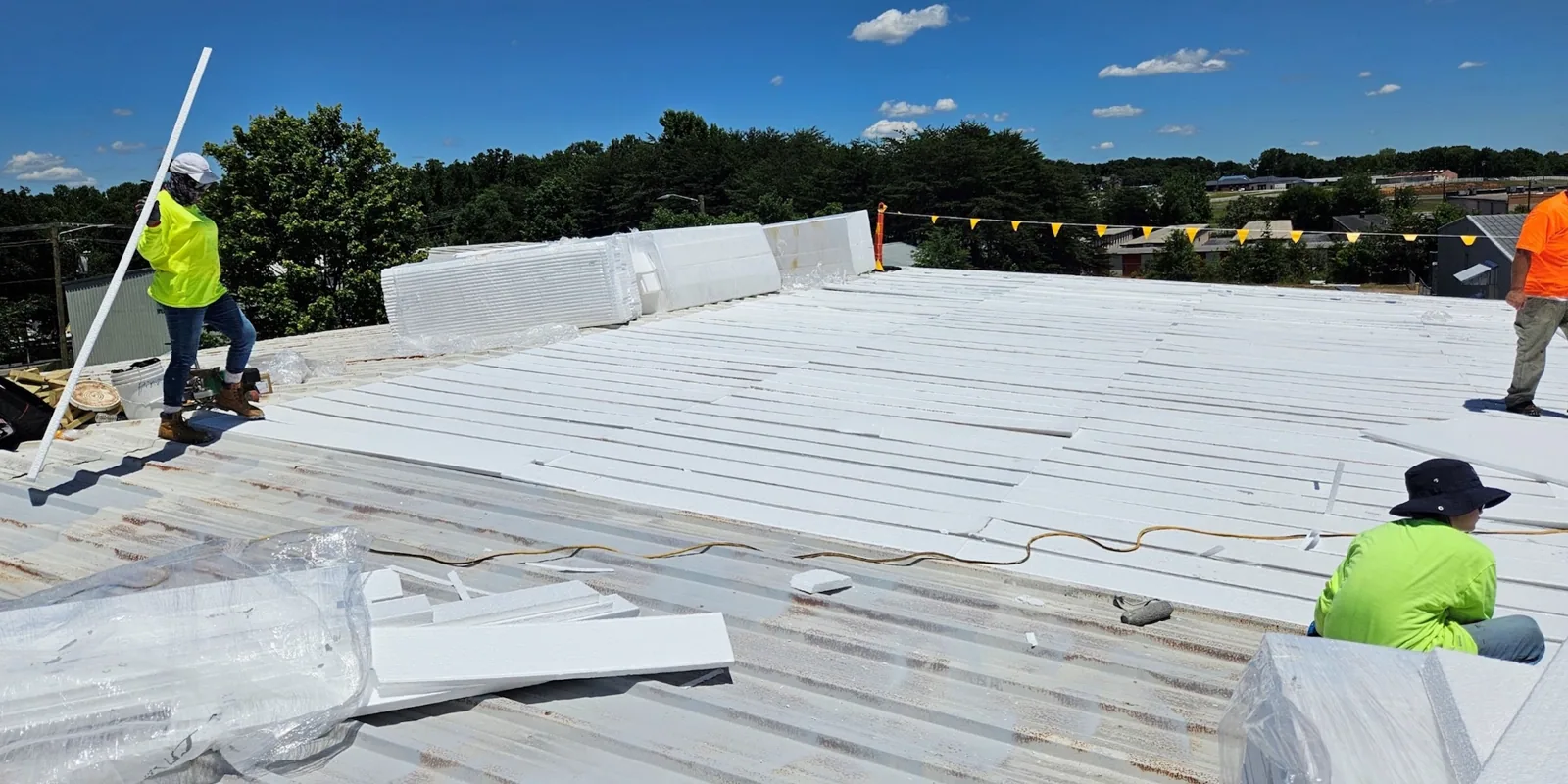
A pale coating over damp layers leaves the concealed roof problem in place. We investigate suspect moisture and unstable supporting construction first. Wet insulation needs a defined removal and replacement boundary. The deck condition may require examination where old layers are removed. A roof inspection helps establish the visible condition and remaining questions. The selected reflective assembly needs suitable support and attachment. A cooler surface should not conceal an unsuitable substrate.
Drainage and flashing heights also affect the construction option. Added thickness may require alterations at curbs or roof outlets. A poorly sloped surface remains poorly sloped beneath a reflective covering. We define the necessary correction before choosing a membrane or restoration. Replacement work may provide a suitable opportunity to rebuild those connections. A restoration requires a roof that qualifies for retaining its existing layers. The proposed thermal benefit should sit on a functioning water-shedding assembly.
A light-colored single-ply sheet can provide a reflective finished surface. TPO roofing and other membranes follow their selected systems' current installation details for attachment, seams and accessory connections. We examine equipment discharge, service traffic and roof geometry before selecting. The material should suit the actual exposure rather than its color alone. Appropriate accessories and detail components form part of the assembly. A reflective field sheet still needs carefully completed penetrations and terminations.
Installation must follow the selected system's surface and weather requirements. Adhered assemblies need suitable preparation and compatible bonding materials. Mechanically attached construction needs the required engagement into a sound deck. Seam intersections and repairs deserve attention during the finished-joint checks. We examine connection quality before the roof area is released. Light color should not distract from the physical details keeping rooms dry. The director receives an assembly specification rather than a purely visual choice.
A reflective coating needs adhesion to the actual prepared roof surface. Existing residue and weathered material can affect that bond. We test and prepare the substrate as the selected system requires. Necessary seam and flashing repairs precede the field application. Coating restoration remains a suitability decision for the existing assembly. It is not an automatic alternative to removal on every roof. We examine the underlying condition before proposing that treatment.
Installed thickness and detail reinforcement affect the completed coating system. A thin or discontinuous application may not provide its intended roof treatment. The material also needs a suitable curing window. Oklahoma summer thunderstorms can interrupt exposed application with rainfall. We schedule preparation and placement around the actual roof conditions. A wet surface or unsuitable temperature may require a different work window. The director should know those dependencies before committing operations to the application schedule.
Downtown Edmond businesses have pedestrian activity and designated outdoor dining nearby. Material handling for reflective roofing needs a controlled route above that activity. Downtown Edmond roof installation may require coordinated staging and entry protection. Broadway Corridor offices may also need ventilation coordination during particular application work. We establish those operating requirements with the facility contact. The chosen material does not remove the need for safe handling. The roof operation and business use must share a workable sequence.
Edmond project requirements require confirmation before the proposed assembly is installed. Statewide and municipal published code information differ in adoption timing. We check which requirements apply instead of assigning an unsupported edition. Roof alterations, insulation and structural work may affect the review. Any required energy or design assessment needs the appropriate professional responsibility. The proposal identifies those dependencies rather than suggesting roof color resolves them. The director can then evaluate the full construction and review path.
A reflective surface can collect dirt and residue during its service life. Cleaning should follow the material's requirements and preserve its roof connections. Harsh or incompatible treatment can damage the finished covering. We inspect drains and service paths along with surface condition. Equipment work needs protection where tools or traffic contact the roof. Roof maintenance can keep those care needs under attention. New damage requires suitable repair material, not merely a matching color.
Completed installation needs inspection at the seams, flashings and runoff outlets. We remove construction debris that could damage or obscure the surface. The director receives care information relevant to the installed assembly. Future roof work should preserve its compatible connection methods. A new penetration needs the correct detail for that covering. The roof's usefulness depends on continued water control and sound underlying layers. Reflectivity adds a material property to that working construction, not a substitute for it.
Arrange a review of the roof condition, insulation and operating needs. We will compare suitable reflective construction options for the building.
Damaged layers need treatment regardless of surface color. We investigate wet or compressed insulation and define replacement areas. The reflective covering needs suitable support beneath it. Keeping an unsuitable assembly can undermine both roof performance and thermal goals. The construction decision starts with its actual condition.
Specific energy outcomes require the building and operating conditions to be assessed. Insulation, climate exposure and mechanical loads can change the result. We explain the properties of the roofing material and available assembly options. An appropriate energy assessment can address projected savings where the director needs that comparison.
The retained construction and installation methods differ. Coating needs a qualifying roof, preparation and suitable adhesion. A new membrane may involve removal or an approved recover assembly. We compare those options against moisture, attachment and detail condition. The material choice follows the roof construction requirements.
Compatible cleaning and protection help preserve the installed covering. Drains, seams and flashings still need examination. Equipment service traffic may require suitable walkway treatment. New cuts or damage need an assembly-specific repair. We identify those care requirements with the completed roof information.