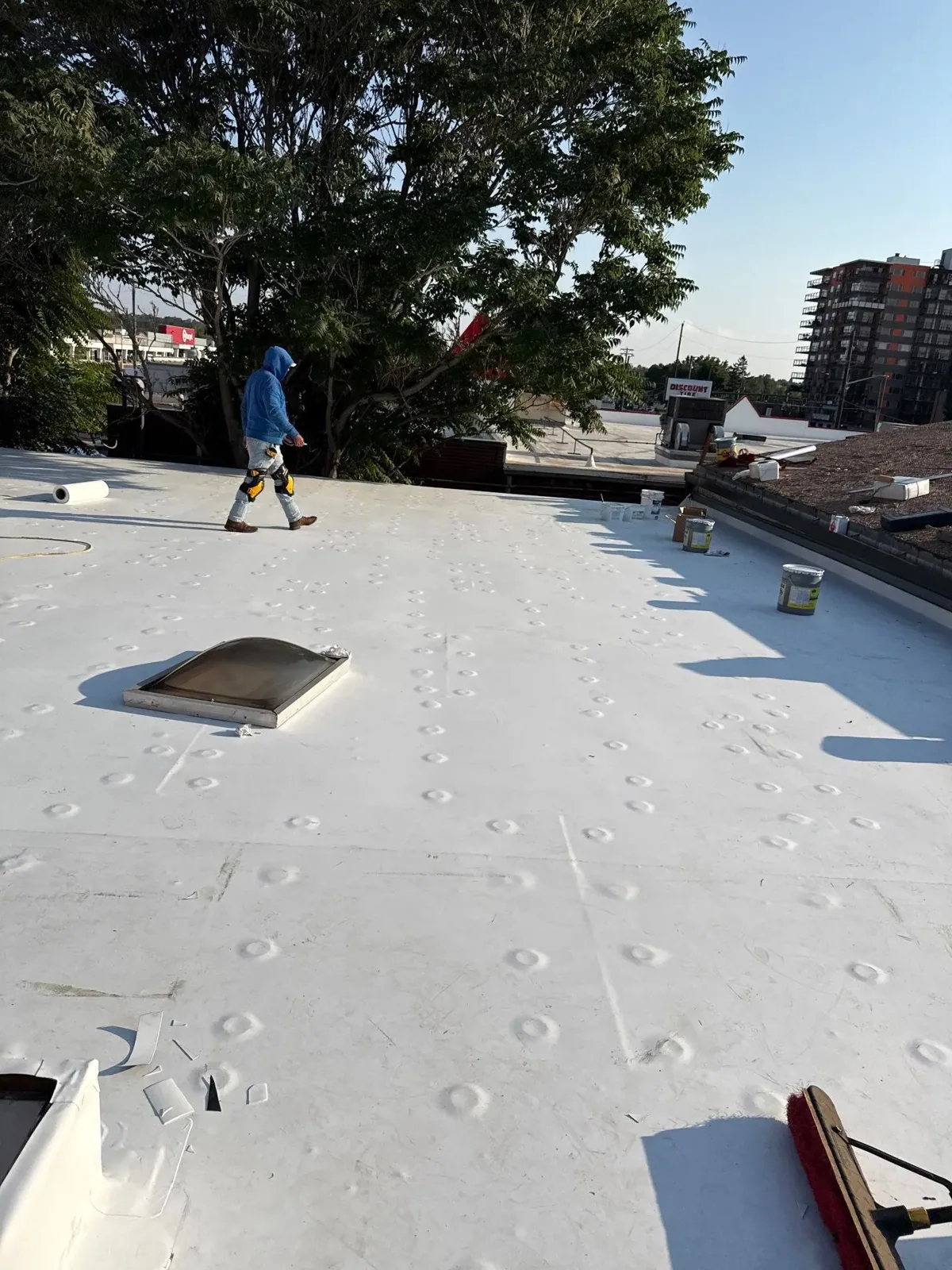

An office roof with EPDM needs its bonded lap pressed against prepared material. Dust or incompatible residue can interrupt the connection beneath the exposed edge. We examine that interface before choosing seam repair. Commercial Roofing Edmond installs and repairs EPDM rubber roofing in Edmond, OK. The flexible sheet requires suitable support, attachment and compatible details. Repairs need identification of the existing material and its condition. The director receives a defined construction method for the observed defect. A patch that looks smooth still needs a properly made bond.
The Village contains headquarters offices and other community business buildings. Guthrie has downtown shops, galleries and industrial enterprises among its uses. Those occupied spaces can need different rooftop access and service planning. We consider equipment, drainage and the areas below before selecting an EPDM assembly. Oklahoma experiences summer heat and winter cold outbreaks. Working joints need examination through that regional temperature exposure. The roof method should suit its construction and building operation together.
A rubber sheet pulled away from a curb can load the flashing connection. We examine field attachment and the material fit at that change. The underlying assembly may contribute to repeated separation. A tight-looking return should not rely on stretched material for its shape. The specified detail needs appropriate securement at the transition. We fit compatible flashing over suitable supporting construction. Repairing only the exposed separation may leave the loading condition unresolved.
Roof movement can also affect walls and equipment penetrations. We examine backing and termination attachments before renewing the visible seal. Different directions of movement can require a carefully selected detail. Flashing failure repair should address the supporting connection as well as the membrane. The director should know whether the treatment rebuilds that assembly. A recurring split can justify a wider examination of adjacent details. The roofing method follows the physical behavior observed at the connection.
An EPDM joint needs the preparation and seam materials required by the system. Cleaning and priming are separate steps where that detail calls for both. The surface must be suitable before tape or another seam treatment is placed. Pressure during application helps complete the intended material contact. We inspect overlaps and seam intersections as the construction proceeds. Unprepared rubber cannot become a sound bond simply through added pressure. The working conditions and materials need to match the selected procedure.
Old adhesive and incompatible repair compounds can complicate a later seam repair. We examine how that residue affects preparation and material contact. The repair may need removal or a boundary extending to serviceable rubber. TPO seams use a different connection method from typical bonded EPDM details. PVC assemblies likewise have their own accessories and joining requirements. Material identification keeps those systems from being treated interchangeably. The correct repair has to suit the covering actually installed.
A proposed EPDM roof needs its deck and supporting layers examined first. Wet insulation and damaged board cannot provide suitable retained construction. We investigate suspect areas and establish the necessary removal. Insulation replacement may form part of preparing the new assembly. The resulting surface should fit the selected attachment method. Adhered, mechanically attached and ballasted arrangements bring different project requirements. We evaluate those choices rather than assume one applies to every building.
Ballast imposes loads and operating considerations that need appropriate review. Adhered construction needs suitable bonding surfaces and compatible application material. Mechanical attachment relies on the specified deck engagement and fastening arrangement. Each method still needs correctly fitted perimeter and penetration details. The roof configuration affects the assembly design at different areas. Project and permitting requirements should be confirmed before installation. The director receives an attachment decision connected to actual supporting construction. The rubber sheet is one component of that complete roof.
A pipe flashing base needs full contact around its connection to the field. Crowded pipes can leave insufficient space for a suitable detail. We examine the service layout before choosing the accessory treatment. The upper closure requires correct fit and compatible sealing. Corners may need flexible detail material formed according to the system requirements. We do not force an unsuitable component around an awkward opening. Penetration work must leave a connection that can be examined and maintained.
The drain interface deserves similar attention at its supporting surface. A membrane bridging a gap near the bowl can become stressed. We examine insulation fit and flange condition before rebuilding. Appropriate attachment and the compatible detail complete the roof-side connection. Pipe joint concerns need the responsible plumbing work instead. Water should reach the drain across the finished surface. A sound rubber field does not resolve an outlet standing above nearby roofing. The director should understand both the flashing and elevation requirements.
Guthrie's historic downtown contains shops, galleries and coffee businesses. Roof application above such occupied uses needs access and ventilation coordination. Guthrie commercial roof work may require carefully arranged material and disposal routes. The specific property determines the available staging, not its district name. We discuss intakes and sensitive room activity with the facility contact. Application products need their appropriate handling and ventilation conditions. That coordination belongs in the planned construction sequence.
The Village's office activity can also require service access during roof work. Oklahoma summer heat may affect material handling and adhesive application conditions. We follow the system requirements at the actual roof temperature. Rain or an unsuitable surface can prevent bonding work from proceeding properly. The work area needs a secure closure when conditions change. Occupied-building sequencing should preserve that protection while operations continue. A planned stopping point helps keep both the assembly and the interior usable.
A puncture in serviceable EPDM can allow a localized compatible repair. We prepare the rubber and examine the layers below the defect. Wet insulation or weak support may add removal beyond the visible hole. Commercial repair work should define that complete boundary. Broad cracking or repeated seam distress requires a wider condition review. Isolated patches should not conceal an assembly that needs larger renewal. The director can compare the immediate treatment with the roof's ongoing needs.
Finished repairs need the appropriate check of bonding and detail fit. Loose tools, sharp debris and removed components must leave the roof. Equipment service routes may need compatible protection afterward. New penetrations should retain the installed system's required material treatment. Facility staff can report changed seams or water observations at precise locations. We then examine the physical connection rather than repeat a generic seal application. EPDM remains useful through suitable preparation, supported details and continued attention to its working joints.
Arrange a close review of the EPDM joint, attachment and curb fit. We will define the preparation and supported detail needed for the assembly.
A suitable bonding surface is necessary for the specified repair. We examine dirt, weathering and residue before preparation. The selected seam materials need compatible clean contact. Covering contamination can leave the same weak interface beneath the repair. We define the preparation and material treatment before closing the joint.
Attachment and material fit may be loading that transition. We examine securement, backing and the condition of the flashing. The repair may need rebuilding the lower connection rather than only replacing exposed sealant. Surrounding movement also deserves attention where the defect has returned.
The proposed assembly determines its attachment requirements. Adhered and mechanically attached options use different construction from ballasted systems. Deck condition, design and loads inform the choice. We review the appropriate assembly before installation. Ballast should not be added simply because the roof covering is rubber.
Serviceable surrounding material is needed for the new bond. Old residue, weathering or wet underlying layers may extend beyond the puncture. We examine those conditions and prepare the necessary area. The repair should close onto suitable rubber with sound support beneath it. Its boundary follows construction rather than appearance alone.