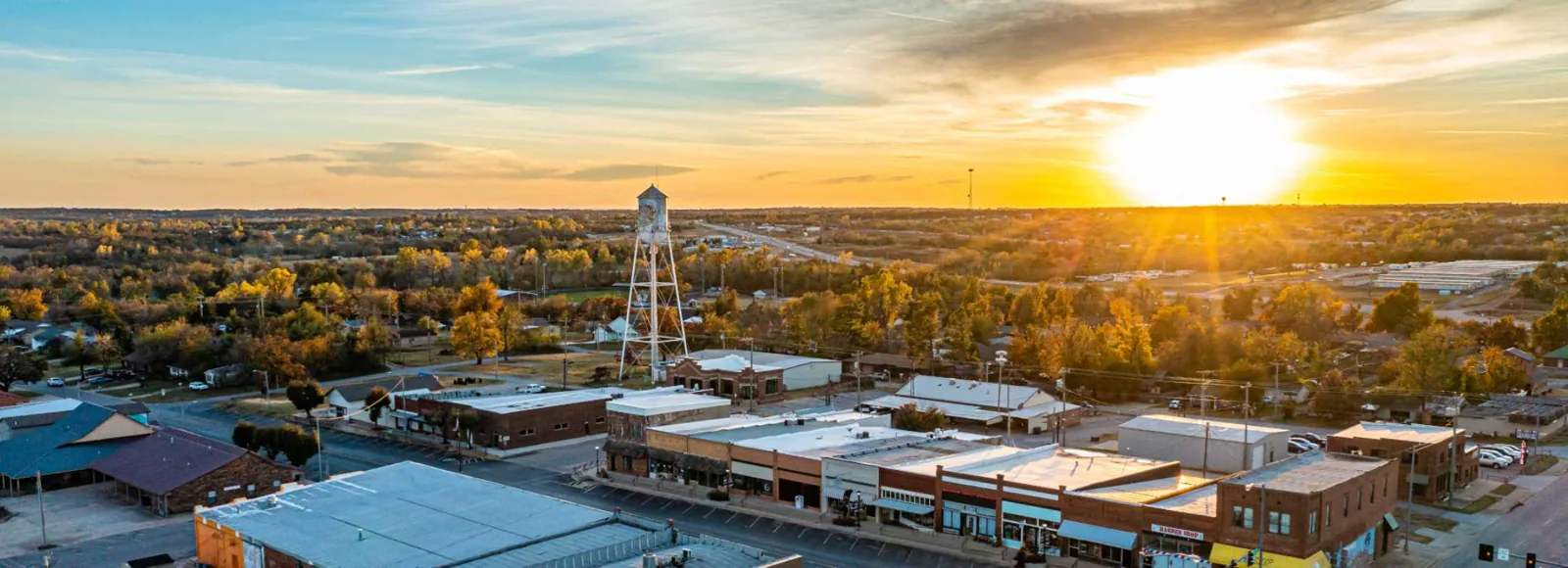

Downtown storefront schedules leave little room for a flashing repair that spreads into service hours. Restaurants use designated outdoor dining areas, while local businesses sit along walkable streets. We inspect the curb, wall turn and membrane return before cutting anything open. A tight fit keeps water moving toward the drain instead of behind the detail. We set the work zone around customer access and the area needing repair. If a damaged seam continues beneath the curb, we trace the lapping direction before choosing a patch. The facility director sees the failed connection and the repair limit. That makes the scope specific to the roof, not the whole block.
Downtown Edmond has street parking and multiple public parking lots. Those options do not remove the need to protect each storefront entrance. We stage materials away from doors and marked customer paths. Before opening a membrane return, we confirm where tools, removed material and foot traffic will move. A small repair can still block an entry when the work zone is placed poorly. We plan the sequence around business hours and the particular roof detail.
Where dining extends outdoors, overhead work needs a clear boundary. We identify the area beneath the repair and coordinate when protection goes up. The exposed opening stays limited to the section our crew can close. If a curb or parapet needs additional metal, we check the attachment before ordering a replacement piece. A measured edge is easier to fit than a field cut made after access is restricted. The finished path stays clear of loose metal and roof debris.
A ceiling mark can appear away from the roof opening. Water may travel along a deck flute, fastener or insulation joint before it reaches a room. We compare the interior symptom with seams, penetrations and drainage nearby. Then we test the suspected connection without widening the opening unnecessarily. A repair needs sound backing beneath its attachment. If the membrane has pulled from a curb face, we inspect the corner and return rather than covering the visible gap.
For a persistent leak, our commercial roof repair work starts with the failed detail and a defined boundary. We document what the inspection exposes and what remains concealed. When a second test would change the proposed scope, we name it before proceeding. A drain bowl, scupper or overflow condition can redirect the repair decision. We keep those findings separate from unrelated roof areas so the director can approve a practical next step.
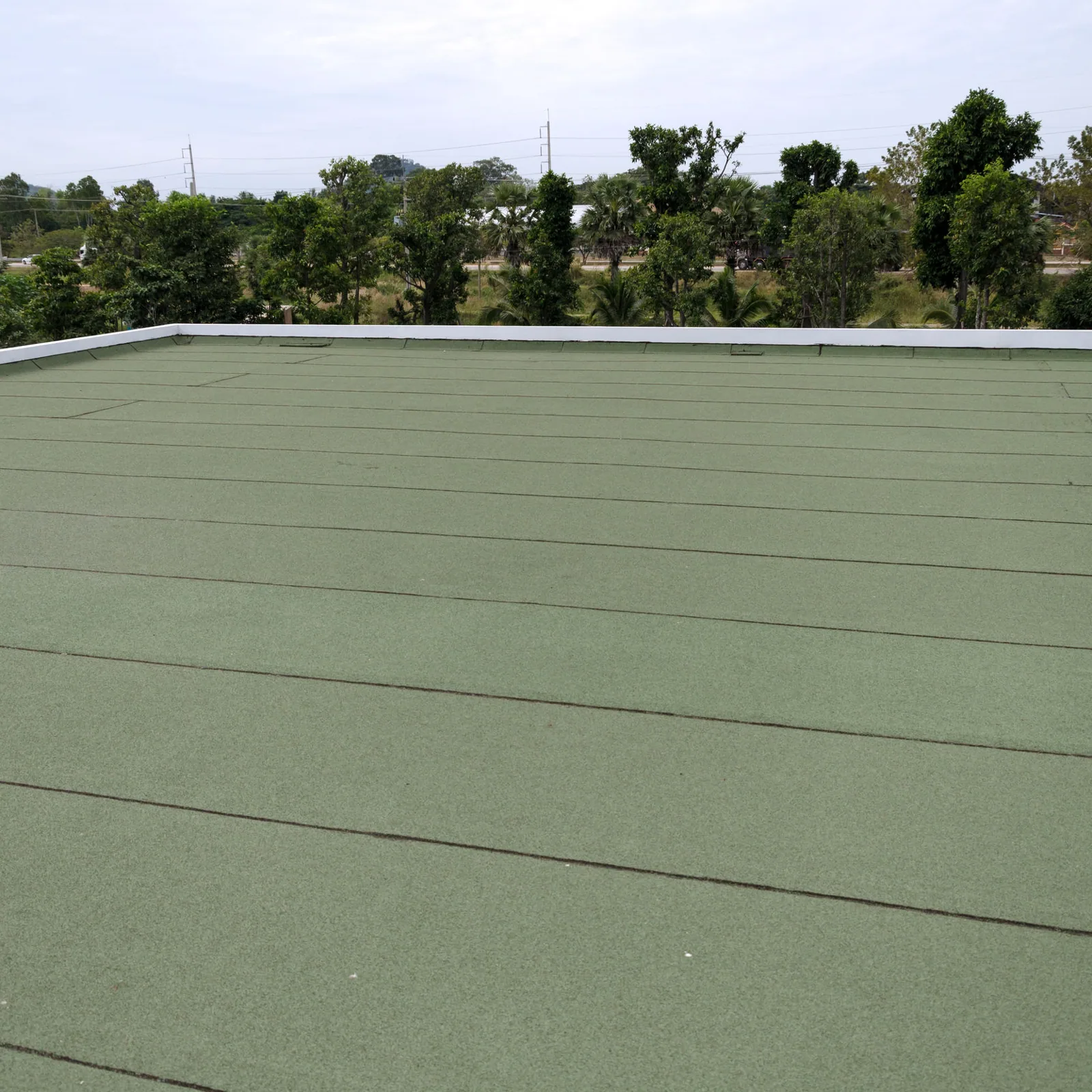
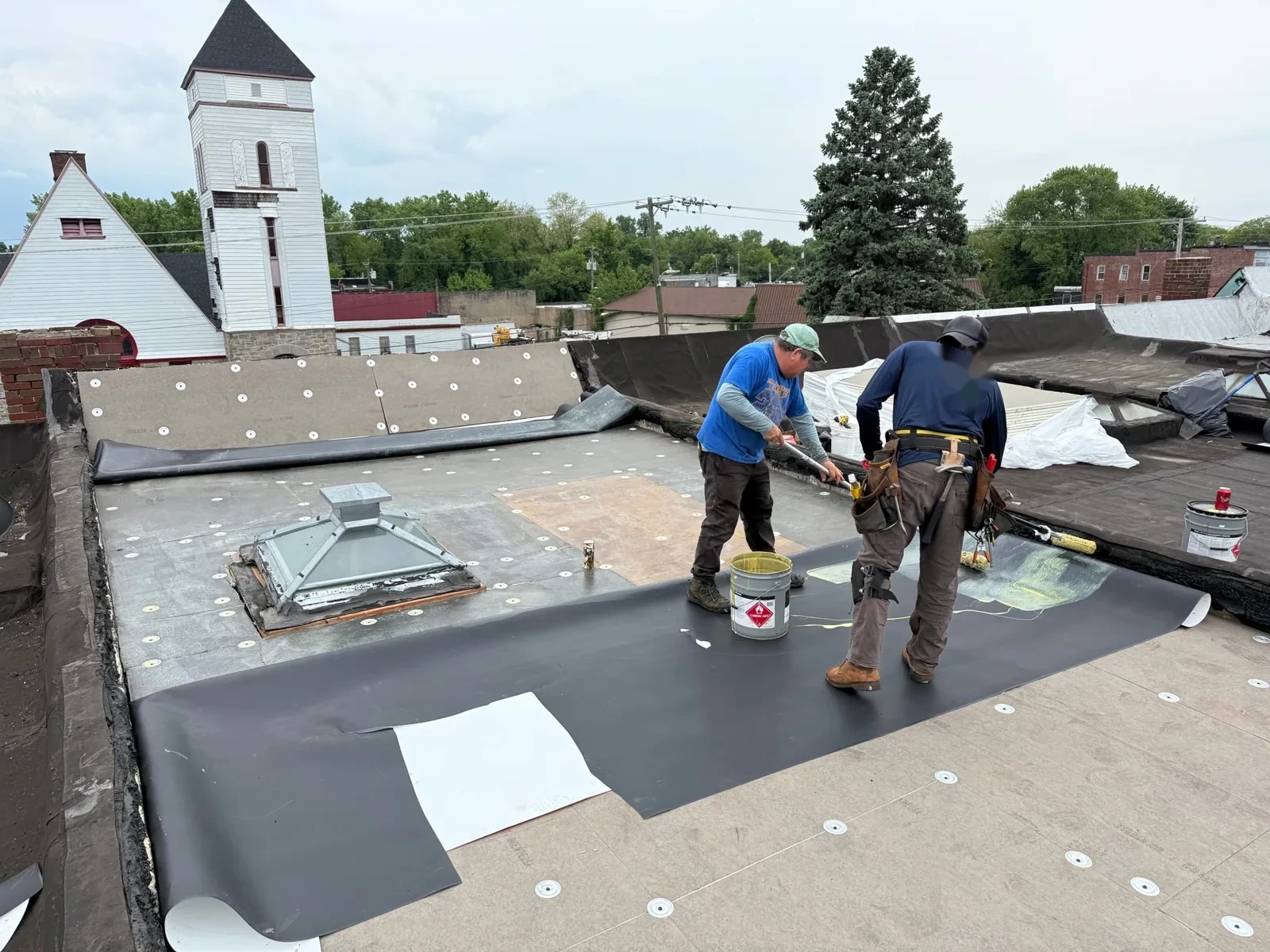
A patch must bond to the installed roof, not simply cover its surface. We identify the membrane and check its condition around the damaged area. With TPO, a clean weld depends on compatible sheet and prepared surfaces. With EPDM, the cleaner, primer and flashing material must match the assembly. A coating does not restore a loose seam or wet insulation. We first determine whether the substrate is sound enough to carry the repair.
If the roof needs a larger replacement section, system choice changes at edges, curbs and drains. Our TPO roofing installation includes the membrane return and termination details, not just the field sheet. We compare that scope with EPDM roof work when existing materials support that path. Neither selection is automatic. The director receives the material, attachment and tie-in requirements before the repair expands beyond its observed boundary.
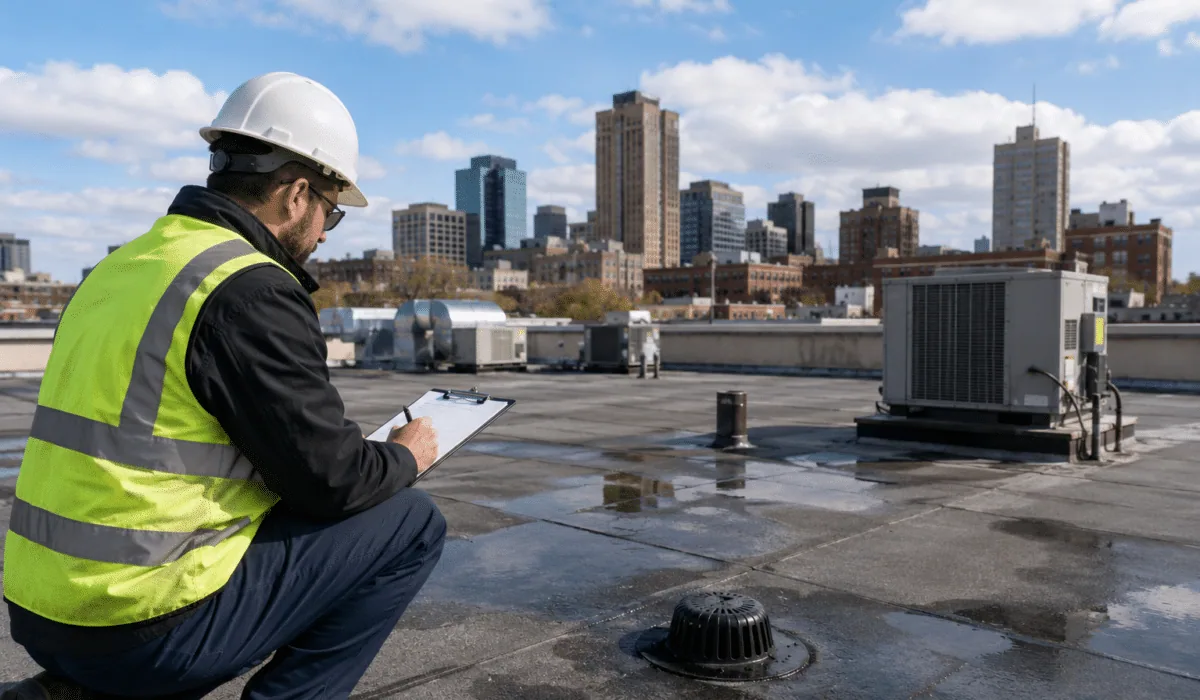
Roof debris can collect near drains after maintenance or repair work. We inspect the bowl, strainer and surrounding membrane before deciding whether the roof needs patching. A blocked inlet can leave standing water that stresses seams and low points. The correct repair may be cleaning, resetting a drain connection or replacing damaged flashing. We separate those actions so a drainage issue does not become an unexplained membrane replacement.
Downtown parking choices keep visitors near local shops, but rooftop access still requires a controlled route. We identify ladder placement, equipment carry paths and the closest drain before mobilizing. If the work crosses an occupied room, protection is set before the roof is opened. A preventive maintenance visit can record recurring debris or loose details between major projects. Its value is a visible condition record and a defined follow-up, not a promise that a roof will never leak.
Oklahoma summers are generally hot, and spring storms can bring hail and damaging wind. Those statewide conditions affect when a membrane can be opened and closed. We check the near-term work window and the roof materials before setting a start. If rain threatens an open section, temporary protection is planned around the exact area. We do not leave a curb return or seam exposed while moving to another task.
Service access can matter as much as the roof surface. A restaurant may need its outdoor dining area cleared before overhead work begins. A shop may need customers directed away from the ladder and staging area. We mark the work zone, communicate the daily sequence and keep the finish connection inspectable. Downtown Edmond streets are walkable, so material movement should not force an avoidable conflict with pedestrian access. The director gets a clear sequence before noisy or disruptive work starts.
Edmond studied the Broadway and 2nd Street corridors with public meetings through February 2026. The work is planning context, not proof that proposed roadway changes are complete. Broadway includes downtown-adjacent mixed residential and commercial uses. The 2nd Street corridor includes university-adjacent residential and nonresidential uses. Different building schedules can affect how a roof crew stages materials, but the study alone does not identify any roof condition.
Our inspection remains tied to the property before us. We note its roof assembly, drains, curb details and operating constraints. When ownership includes more than one address, each roof receives its own finding. The Broadway Corridor service area and 2nd Street Corridor have distinct access contexts. We do not assume one corridor's traffic pattern describes another property. A roof condition report keeps observations connected to their building and repair boundary.
Arrange a close examination of the flashing, drain or membrane seam. We will identify the repair boundary, access needs and the decision that remains before work starts.
We place the work zone around the entrance and the roof section that needs access. When overhead protection or a brief closure is necessary, we set that interval before opening the membrane.
The material, extent of wet insulation, backing condition and access path drive the scope. We inspect those items before pricing a patch or a larger removal boundary.
The dining area below the work affects protection and timing. We coordinate the overhead zone and keep the exposed roof section small enough to close in sequence.
Sound material sets the stopping point. If the seam, backing or insulation fails beyond the initial opening, we show the added area and explain what the larger section addresses.
That depends on whether water is reaching occupied space and whether the temporary repair can protect the assembly. We document the condition and options so the director can compare timing with exposure.