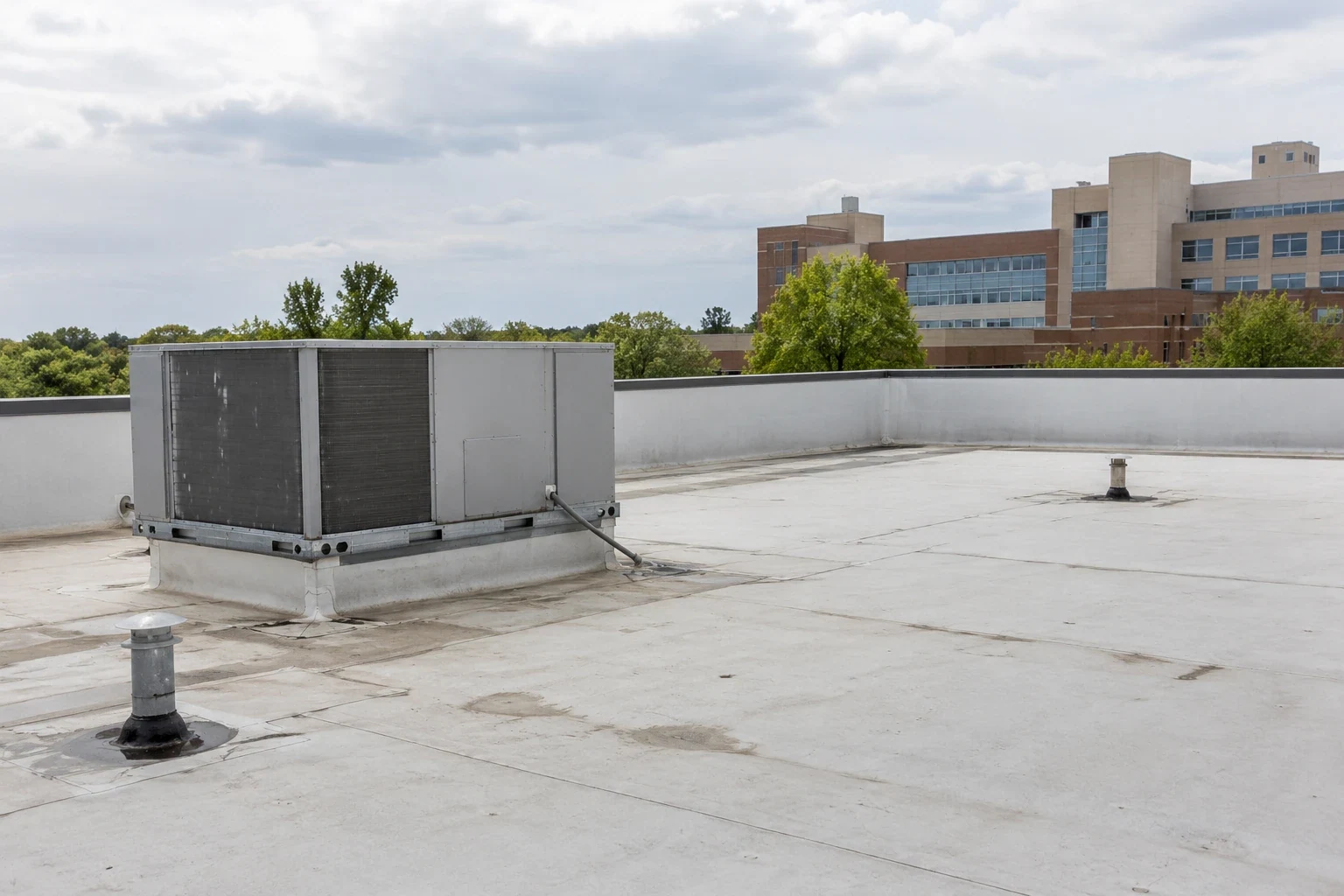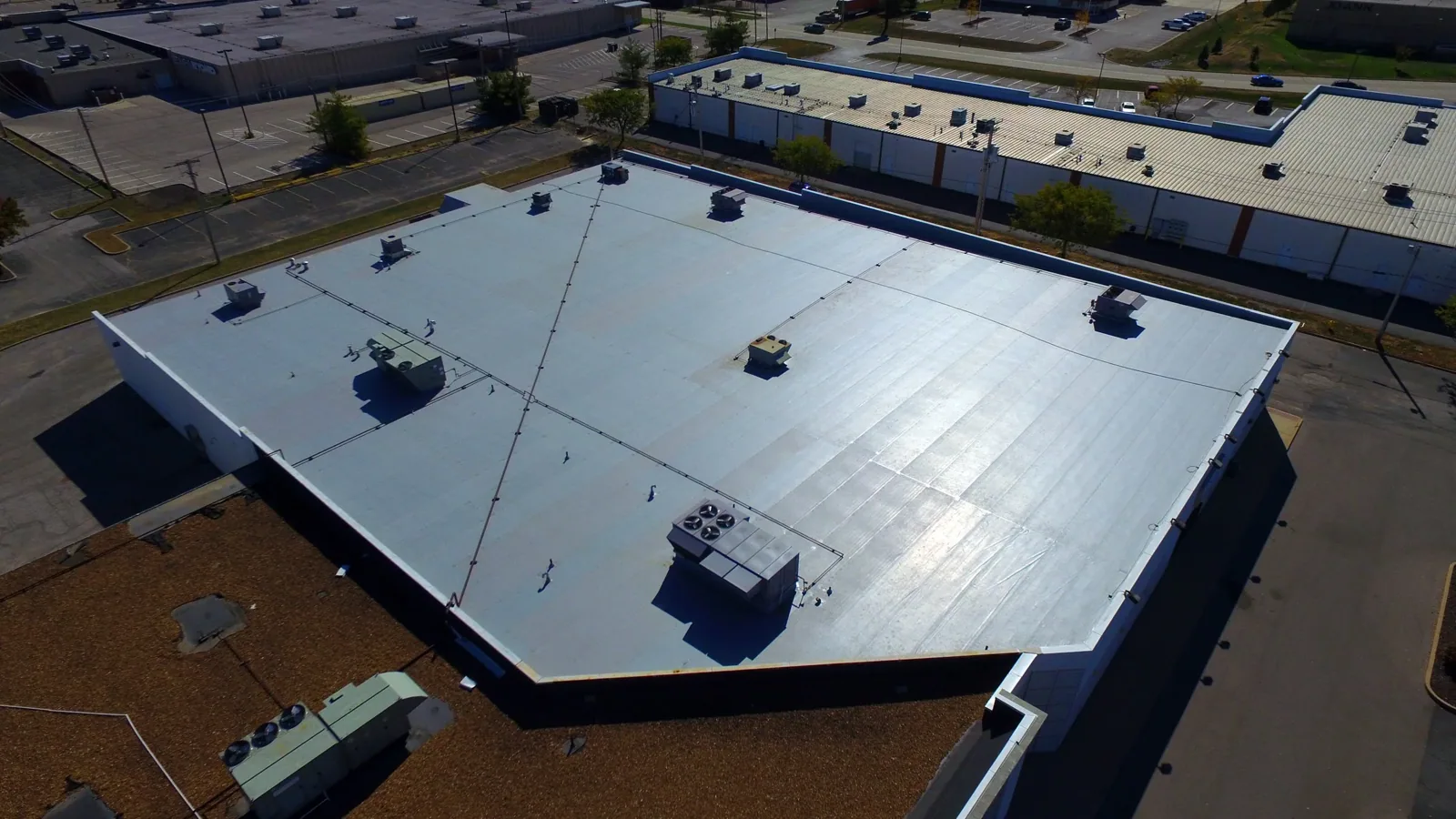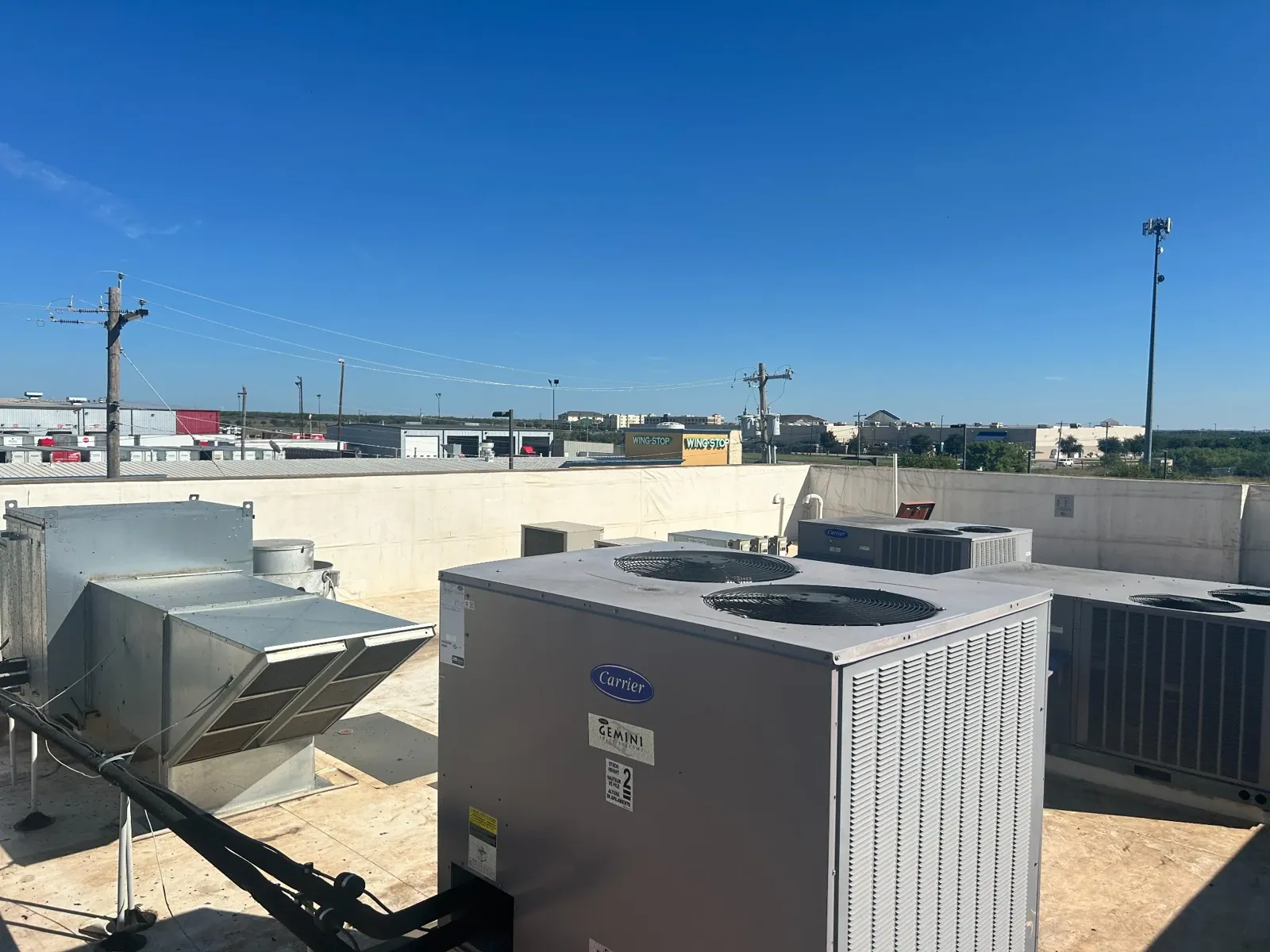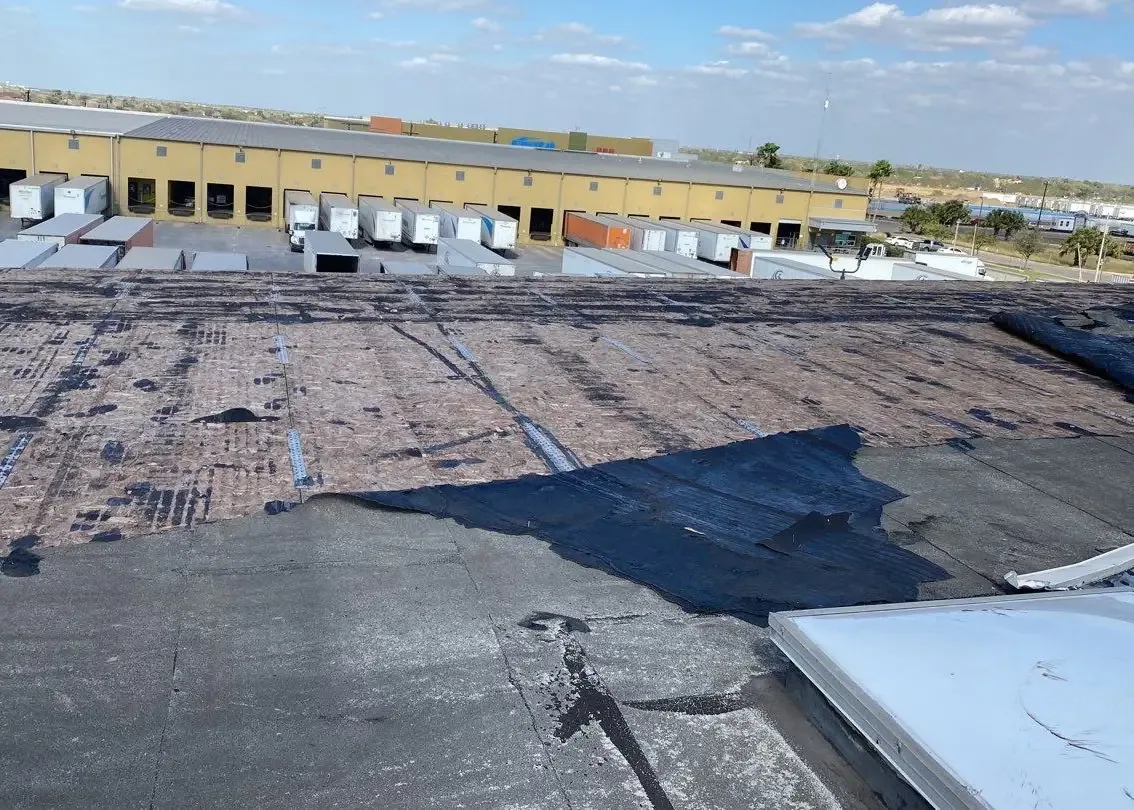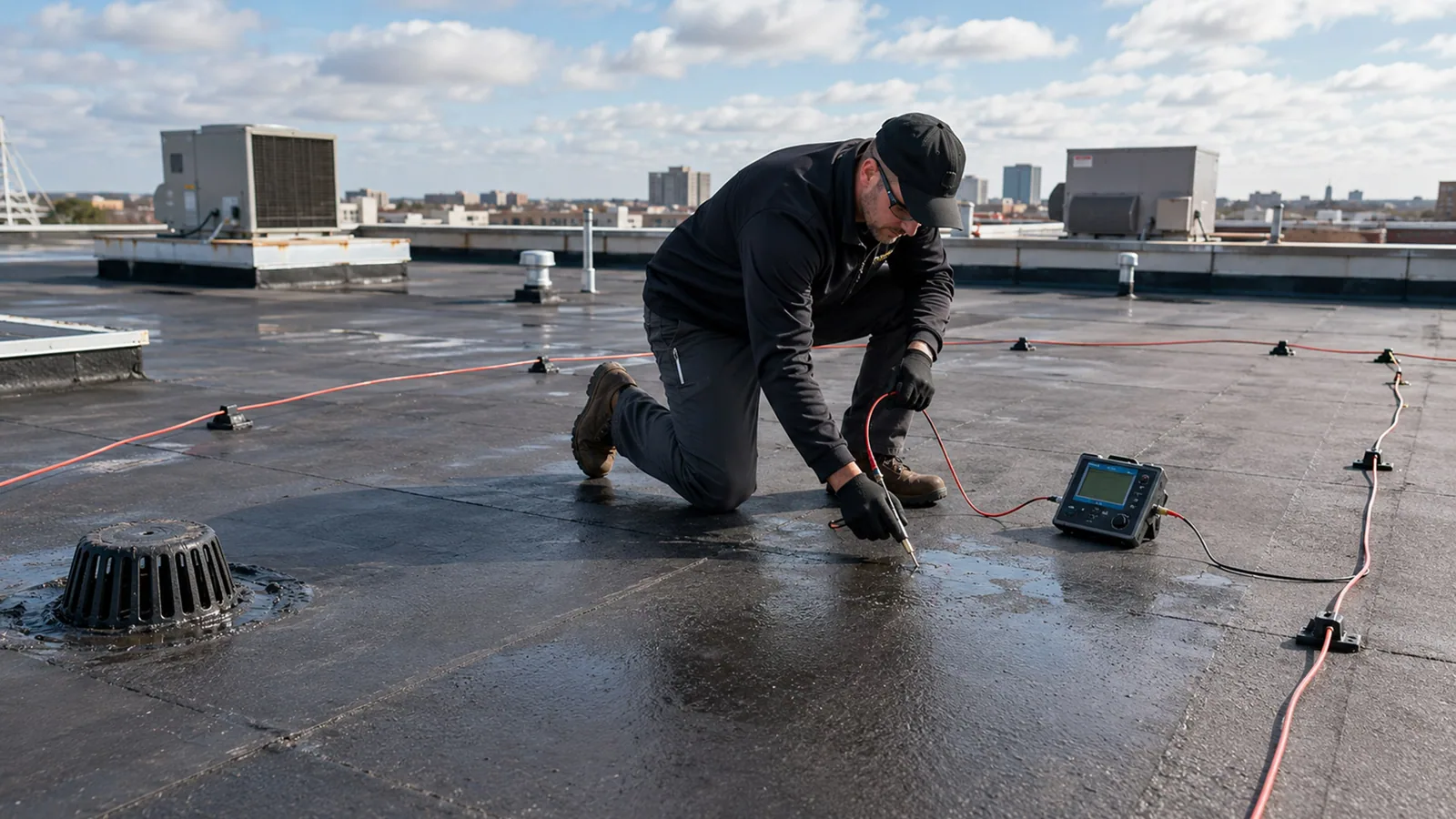

Research buildings in Oklahoma City need tight roof transitions around equipment curbs. A loose membrane return can expose insulation beside critical rooftop equipment. We inspect each curb face, corner, fastening line and weld before selecting a repair. The field sheet is only one part of that connection. A sound backing and clean weld matter at each turn. Oklahoma City sectors include aerospace, energy and biosciences, among other industries. We do not infer a roof system from the tenant or use. Our crew identifies the assembly, marks the failed detail and protects the operating area below.
Medical and aerospace research centers create distinct operating constraints. Equipment access, sensitive rooms and daily schedules can change the work window. We locate penetrations, identify service clearances and set protection before cutting membrane. The director sees the detail before we move equipment or remove material. A path that works above one room may block another. We plan each curb and work zone at the building level.
The city sits at the Interstate 35, 40 and 44 crossroads. Interstate access may support regional material delivery, but the roof still controls rigging and staging. We verify truck access, lift reach and roof loading before mobilization. A Downtown Edmond storefront roof has a different pedestrian pattern than a research property. That distinction affects staging, not the membrane mechanics. Our health-care roof work starts with the occupied area and the detail above it.
Equipment curbs need a complete membrane turn at every face. We check the corner radius, surface condition and membrane return. A stretched corner can split when the assembly moves. Loose backing can let an attachment pull free. We expose the connection only as far as needed to verify sound material. A repair that stops on weak backing will not carry the intended fastening pattern.
Different equipment requires different service clearance. We map the curb perimeter and note conduits, supports and mechanical access. Then we confirm where the flashing can terminate without covering a service opening. If the existing sheet is thermoplastic, the weld surface must be clean. Our TPO roof installation details include seams and penetrations together. The curb and support service addresses attachment, water shedding and clearance before the finish metal goes on.
Oklahoma summers are generally long and hot. Spring storms can bring large hail, damaging wind and tornadoes. We use those statewide conditions to plan the work window, not to assign damage to a particular roof. Heat affects safe handling and the time available for a clean weld. An approaching storm affects whether an opening can be closed before the crew leaves.
After severe weather, we inspect seams, edge metal and penetrations for observed damage. A hail report alone does not establish a puncture. We photograph impact marks, split flashing or displaced metal where present. If the field sheet remains sound, we keep the repair at the failed connection. A storm damage roof assessment records the condition at the site. It does not convert regional weather into a building-specific claim. The director receives the repair options and any need for further testing.
Water near an equipment curb may begin at a drain or seam. We check slope, drain bowl, overflow and nearby laps. Debris can slow an inlet. A loose drain connection can admit water below the surface. We follow the route before opening the assembly. The observed path gives us a repair boundary and helps separate the curb from an unrelated drainage issue.
When insulation has become wet, we locate the affected area before selecting a cover system. Moisture readings help identify where verification is useful. We confirm the assembly through an inspection opening before approving removal. The report distinguishes tested locations from unexamined areas. Our commercial roof inspection records seams, curbs, perimeter details and drains as separate observations. If the drain needs repair, we keep that task visible in the scope instead of hiding it inside a general roof allowance.
A new membrane must connect to the existing roof without a weak lap. We identify the material and inspect the edge that will remain. For TPO or PVC, a field weld needs compatible sheet and a prepared surface. EPDM uses different primers and flashing accessories. Coatings require a clean, stable substrate. They do not replace damaged insulation or loose attachment.
If the existing assembly is beyond a dependable tie-in, we compare a section replacement with a broader recover. The removal boundary should reach sound material and preserve any layer suitable for retention. That boundary affects debris, access and closeout. A recover-over-existing-roof option is reviewed only after deck and moisture conditions are checked. Our commercial roof replacement scope identifies penetrations, fastening and edge transitions before installation starts.
A Del City roof assessment can be scheduled with its own building record and service route. Research work may continue during roof repairs. We coordinate roof access, hoisting and material movement with the building schedule. The crew protects doors, intakes and routes below the work area. If an intake sits near the repair, we identify the risk of dust or odor before using products. A safe work zone accounts for the operation beneath the roof.
Oklahoma City has sites with interstate, rail and airport access. Those network facts do not tell us which loading route a property can use. We inspect the truck approach, lift placement and roof entry. Where a work sequence crosses an active mechanical service path, we set a temporary route before staging. An occupied-building reroof plan defines the daily zone and when protection can be removed. The facility director receives the access sequence before crews begin.
Arrange a close examination of the curb, flashing and nearby drain. We will identify the failed connection, tie-in material and access needs for the repair.
We trace the water path, inspect the curb return and test the membrane edge. Sound backing and a compatible tie-in guide the repair boundary.
We coordinate the work zone with the room and equipment below. Intake protection, access and the daily schedule are set before opening the roof.
Observed damage and assembly condition control that recommendation. We photograph affected details and separate local repair from any broader condition.
We expose and map the affected area, then identify the material that can remain. The scope changes only when the verified boundary requires it.
The existing deck, membrane, fastening and service clearances guide system selection. We compare compatible details after inspecting the assembly, not from the building use alone.