
Above school classrooms, displaced coping requires a close attachment check. The metal may have opened a wall-top connection above occupied rooms. Repair must reach the fastening and support beneath that movement. Commercial Roofing Edmond assesses storm-damaged commercial roofs in Edmond, OK. We identify damaged covering, flashings and related construction at the property. Immediate protection comes first where an opening exposes the interior. The permanent scope follows a close examination of the affected assembly. A storm label cannot settle which parts need repair.
Oklahoma's spring storms can produce large hail, damaging winds and tornadoes. Autumn brings another period of severe-weather potential across the state. We use that context to understand the roof's exposure. Actual repair decisions follow the physical condition at the building. Downtown Edmond businesses and Broadway Corridor offices have different operating constraints. Those uses affect protection and access after damage. The facility director receives a plan connected to the damaged detail and occupied space.
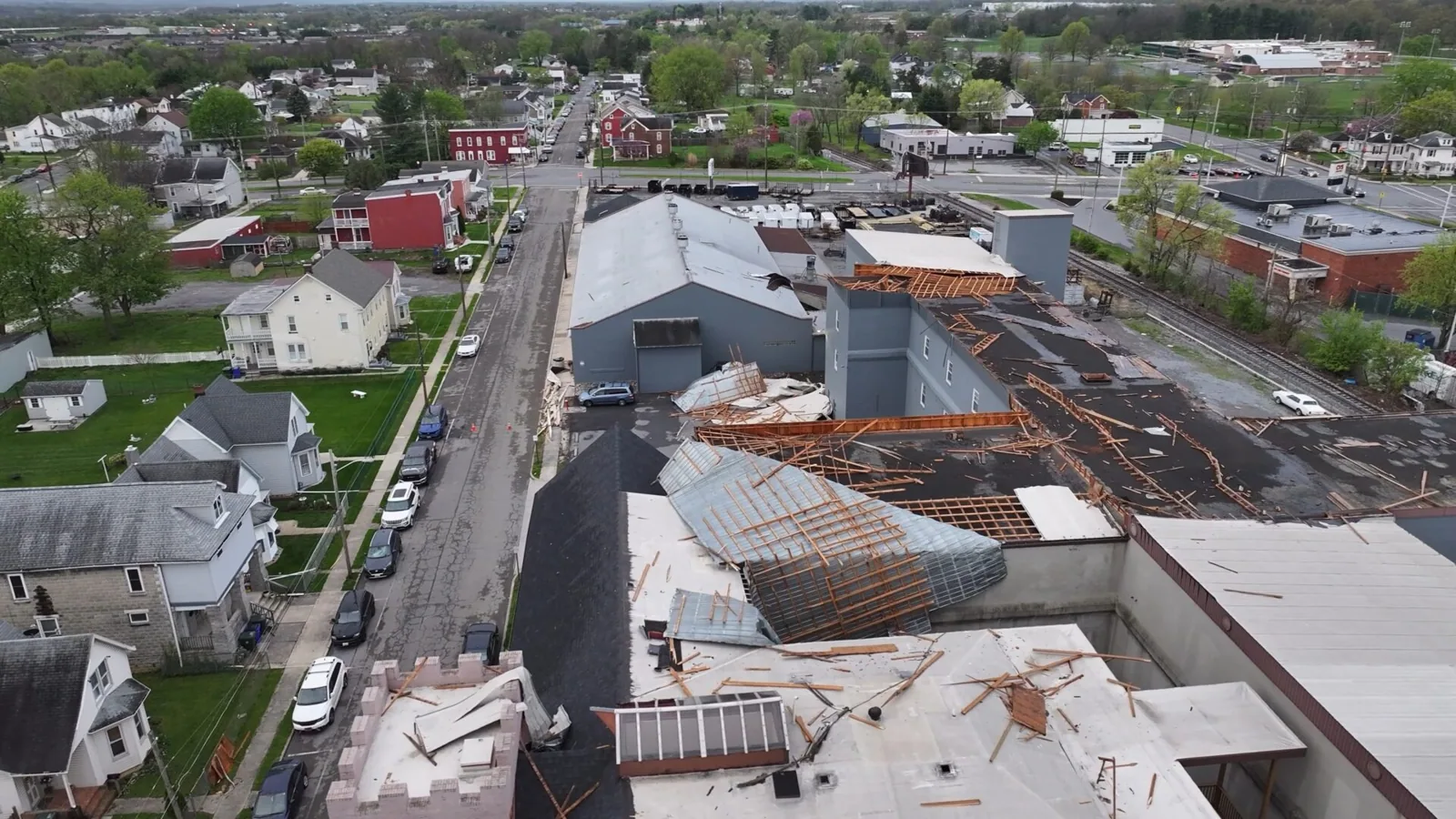
A lifted sheet can admit water while continuing to move in wind. We assess whether safe access permits temporary restraint or closure. Loose material near an entrance may require controlled space below. Interior water around electrical equipment needs the appropriate qualified response. We coordinate roof protection with the facility contact and affected trades. Emergency roof work may provide a temporary dry-in before complete reconstruction. Weather and unstable construction can restrict that immediate work.
A damaged roof may have concealed hazards beyond the visible opening. Debris can cover weakened decking or sharp material. Apparent framing distress requires an appropriate structural assessment. Roofing work cannot substitute for that clearance. We identify the area protected and the conditions still unresolved. Subsequent examination should start from those limits rather than assume stabilization completed the repair. A secure temporary boundary allows the permanent work to be defined carefully.
A hail mark on a membrane may differ from a split through its reinforcement. We examine the material closely before deciding the repair. Surface scuffs, fractures and damaged insulation have different consequences. Selected openings may be necessary where concealed damage affects the scope. A mark on rooftop equipment can direct examination without proving membrane damage. We compare actual roofing findings across the affected area. Hail damage repair should address the defects the assembly examination reveals.
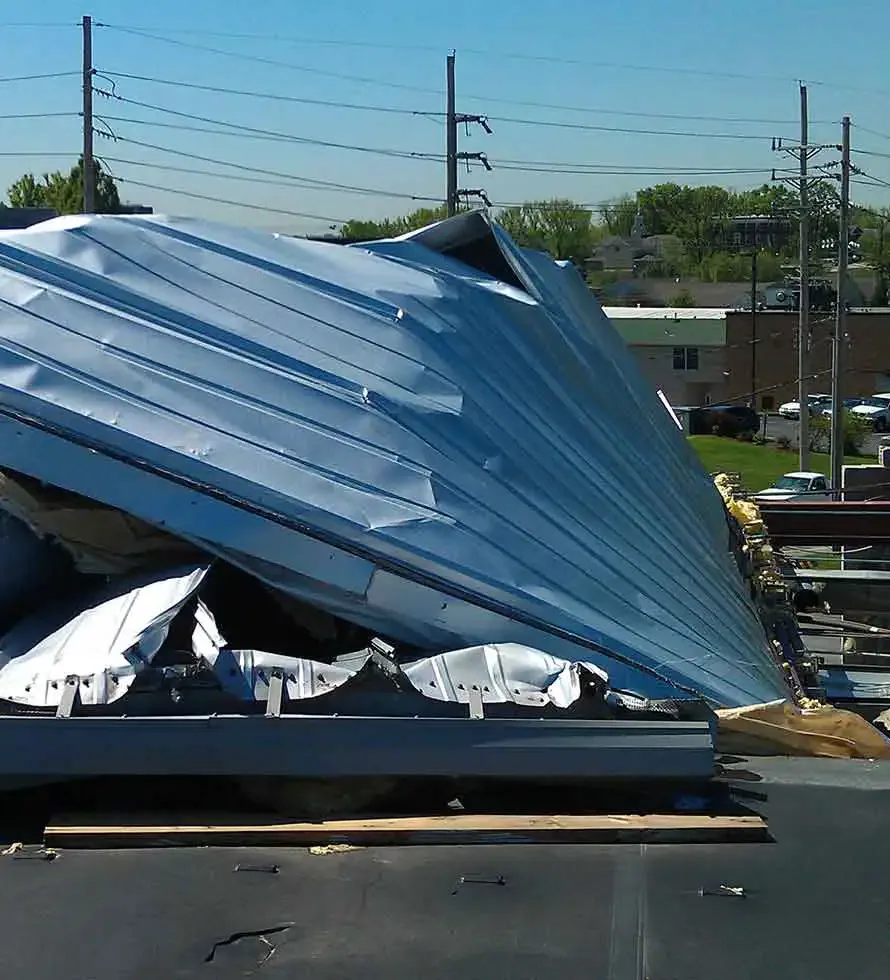
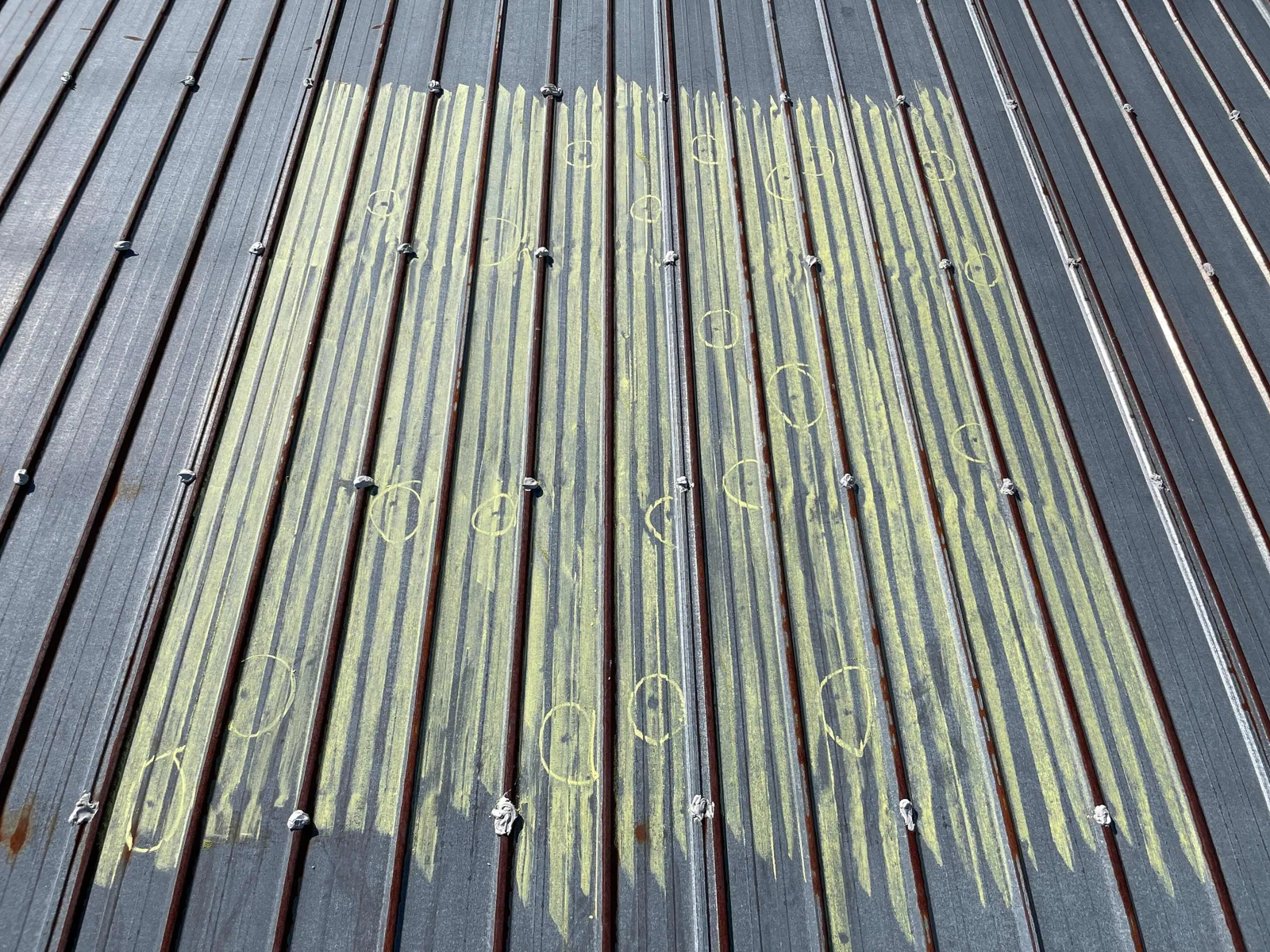
Metal dents also require interpretation within the roof's construction. A visible dent may not be the same as a failed water-shedding joint. We inspect panel seams, clips and penetrations near the impact. Broken accessories or changed drainage can require separate treatment. The director should know which findings involve appearance and which expose the interior. That distinction helps establish a practical construction scope. We photograph the observed condition without inventing a date or cause for unrelated deterioration.
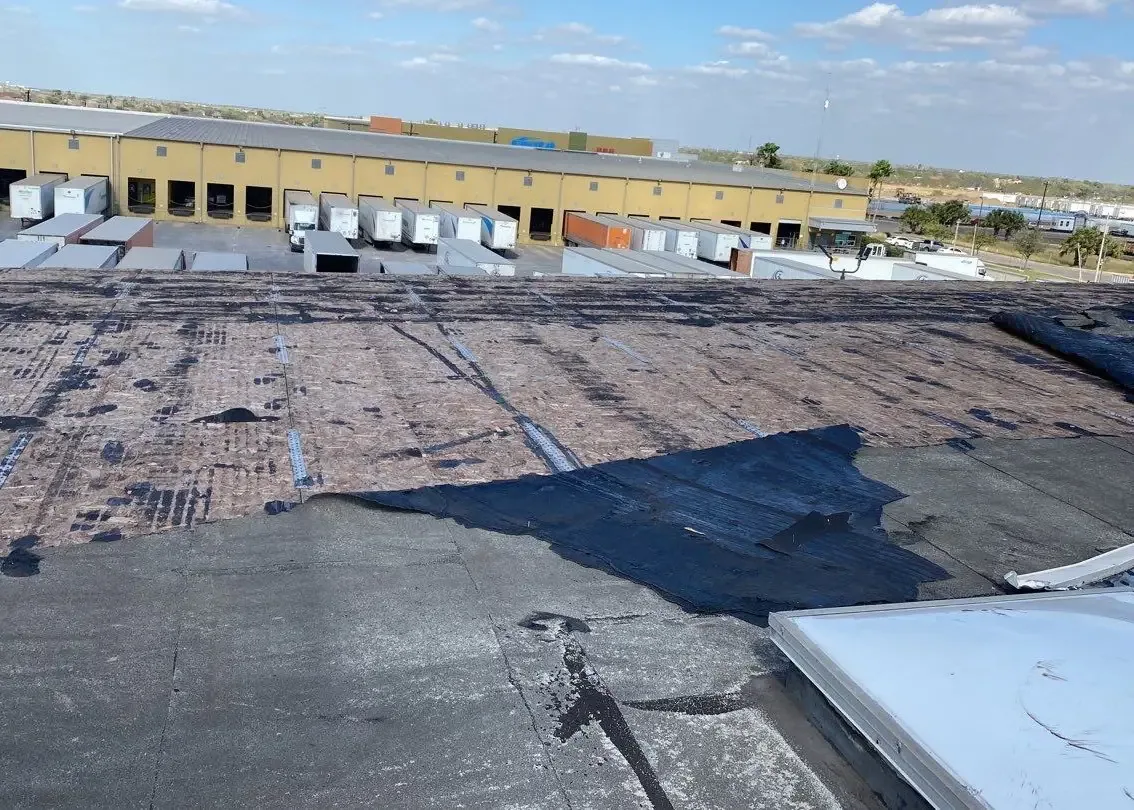
A peeled membrane edge needs examination of its termination and supporting deck. The damaged sheet may extend farther than the obvious tear. We inspect adjacent attachment and the condition of perimeter metal. Loose backing can leave a rebuilt detail vulnerable to further movement. Wind-related roof repairs may therefore include more than replacing exposed covering. The new connection needs suitable material and the required fastening. We establish that construction before closing the roof perimeter.
Displaced coping can expose the top of a wall to water. We examine cleats, joints and the support below the metal. A bent cover may need replacement rather than reshaping in place. Nearby masonry or wall materials may require another trade. We identify those interfaces so the repaired assembly can shed water correctly. Membrane flashing must connect with the rebuilt metal detail. Treating the pieces independently can leave a gap at the finished transition.
A weathered patch near a fresh tear deserves its own description. We distinguish deterioration from the observed displaced or impacted material. Available previous photographs can help clarify changes at that location. The roof still needs physical examination where images leave uncertainty. A roof condition inspection can assess the broader assembly after localized damage. That wider view helps determine whether repair has suitable material to join. A damaged area should not be repaired onto failing surrounding construction.
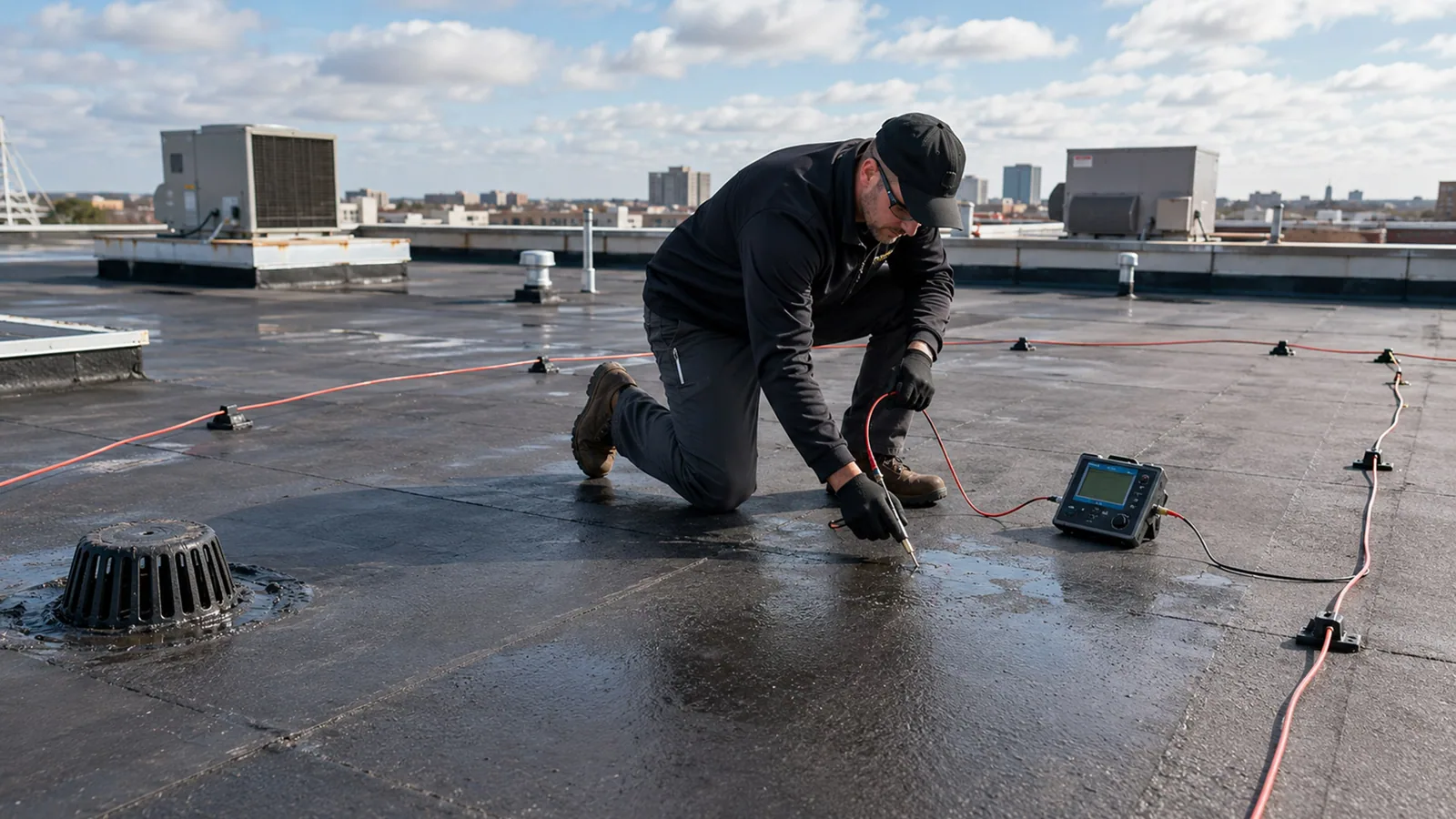
Water entering after damage may saturate insulation beyond the visible opening. Moisture investigation can help locate affected layers for removal. We inspect the deck where those layers are exposed. Corrosion or other deterioration may add work beyond the storm repair. The scope should describe that condition rather than hiding it under one label. The facility director can then distinguish damage repair from preexisting renewal needs. Each part of the proposal should have a construction reason.
Downtown Edmond's designated outdoor dining areas create occupied space below roof edges. Repairing overhead metal there requires an agreed ground protection boundary. Downtown Edmond storm repair also needs material handling compatible with walkable business streets. We coordinate deliveries and removal with the facility contact. The damaged roof area and nearby public access may need separate controls. Those arrangements should be in place before overhead repair begins. Operations influence the method, not just the appointment time.
Broadway Corridor contains commercial properties and offices among its mixed uses. Equipment-dependent tenants may need intake or rooftop-service coordination during work. Removal areas must fit the available safe weather window. We rebuild what can be securely closed within that sequence. Temporary measures remain identified where permanent work is incomplete. The director should know which rooms remain exposed and what protection is in place. That lets building staff plan occupancy against the actual repair status.
A replaced perimeter section needs examination where new construction meets retained roofing. We check attachment, membrane fit and water-shedding laps at that transition. New components must be compatible with the remaining assembly. Drains and runoff routes need clearance after debris-producing repair work. We remove sharp scrap that could puncture the repaired covering. Completion photographs identify the detail treated and the remaining issues. The director can then relate the finished work to the original damage.
Claim documentation assistance can organize observed conditions and repair requirements for review. We keep temporary protection and permanent construction identifiable within that information. Insurer decisions and policy coverage remain separate from roofing findings. A capital repair plan may address deterioration left outside the damage scope. That subsequent work should follow the roof condition, not a presumed storm history. The completed storm repair must function at the actual physical connections it rebuilds.
Arrange a close review of displaced roofing, impact areas and interior exposure. We will define the protection and rebuilt connections the building needs.
The roofing assembly requires its own examination. Equipment dents may direct attention toward nearby membrane and details. They do not describe concealed insulation or deck condition. We inspect the roof and recommend selected tests where necessary. Repair or replacement follows those findings rather than equipment appearance alone.
Immediate falling-material risk may require controlled removal or securement. We assess safe access and the area below the metal first. Temporary protection must address any exposure created during that work. The permanent connection is then examined for replacement and fastening requirements. Safety and roof protection remain linked in the sequence.
Confirmed wet layers need a defined treatment boundary. We investigate their extent and inspect the construction exposed during removal. Suitable replacement material restores the assembly beneath the repaired covering. Extensive saturation can change the scope beyond a local patch. We show the director the findings behind that change.
Our examination describes observed construction and required roofing work. The insurer evaluates coverage under the policy and claim information. We provide located photographs and a clear repair scope. We cannot promise claim approval. The director can use the findings to discuss the actual damage and construction requirements.