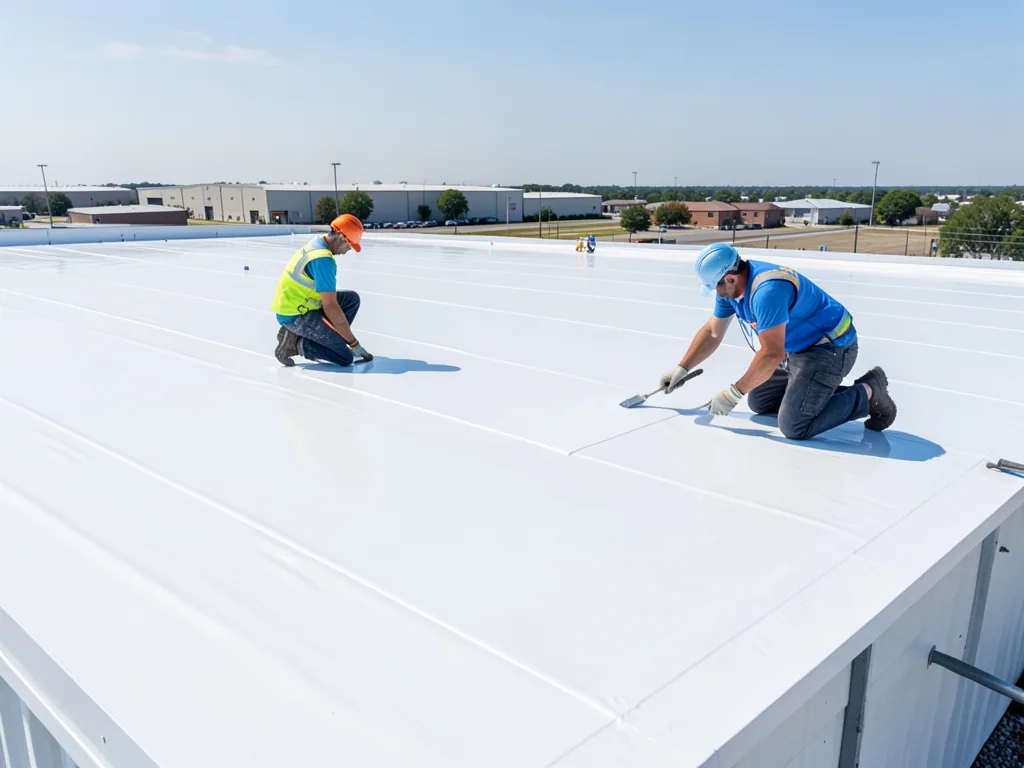

The layered roof above a public office needs its flashing joined through the intended ply construction. A surface patch can leave separated material working beneath it. We examine those layers before selecting a built-up roof repair. Commercial Roofing Edmond installs and repairs built-up roofing in Edmond, OK. The assembly uses multiple reinforced plies bonded into its specified construction. Surfacing and attachment vary with the proposed system. The director needs the actual roof identified before choosing treatment. Its exposed finish describes only one portion of the assembly.
El Reno has a historic commercial downtown and Redlands Community College. Guthrie combines downtown businesses with manufacturing, industrial and agricultural enterprises. Those different uses can need roof work coordinated with occupied rooms and equipment. We plan the construction around the use beneath the work area. The existing roof condition determines whether repair, restoration or removal is appropriate. A layered system still needs proper drainage and usable penetration details. We connect those requirements before proposing the finished roof construction.
A gravel-surfaced roof can hide small defects beneath loose aggregate. We examine the accessible surface and investigate suspect areas deliberately. The examination may require selected removal of surfacing to see the construction. Blisters or cracks need attention to their layers and surrounding condition. We identify what can be observed directly and what requires an opening. Roof examination should reflect those limits before repair recommendations. The director receives a useful construction question rather than an assumed conclusion.
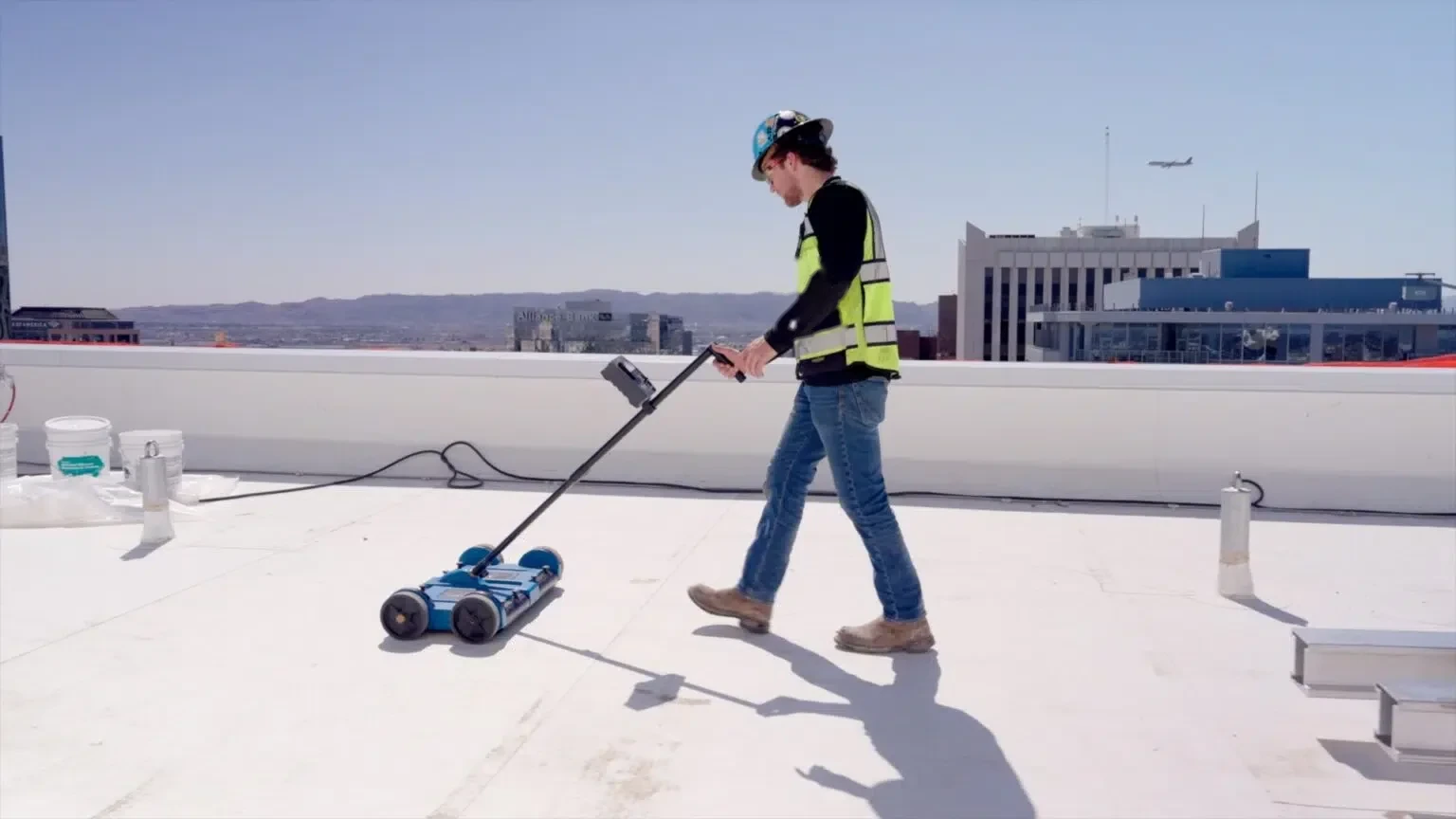
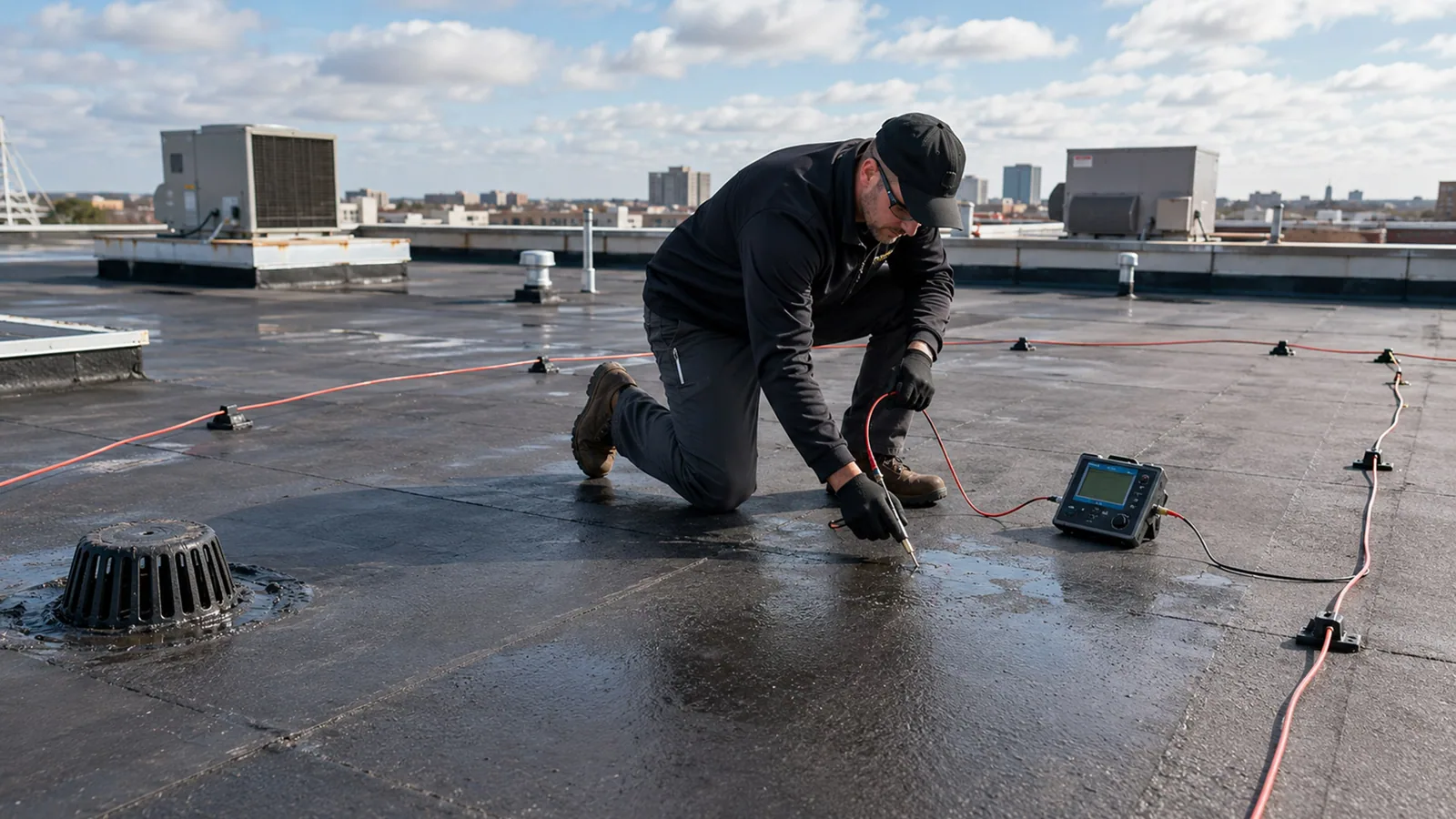
Moisture can occupy concealed insulation despite a largely intact exposed finish. Selected cuts establish the assembly and condition at those locations. Infrared investigation may help target checks where the roof and conditions permit. The thermal pattern still needs relevant direct confirmation. We separate affected layers from sound retained construction before setting removal. Broad moisture or deterioration can require a larger construction scope. The surfacing alone cannot settle whether the underlying assembly remains suitable.
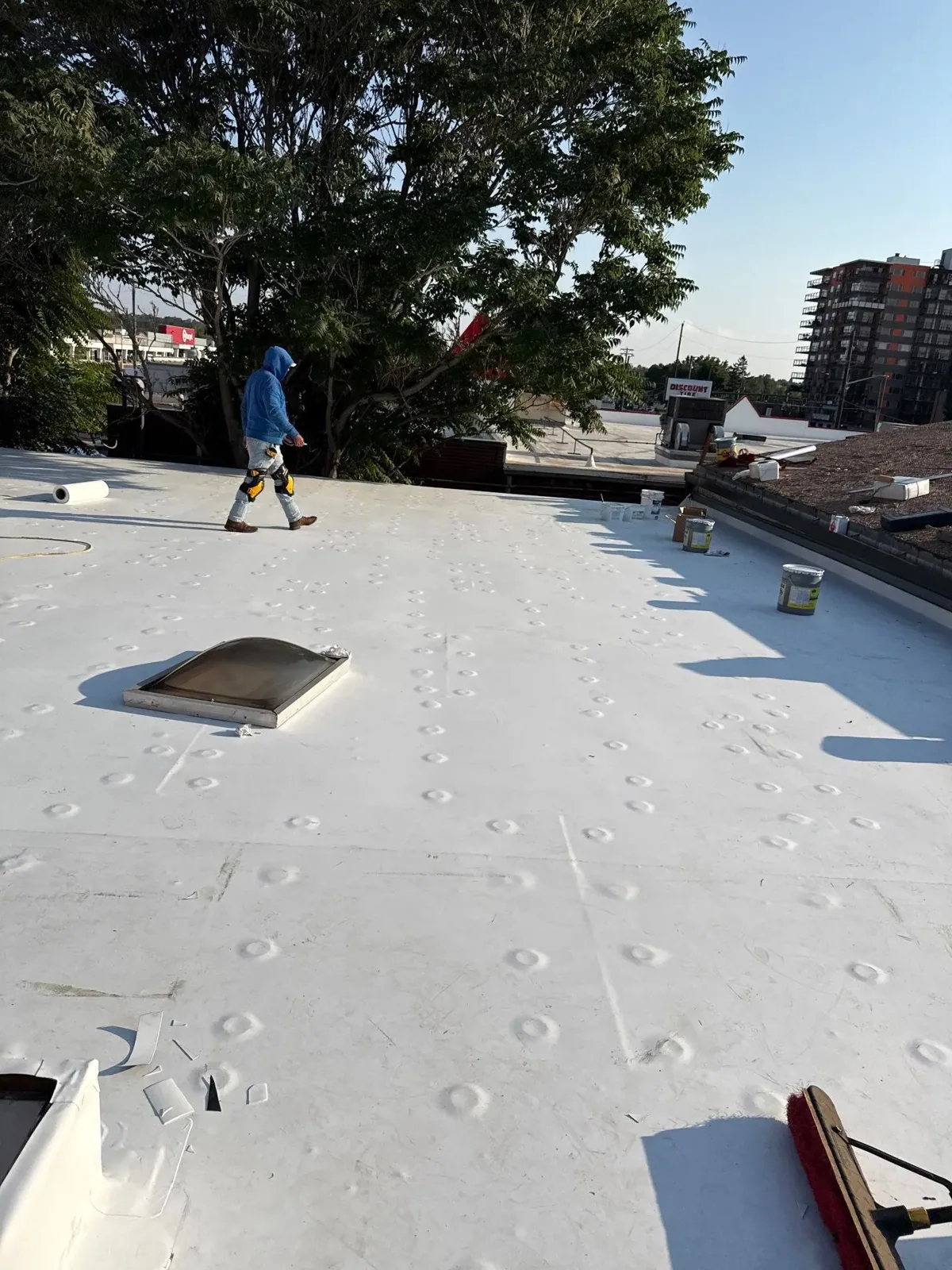
A built-up assembly needs its plies placed and bonded in the prescribed arrangement. Their overlaps should not be improvised across the roof. Material condition and application method affect the resulting bond. The proposed system may use different materials or installation requirements from the existing one. We identify those requirements before placement. Poor contact between layers can leave localized separation in the completed construction. The installed roof needs examination as the work proceeds.
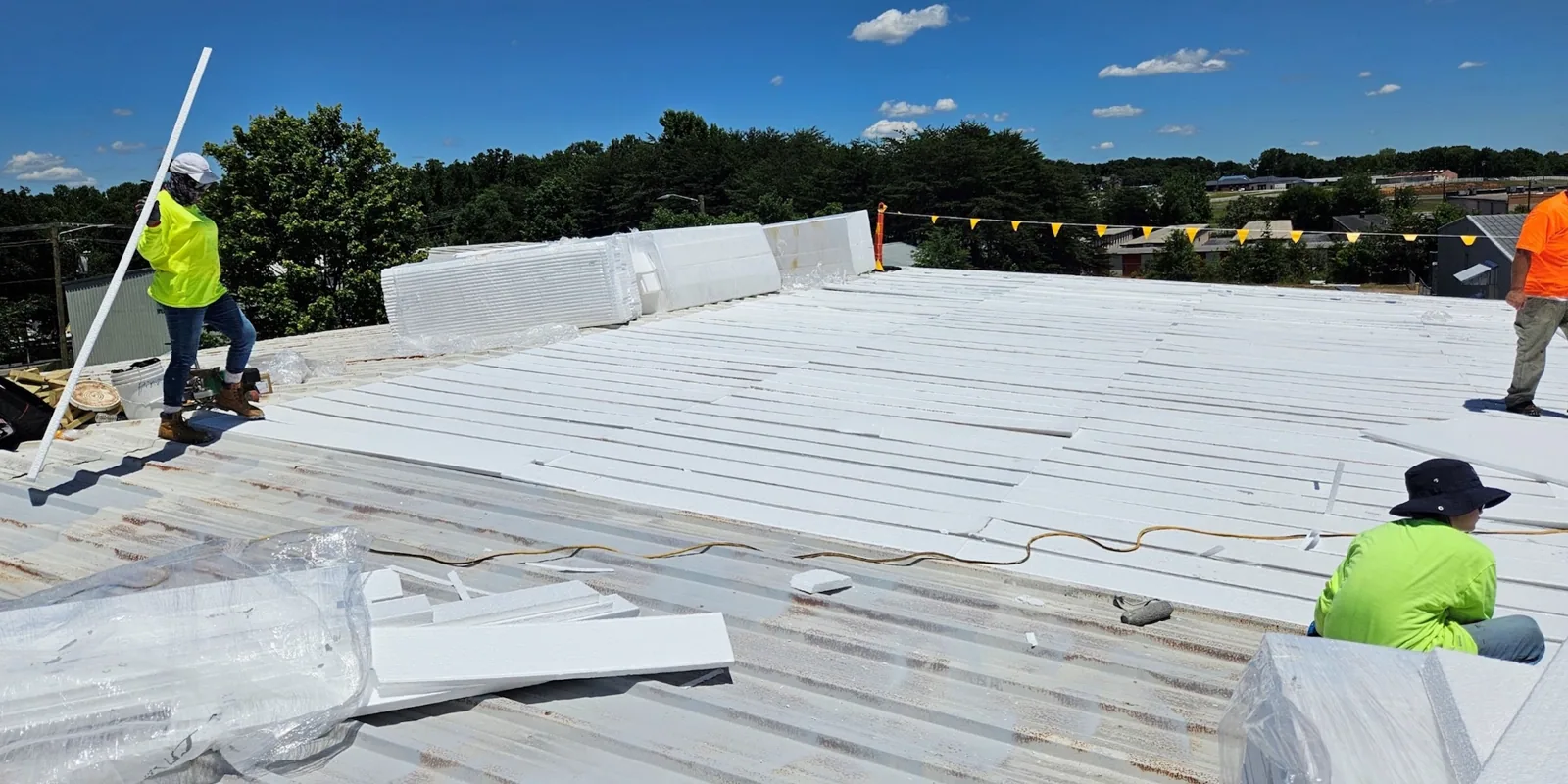
The supporting layers require suitable fit and stable attachment too. Wet boards or deteriorated backing cannot become sound by adding plies. Insulation and board replacement may be necessary before new construction. The finished elevation affects outlets and vertical flashing height. We coordinate those relationships with the layered assembly. The director should know which construction is retained and which is removed. A complete scope identifies the underlying preparation as well as the roof plies. Its performance requires both parts to work together.
A wall flashing split near its base needs examination of attachment and backing. The defect may involve movement between roof and wall construction. We establish the suitable repair boundary before removing affected material. The selected flashing assembly needs the specified reinforcement and fit. Upper terminations must connect securely to appropriate support. Flashing reconstruction should not stop at a new exposed seal over weak backing. The roof-side transition needs a completed physical connection.
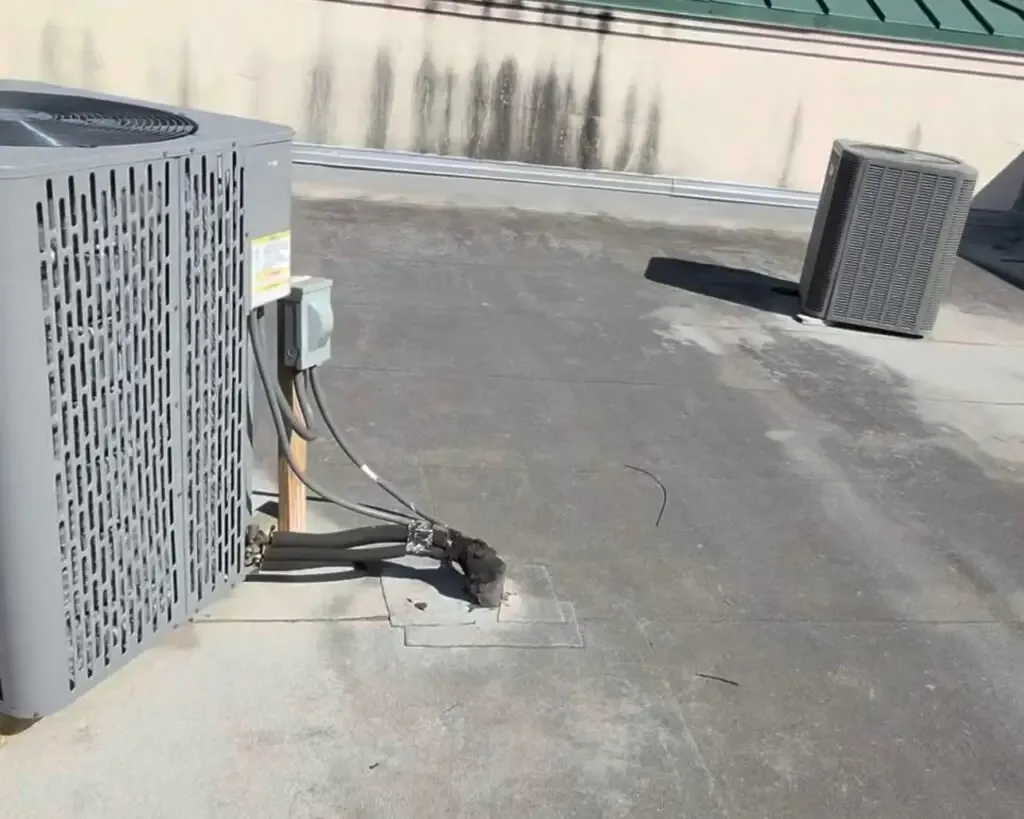
Curbs and drains each present different changes in shape. We examine the available dimensions before placing new flashing layers. Crowded equipment can restrict access needed to finish those connections. The work may require another trade to move or alter a service. Added roof thickness can also reduce useful curb height. We identify that alteration before installation narrows the working space. A multi-ply field does not excuse an awkward unsupported corner. Details need the same deliberate construction as the broader roof.
A deteriorated surface needs review of its protective treatment and the construction below. Built-up roofs can use different specified surfacing arrangements. Loose aggregate, coatings and other finishes have different care requirements. We identify the intended system before choosing renewal. Removing or replacing surfacing should preserve the underlying plies where they remain usable. An unsuitable cleaning method can damage that construction. We define the surface treatment through the condition and selected material requirements.
Modified-bitumen roofing offers another reinforced asphalt-sheet construction, not an identical repair label. Silicone restoration likewise needs a qualifying substrate and appropriate preparation. Options should be compared against actual layers, moisture and attachment. A renewed surface cannot conceal unstable material as useful retained construction. The director receives the roof findings behind the available choices. We distinguish protective surface work from replacing deteriorated roofing below it. That keeps each treatment connected to a practical purpose.
A selected built-up installation method can affect nearby ventilation and safety controls. We establish the procedure before planning the occupied-space protection. Hot-applied construction needs its proper handling and project controls. Other specified methods bring their own conditions and coordination requirements. We examine intakes, equipment and access around the work area. The director identifies the rooms whose operation needs particular protection. Roofing work should fit those requirements without compromising the specified assembly.
El Reno commercial roofing near historic businesses or educational uses needs property-specific staging. Guthrie industrial or downtown operations can have different handling routes. The roof should be divided into areas that can be securely completed. Oklahoma summer storms can produce locally heavy rain across the state. Actual weather governs exposed openings and the suitable application window. We preserve a protected stopping point when work pauses. The building use and material method need one workable construction sequence.
A localized repair needs inspection where it joins the retained roof plies. We check the connection using the procedure appropriate to that material. Debris and loose sharp pieces should leave the roof after work. Drainage paths need clearance from displaced surfacing or construction residue. Maintenance care keeps those areas under examination afterward. Equipment work can disturb the protective surface and create new exposures. Facility staff should identify those changes at their roof locations.
A recurring crack or blister warrants renewed assessment of the underlying assembly. Repeated surface treatment may leave a concealed condition unresolved. We examine whether another opening or broader repair is needed. New penetrations require the appropriate flashing construction for the installed system. The director should retain information identifying that assembly and its care. Layered roofing remains useful through sound bonds and maintained connections. A finished surface needs that construction beneath it to continue serving the building.
Arrange a review of the built-up assembly, flashing and surfacing condition. We will identify the suitable repair boundary or new construction method.
Small defects can be obscured by the surface treatment. We examine accessible areas and choose appropriate closer checks where needed. Selected surfacing removal or test openings may be necessary. The findings distinguish visible observations from concealed condition questions. Repair should follow the construction actually examined.
The blister extent and underlying condition need investigation. A local defect may allow defined repair to serviceable surrounding material. Wider separation or moisture can change the removal boundary. We explain the findings supporting either treatment. The construction decision should not follow the blister label alone.
The underlying roof needs suitable condition before restoration. A surface coating does not restore missing reinforcement or unstable layers. We identify necessary repairs and removal first. The proposed restoration must suit the remaining assembly and its preparation requirements. Extensive deterioration may call for a different project.
The opening needs a compatible reinforced flashing detail. We examine the equipment arrangement, support and available working space. Necessary trade coordination should occur before cutting roofing. The finished connection must join the actual installed layers appropriately. General compound around a new service is not a complete reconstruction method.