
A workshop needs the skylight curb flashing fitted without a stretched return. The lower corner should rest against support rather than span an empty gap. That fit deserves attention before another layer of sealant is applied. Commercial Roofing Edmond repairs skylight and penetration flashing in Edmond, OK. We examine the complete connection from roof field to its upper closure. Pipes, curbs and daylight openings each require their own detail. The facility director receives a repair suited to the actual penetration. A similar-looking opening may need a different construction method.
Edmond includes technology-center business-incubator space and university buildings. Their varied room uses can affect protection below a flashing repair. The Village includes headquarters offices and Casady School among its identified buildings. Roof penetrations above occupied facilities require coordination with equipment and interior activity. We discuss those operating needs before opening suspect connections. Bethany also contains universities, health-care institutions and churches. The local use gives the repair its consequence. The existing material, movement and support give it the construction method.
A skylight leak may begin at its roof flashing or within the unit itself. We examine the curb interface and accessible frame connections. Glazing seals and unit damage may need the appropriate specialty work. Rebuilding roof flashing will not repair a broken daylight assembly. We identify that distinction before choosing the roofing scope. The director should know which component requires attention. Roofing and unit work may need coordination at the same opening.
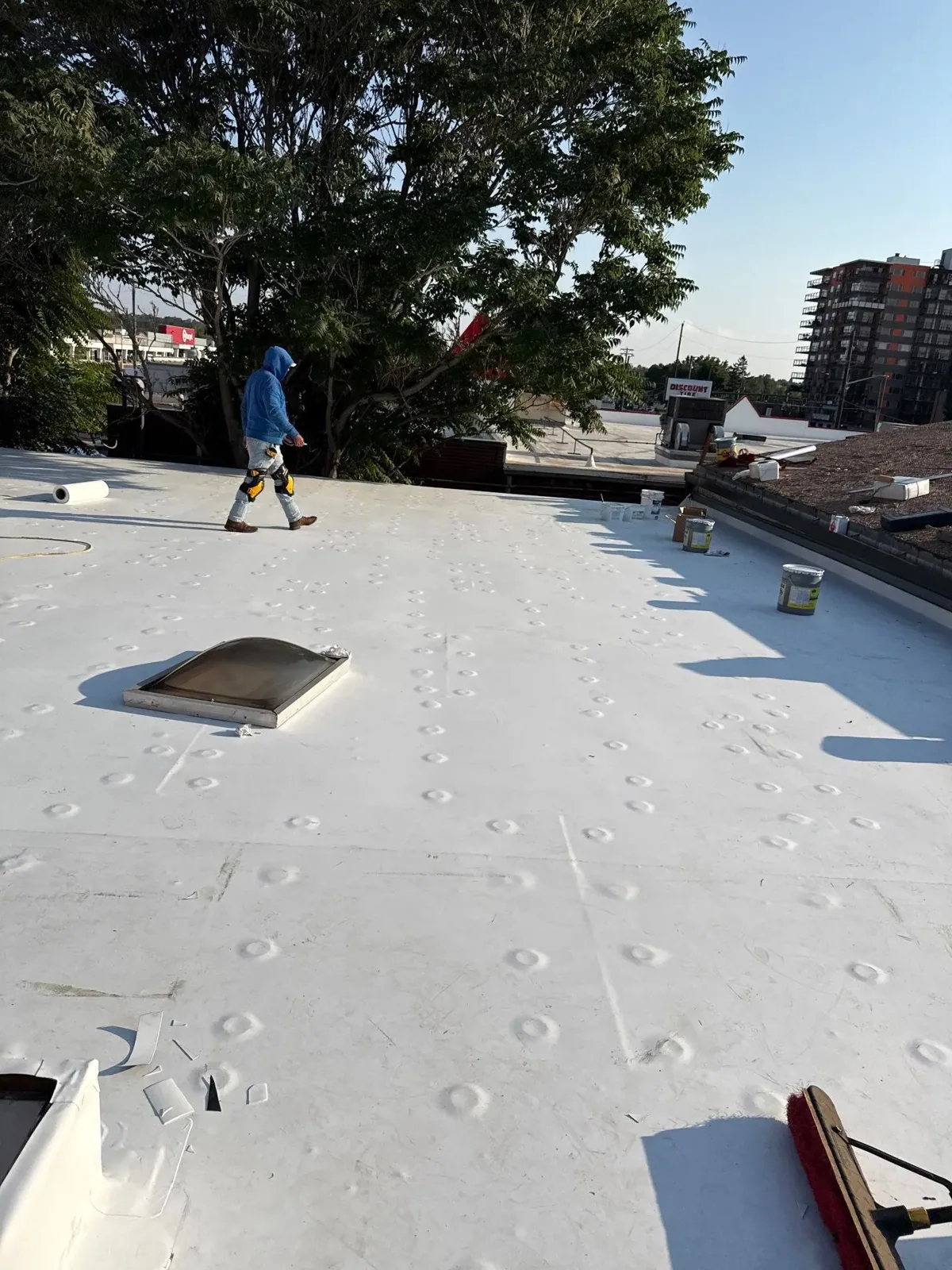
The curb height and its supporting face affect the available roof detail. Added insulation can reduce exposed flashing height around an existing skylight. We examine the finished field elevation before rebuilding the transition. Sound backing must support the selected attachment and termination. The membrane should lie naturally around changes in direction. Flashing reconstruction may therefore include more than replacing exposed roofing. We connect the repaired field to a suitable curb and upper closure.
A pipe boot with an oversized opening can bunch beneath its clamp. We select a compatible flashing suited to the penetration dimensions. The base connection and upper seal need attention separately. Movement and pipe temperature can affect the required detail. A flashing made for one service may not suit another. We examine the pipe arrangement before choosing the roofing treatment. The resulting connection should fit without folds that compromise its closure.
Closely grouped pipes can leave too little room for individual boots. We evaluate whether the grouping needs a different supported detail. Cables pulled through an improvised opening can create a recurring weak point. The responsible equipment trade may need to revise that arrangement. Equipment support work can provide a more workable opening for complex services. We identify the trade boundary before sealing the roof. A repair should leave the penetrations accessible for necessary maintenance.
A rigid pipe and a flexible roof sheet can move differently during service. Their connection must suit the selected assembly and expected movement. Pulling membrane tight against a penetration may load the finished bond. We fit material without relying on tension to hold its shape. Compatible accessories and fastening give the detail its intended support. At curbs, the field-to-vertical transition needs particular care. The physical fit should remain stable through ordinary temperature changes.
Oklahoma summers are generally hot, and winter cold outbreaks also occur. Those regional conditions make thermal movement a useful inspection consideration. We inspect the resulting joint condition rather than presume damage. Split sealant may indicate movement or unsuitable preparation below the exposed surface. Another thick application may not address that underlying condition. We examine the material interfaces and rebuild where necessary. The repair method should accommodate the working connection rather than attempt to immobilize it.
A new flashing sheet must attach correctly to the existing roof membrane. We identify the covering before selecting repair material and preparation. PVC flashing must follow the selected system manufacturer's current instructions for compatible components and joining. Other systems use different approved attachment methods. Old repair compounds can interfere with those methods. We examine and treat residue before attempting the new connection. The repair perimeter needs serviceable roofing beyond the failed material.
Liquid-applied treatments can suit some complex details when the selected system permits. They require suitable preparation, reinforcement and application conditions. They are not a universal substitute for missing support or damaged equipment. We define the surface and geometry before choosing that option. Moisture below a failed detail may also require removal of affected layers. Replacement insulation should support the repaired membrane at the proper elevation. Compatibility applies to the whole detail, including the construction beneath it.
A flashing repair around an operating intake needs coordinated equipment protection. Preparation debris and application materials can affect nearby air handling. We discuss isolation or protection with the responsible mechanical staff. Rooftop service access should remain usable after the rebuilt flashing is installed. Medical office roofing can require particular care around occupied treatment rooms. We plan the opening and closure with the facility director. The construction method needs a workable relationship to the activity below.
For commercial buildings in The Village, the same coordination applies at offices and educational uses. Each repair location needs its own access and interior protection assessment. Skylight work also requires recognition of the opening and fall hazards. We use appropriate controls rather than treating the unit as a walking surface. Weather must allow the detail to be opened and securely completed. If removal exposes deteriorated support, the director receives the changed construction requirement. The work should stop at a protected boundary if completion is delayed.
A finished return needs inspection at its base, corners and upper termination. We check attachment using the method appropriate to the membrane. Clamps, bars and metal closures need their intended fit and support. The field connection should be continuous where the assembly requires it. We remove debris from the work area and nearby drains. Photographs locate the rebuilt penetration and show the completed connection. The director can then identify the treated detail during future equipment work.
Regular detail maintenance should check for new movement or disturbance around penetrations. Equipment changes can alter a previously sound arrangement. New wires or replaced units need suitable roof closure rather than improvised seal. Interior leakage after repair warrants renewed examination of the water path. A frame defect or another entry may require a different response. We keep those possibilities connected to physical findings. The repaired flashing earns its purpose through correct fit, compatible material and secure termination.
Arrange a close look at the skylight curb, pipe boot or equipment opening. We will identify the support, fit and compatible closure needed at that detail.
The entry point needs examination before selecting the work. Damaged glazing or frame seals can leak independently of the roof connection. We inspect accessible interfaces and identify where another specialty trade is needed. The roofing scope addresses the curb and membrane conditions actually found.
The opening needs an approved detail suited to the actual grouping. Crowded pipes may require a supported curb or another designed arrangement. A loose enclosure cannot provide a reliable fit at each service. We examine spacing, movement and access before selecting the construction.
Tension, movement or unsuitable attachment may have stressed that transition. We examine the membrane fit and supporting construction. Material compatibility and service conditions also need attention. The repair must address the cause found at the connection rather than simply cover the split with another exposed compound.
Mechanical connections and structural support can be affected by the change. The responsible trades may need disconnects, lifting and reconnection. We identify the finished roofing elevation and required flashing clearance. The curb work and equipment operation should be scheduled together so the roof closes around a usable assembly.