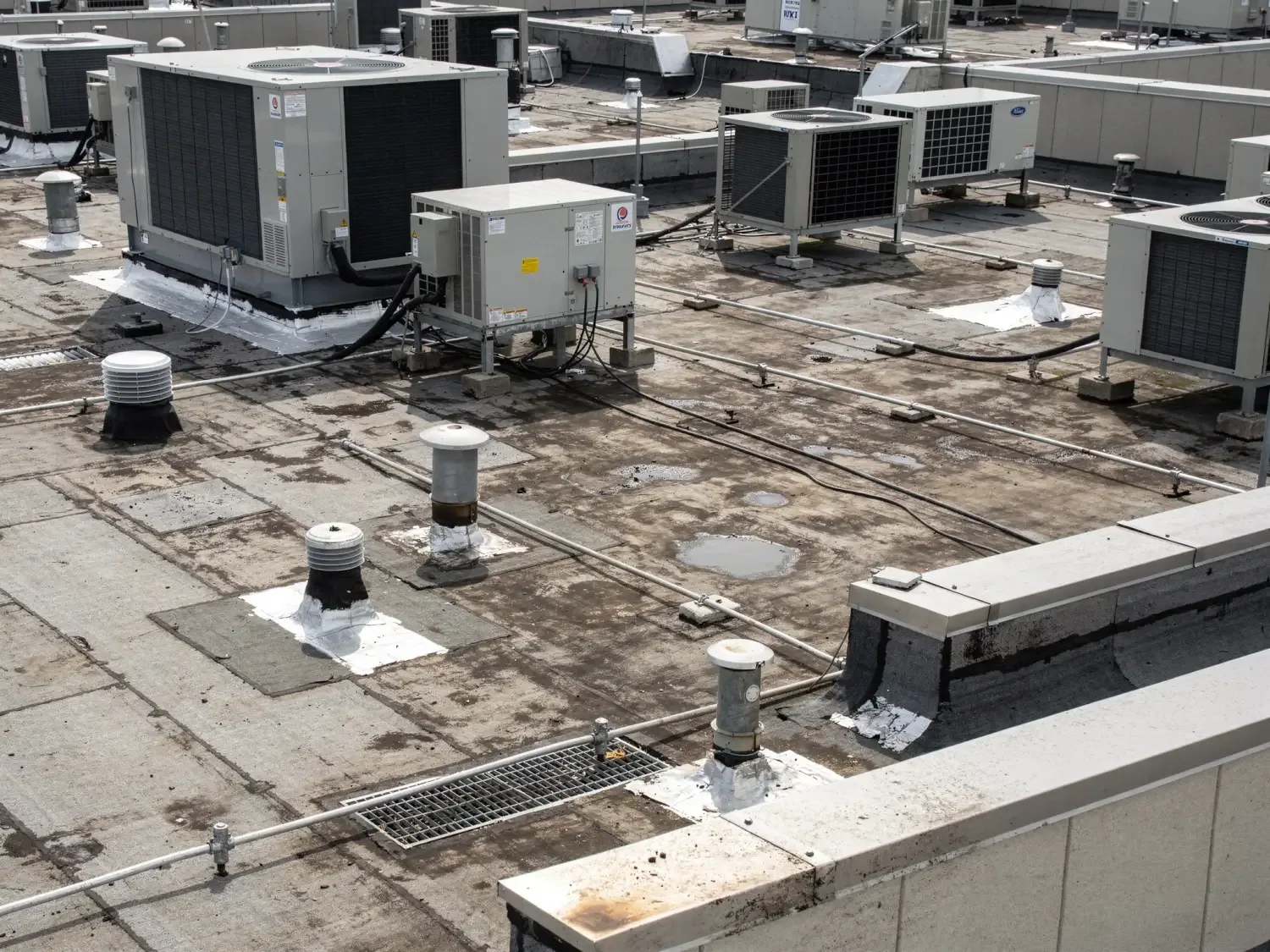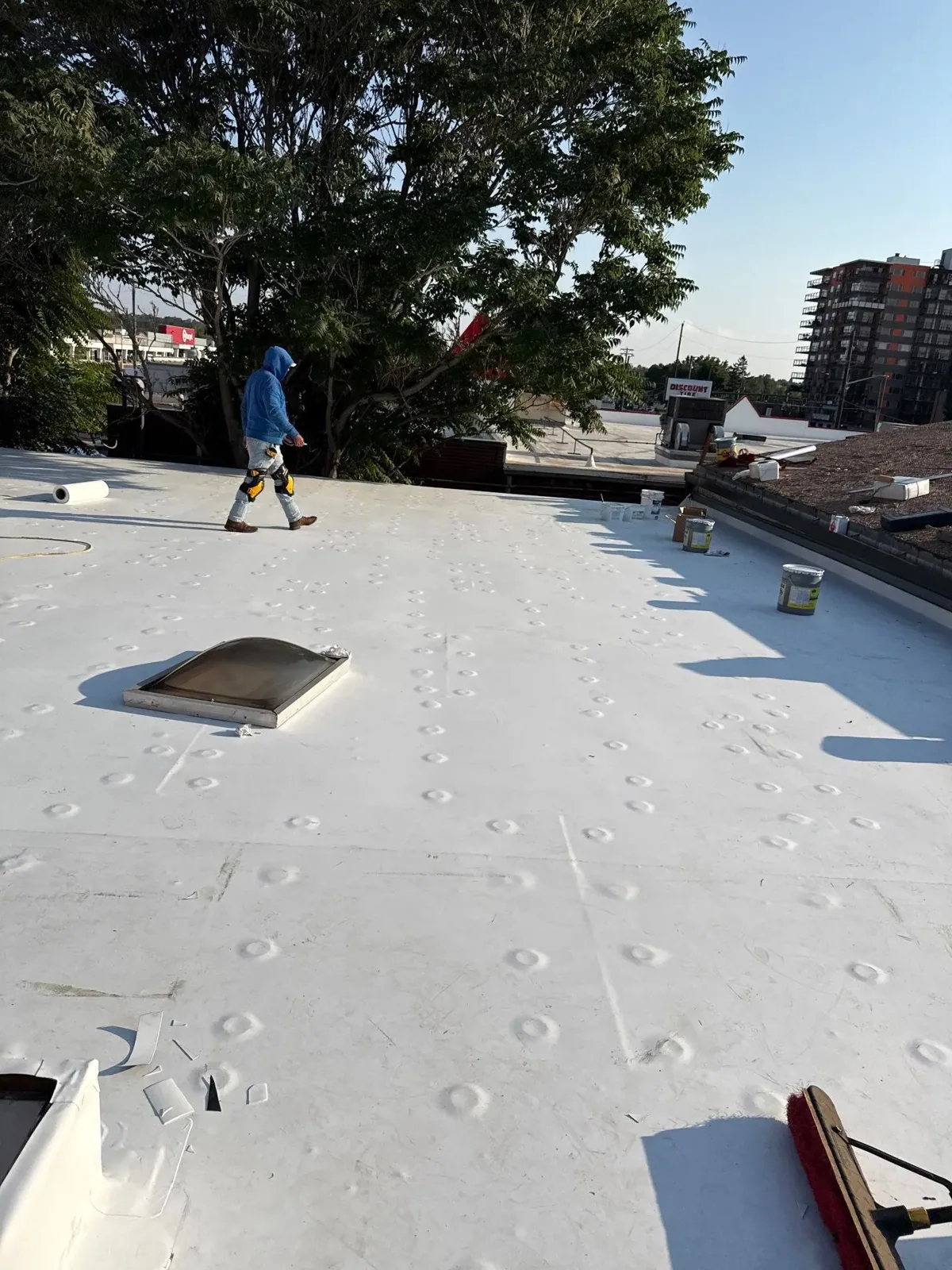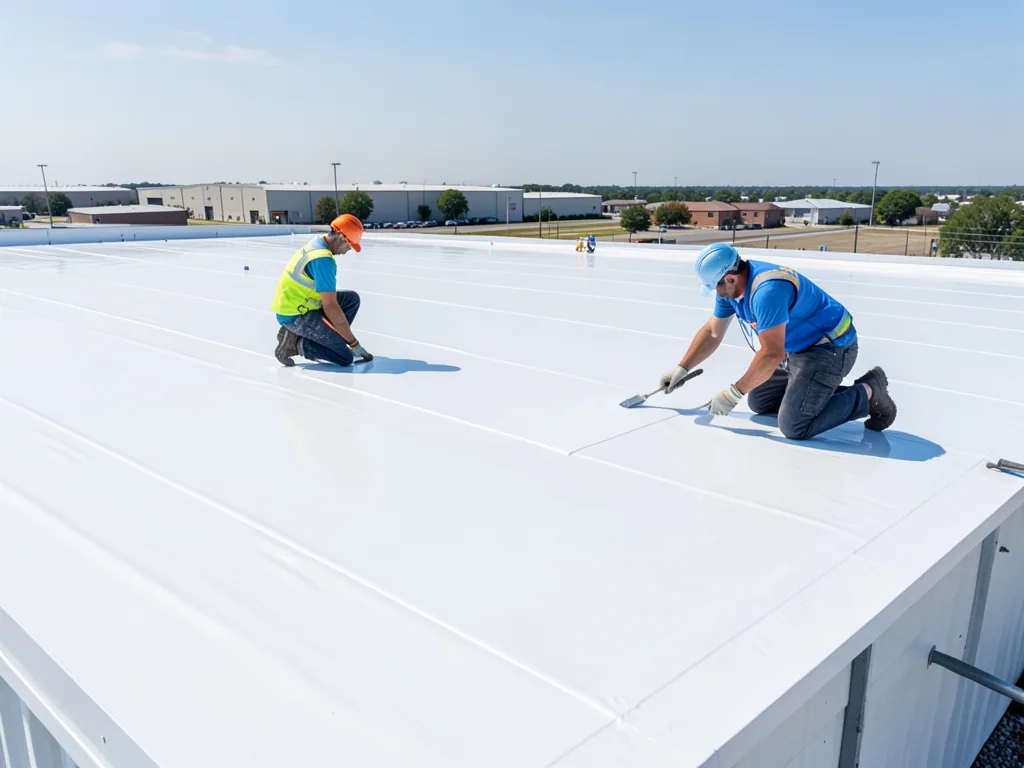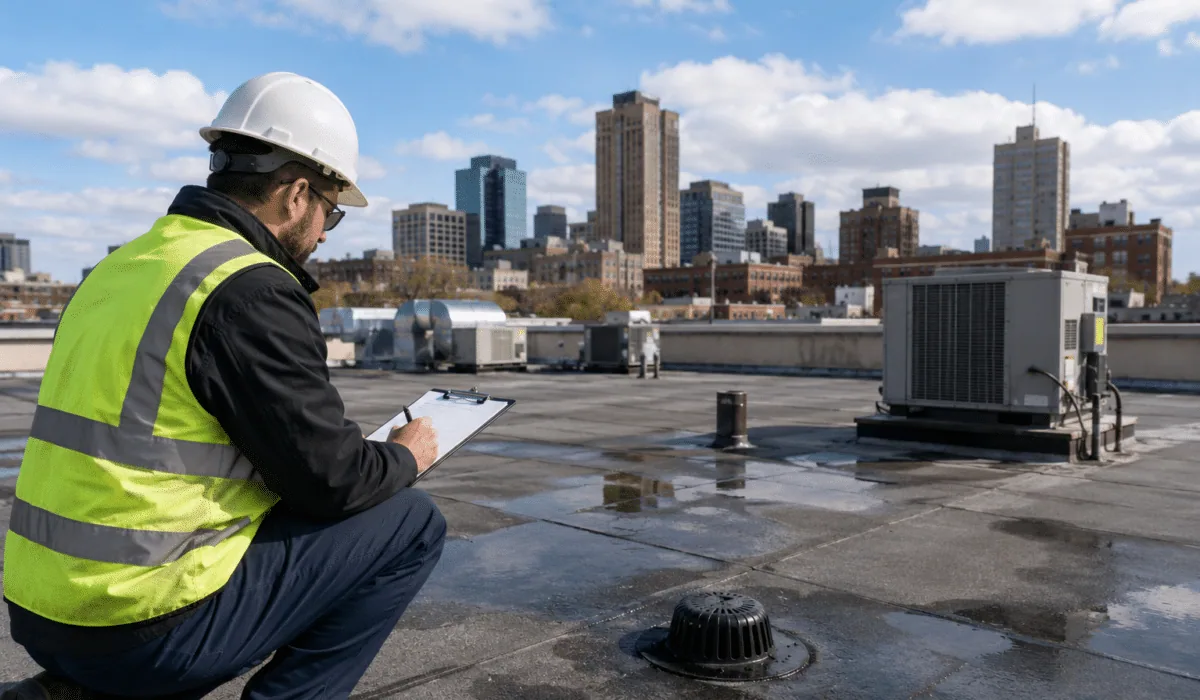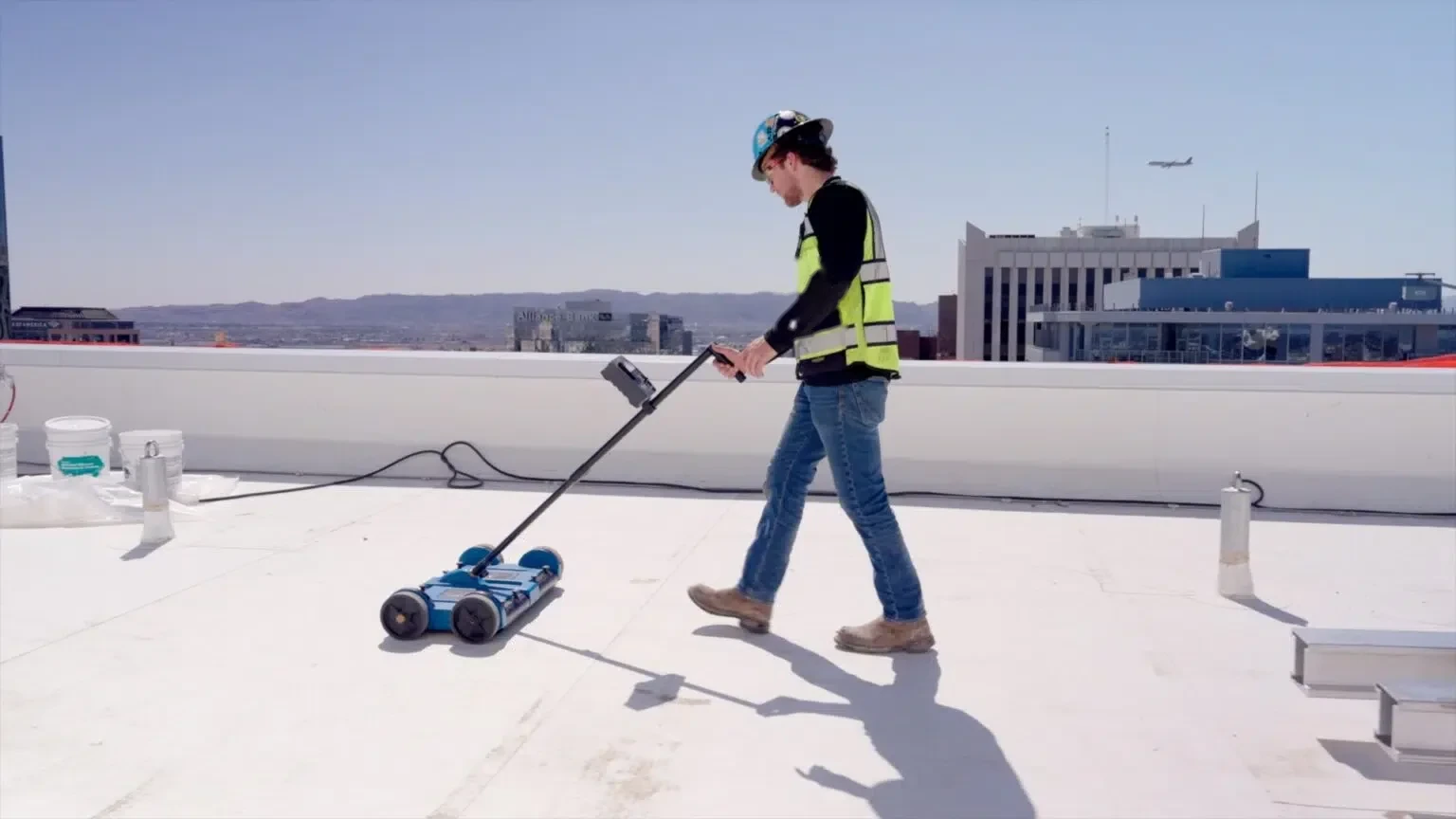

A fitness building needs coating bonded firmly beside its rooftop exhaust equipment. Loose residue or a damp substrate can interrupt that bond. Restoration begins by examining the surface that must accept the material. We restore suitable commercial roofs with coating systems in Edmond, OK. Commercial Roofing Edmond prepares the roof and treats necessary details before application. The existing assembly must remain capable of supporting the restoration. A coating is a construction option for a qualifying roof. It does not turn deteriorated layers into useful insulation or sound decking.
Edmond includes university facilities and technology-center business-incubator buildings. Those uses may need roofing work coordinated with equipment and occupancy. Broadway Corridor also contains office and commercial properties. A restoration plan should identify its effect on their ventilation and access. We evaluate the assembly, moisture condition and surface preparation requirements together. The facility director receives a scope tied to those findings. Coating selection then follows the roof's material and service exposure.
A firm-looking sheet can cover damp insulation beneath a leak area. We investigate suspect conditions before accepting the roof for restoration. Selected openings show whether affected layers require removal and replacement. The extent of deterioration can change the available construction options. A moisture survey may help target those checks on a suitable assembly. Direct findings establish the condition at the examined locations. The restoration scope must account for what cannot remain in service.
Attachment and dimensional stability also need attention before coating. A poorly secured covering may move beneath the new application. Repeated splitting can indicate a connection that needs reconstruction first. We inspect the supporting detail rather than simply increasing coating thickness there. Broad instability may favor replacement construction instead of restoration. We explain that recommendation through the discovered condition. Keeping a usable roof and burying a failing assembly are different decisions.
A chalked metal surface needs preparation before a coating can adhere. Existing membranes have their own cleaning and compatibility requirements. We identify the surface and prior treatments before selecting the method. Old repair compounds can create localized areas with different bonding behavior. Loose coating, grease and debris must be addressed appropriately. The preparation should leave the substrate suited to the selected system. Cleaning is construction work here, not an incidental rinse.
Adhesion tests can help evaluate the proposed treatment on the actual roof. Where required, the primer must match the surface and coating system. Rust treatment needs consideration on metal assemblies before application. Residual contamination may require further preparation or a changed boundary. We check drainage and protect areas below runoff during cleaning. Nearby equipment and intakes may need coordinated protection. The application should begin only after the prepared surface meets the system requirements.
A moving panel lap can split a coating placed across it without reinforcement. We examine the joint and its attachment before detail treatment. Loose fasteners and deteriorated closures need repair where they affect performance. The selected system may require reinforcement at particular joints and transitions. We apply that treatment with attention to the full connection. An isolated bead over a working opening may leave the problem active. The detail must suit the movement expected at that location.
Equipment curbs and penetrations also need suitable preparation and treatment. A poorly fitted flashing should not disappear beneath a decorative surface. We reconstruct failing connections before placing the restoration layer. Flashing repairs may involve backing and attachment as well as sealing. The coating then meets a detail capable of supporting its intended application. We inspect the transition from the roof field into the reinforced area. That connection deserves attention before broad surface work proceeds.
A roof with persistent standing water needs drainage examination before coating selection. Product suitability does not remove the need for a functioning outlet. Silicone coating systems have particular application and surface requirements. Other systems may have different moisture exposure limitations and preparation needs. We compare the proposed material with the roof's actual conditions. A coating should meet the service exposure rather than be selected by appearance. The complete application includes preparation, detail work and the field treatment.
Service traffic also changes how the finished roof needs protection. Equipment technicians may cross the same area repeatedly. Walkway treatment must be compatible and should not obstruct runoff. Certain chemicals or discharge conditions may require additional review. We examine the equipment area rather than assume uniform exposure across the roof. The proposed work should identify any excluded or specially treated portions. That makes the restoration boundary clear to the facility director.
A thin application can leave a surface below the specified system requirements. We control material placement according to the selected restoration assembly. Texture and substrate profile affect how coating covers the roof. Detail areas may require a different treatment than the open field. Application checks need to address the actual installed film. We follow the product procedure for measuring coverage and thickness. The result should be a continuous treatment with properly completed transitions.
Oklahoma summer heat can affect application temperatures and curing conditions. Summer thunderstorms may also bring rain before a surface is ready. We select a workable window for the material's application requirements. Dew and humidity can matter even without a daytime shower. Broadway Corridor businesses need ventilation coordination where the chosen products require it. Restoration work along Broadway Corridor also needs an agreed material-handling route. Weather and occupancy both belong in the application sequence.
A completed coating needs examination for missed areas and unfinished detail transitions. Drains should remain open after equipment and protective material are removed. We address application defects before releasing the treated area. The director receives the relevant product and care requirements. Future equipment work should use compatible repair material where necessary. An unapproved compound can create a problem on the restored surface. We identify how rooftop service will reach the equipment without unnecessary damage.
Downtown Edmond's businesses and outdoor gathering areas continue operating beneath roofs needing care. A restored surface still needs cleaning and examination of its working details. Preventive roof maintenance can keep drains and service paths under attention. Changes in the coating, joints or equipment connections need evaluation. Restoration does not remove the need to examine new leaks. The facility director can use those observations to guide subsequent repairs. The useful outcome is a maintained roof treatment on a suitable underlying assembly.
Arrange an examination of the roof layers, coating substrate and working joints. We will establish the preparation and details a restoration needs.
The underlying condition needs investigation first. Softness may indicate wet or deteriorated layers that cannot serve as a reliable substrate. We open appropriate locations and define the affected area. Necessary removal and replacement precede restoration. Extensive damage may change the proposal to another roofing option.
The actual surface may contain weathering or previous compounds that affect bonding. Testing the proposed treatment helps assess that condition. We use the applicable system procedure and examine the result. Additional cleaning or primer may be needed. A roof-wide application should not rely solely on how clean the surface appears.
Loose attachment requires its own correction. A coating cannot supply the missing mechanical restraint. We examine the joint, fasteners and required movement provisions. The detail treatment follows that repair and the selected system requirements. Reinforcement belongs on a workable connection rather than across an unresolved failure.
The treated surface needs compatible protection and repair methods. Equipment staff should keep sharp tools and unprotected service materials off the coating. Repeated routes may need suitable walkway treatment. New penetrations require a proper flashing connection. We explain those requirements alongside the finished roof work.