
Above a public service counter, a roof opening can affect the occupied waiting area. Removal should follow a defined protective boundary beneath that work. Commercial Roofing Edmond handles public agency roofing in Edmond, OK. We examine the assembly before setting its treatment and opening size. The agency contact identifies essential services and circulation that must remain available. Roofing products, preparation and weather closure influence the workable interval. The proposal connects those conditions to physical reconstruction. A director can then arrange the building operation against a roof scope that includes its unfinished interfaces.
Guthrie serves as the Logan County seat. El Reno is the Canadian County seat and contains historic downtown structures. Those municipal settings include buildings serving public operations. An agency roof decision should address the actual occupied use and assembly. A service counter, storage room and mechanical area present different protection tasks. We locate them against the intended construction boundary. Building support and existing roof details govern the removal method. Service availability influences how that work is divided and protected, without changing the installation requirements above it.
An entry canopy can connect to a wall with deteriorated upper flashing. We examine the accessible closure and its support before rebuilding it. Public entry flashing repairs need sufficient return height and compatible contact surfaces. The wall may require another trade where its condition contributes to entry. Temporary roof containment should fit the material and current safe access. The public approach also needs appropriate ground control beneath removal. We identify the overhead zone and disposal route with the agency contact. The completed connection should include the supporting work needed to finish its upper boundary.
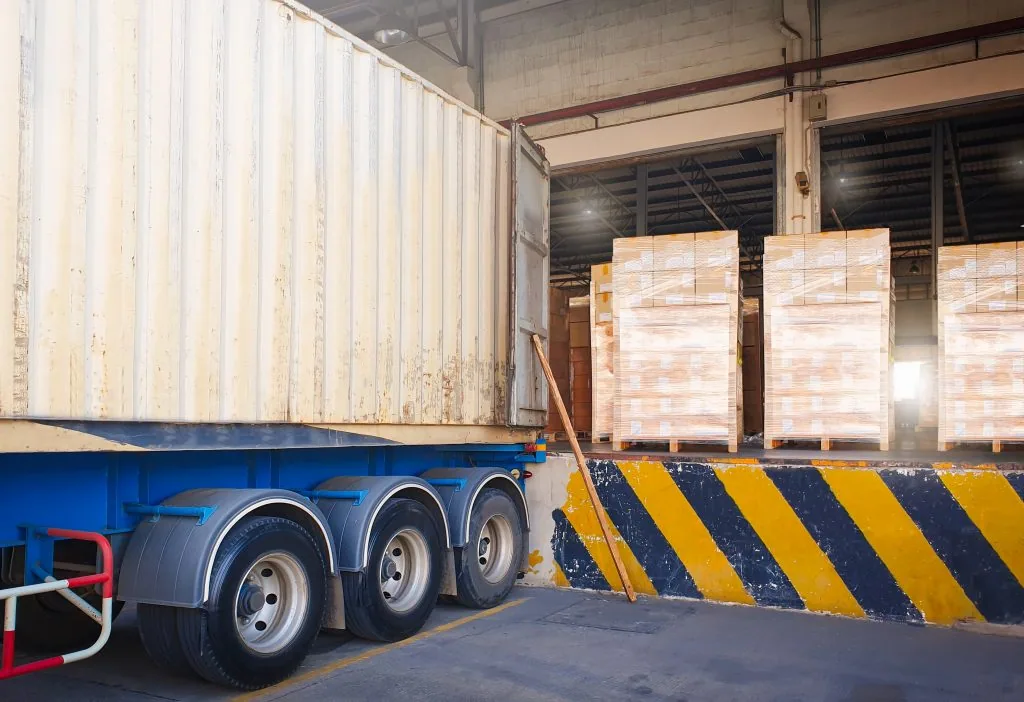
A service entrance can share space with waste handling or deliveries. Loading-area roof repairs coordinate overhead work with vehicle movements through that shared approach. The agency identifies its actual receiving intervals. We establish lifting and disposal protection before roofing materials move. Required emergency routes need suitable arrangements throughout the active stage. Rooftop storage must suit structural requirements and product protection. Accessible collection points should remain usable. A changed roof opening can change the ground exposure, so the handling boundary receives review before further work proceeds.
A broad replacement allowance can omit damaged curb backing or concealed wet insulation. We examine those interfaces before presenting the roof option. Located agency roof findings connect observed condition to the proposed treatment. Where useful, selected concealed examinations establish more of the retained-layer condition. Access restrictions may leave additional examinations necessary before final construction. We identify that task and its location. The director receives roof removal, supporting work and new assembly requirements separately. Those physical boundaries help the agency compare the construction included in each proposed stage.
Specifications may call for attachment, insulation and accessory performance together. A replacement covering should not obscure unresolved support or drainage needs. We review field height against retained returns and drain components. Equipment modifications may require responsible specialists before roofing closes. Project design, permitting and inspection responsibilities should be established for the intended scope. The agency follows its applicable purchasing and authorization requirements. We provide the roof findings and construction information needed for that process. We complete the specified physical connections before the occupied area returns beneath that stage.
A failed local seam may permit reconstruction within otherwise serviceable roofing. Widespread loose attachment can require a larger treatment boundary. Defined public building roof repairs connect replacement material to suitable retained construction. Moisture beneath the visible opening can extend removal further. We inspect that condition before closing it beneath new layers. Deck deterioration may need professional review and another trade's work. The selected repair should include its required backing and termination. A small visible defect does not establish the full concealed boundary or the correct supporting treatment.
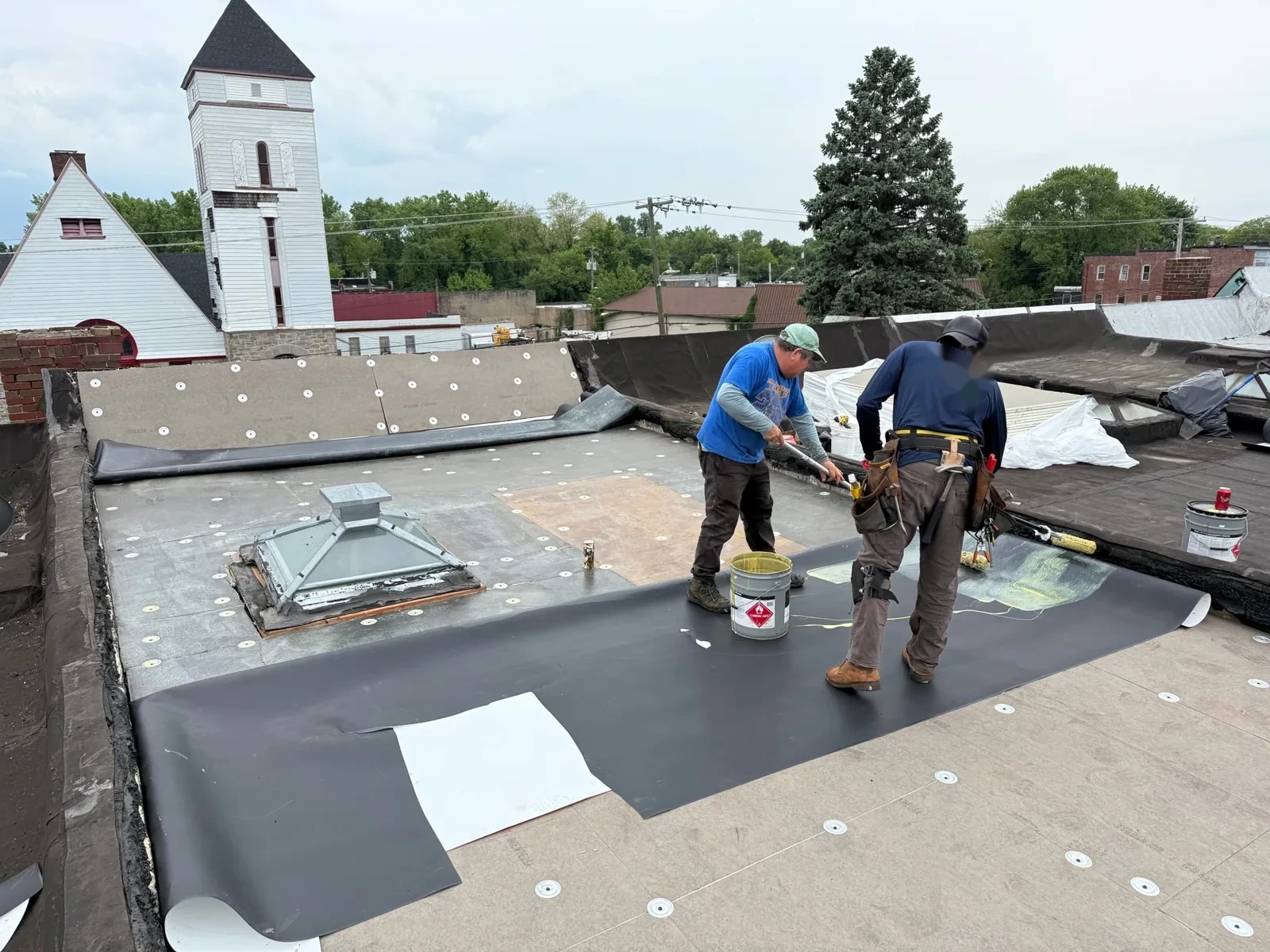
Public facility roof recovery depends on suitable retained layers and applicable project requirements. It requires more than adding a new surface over unresolved defects. We assess moisture, attachment, field elevations and interface dimensions. New insulation can change the usable height at equipment curbs. The drain connection must suit the finished surface relationship. Existing layers and added assembly loads need appropriate design consideration. Where those conditions do not support recovery, removal may be the useful option. The agency receives the connected construction implications rather than a covering choice alone.
A short public-service interruption may not suit every roofing method. Preparation, bonding and curing take the time required by the selected material. We compare that requirement with the actual protected opening available. District roof staging similarly fits removal to protected classrooms and usable return-to-service intervals. At the agency building, we examine the occupied room and roof connection together. The chosen stopping detail should resist weather at that stage. A revised construction boundary can require changed interior precautions. The agency contact receives that decision before removal reaches additional occupied space.
Oklahoma winters can bring cold outbreaks affecting installation limits. Spring storms can interrupt exposed roof work with hail and damaging winds. We assess safe access and acceptable material conditions at the project. A roofing interval should allow secure closure before the exposed stage ends. Temporary protection depends on suitable access and safe conditions at the building. Temporary containment is identified separately from final reconstruction. The director receives the remaining physical work and current protective boundary before normal service expands beneath it.
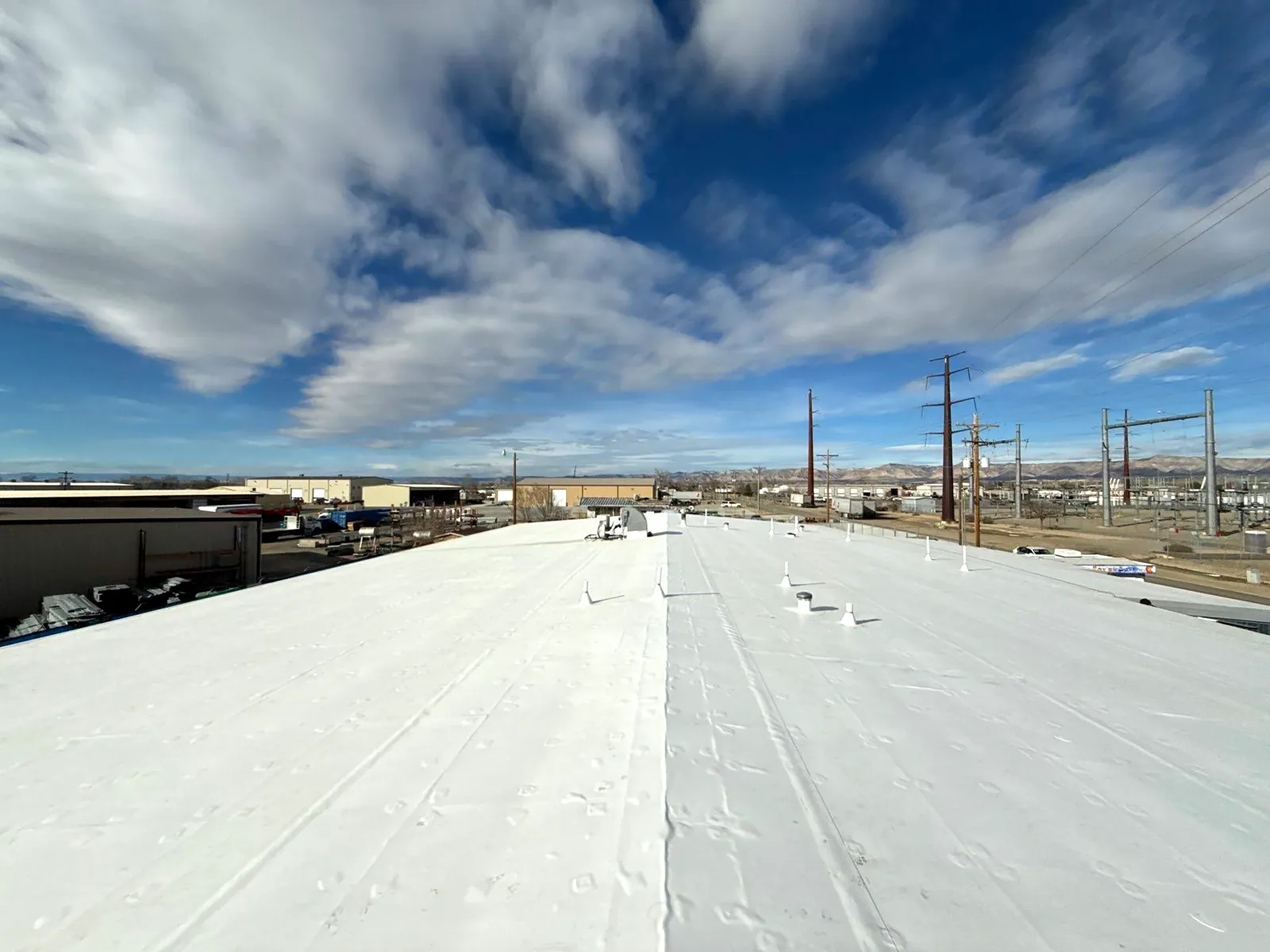
El Reno public facility roofing starts with the building's actual roof and occupied service requirements. Guthrie agency projects also require their own property-level examination. We check completed seams, returns and accessory joints through appropriate assembly methods. Roofing scraps should leave accessible drains and service paths. Other trades finish their respective support or equipment tasks. The agency receives the treated locations and unfinished interfaces. Later maintenance should reach the components without dismantling an unnecessary obstruction. A roof handover is useful when the physical condition and remaining work are clear to the operating contact.
Recurring entry should identify the affected room and relevant weather timing. Recent equipment or wall work can help direct examination at the connection. We inspect that relationship rather than repeat a prior surface repair automatically. Public roof asset care tracks useful observations and service needs at identified components. New equipment installations require compatible roof closure within their construction sequence. Inspection should continue to address outlets and accessible termination condition. Larger investment follows current assembly findings and operating constraints. The agency can retain a practical connection between routine care and the next required roof project.
Identify the affected public service area and proposed work interval. We will examine the assembly and define a complete repair, recovery or removal boundary.
The included construction boundary should be explicit. We identify removal, retained layers, supporting tasks and accessory closure. Design responsibilities and operating protections belong with that physical scope. Concealed uncertainty may require additional examination. A surface area alone leaves important treatment differences unresolved.
Suitable protection must be available for the actual occupied room. The agency establishes service restrictions with the construction contact. We explain debris, product and water exposure from the selected method. The stage needs a secure weather stopping condition. Changed removal can require another room boundary before operations continue.
Retained construction and project requirements govern that option. We examine moisture, attachment and connected height conditions. Added layers also require suitable load and assembly review. Drains and returns need complete corresponding details. Where those interfaces cannot be made useful, removal may be the appropriate construction choice.
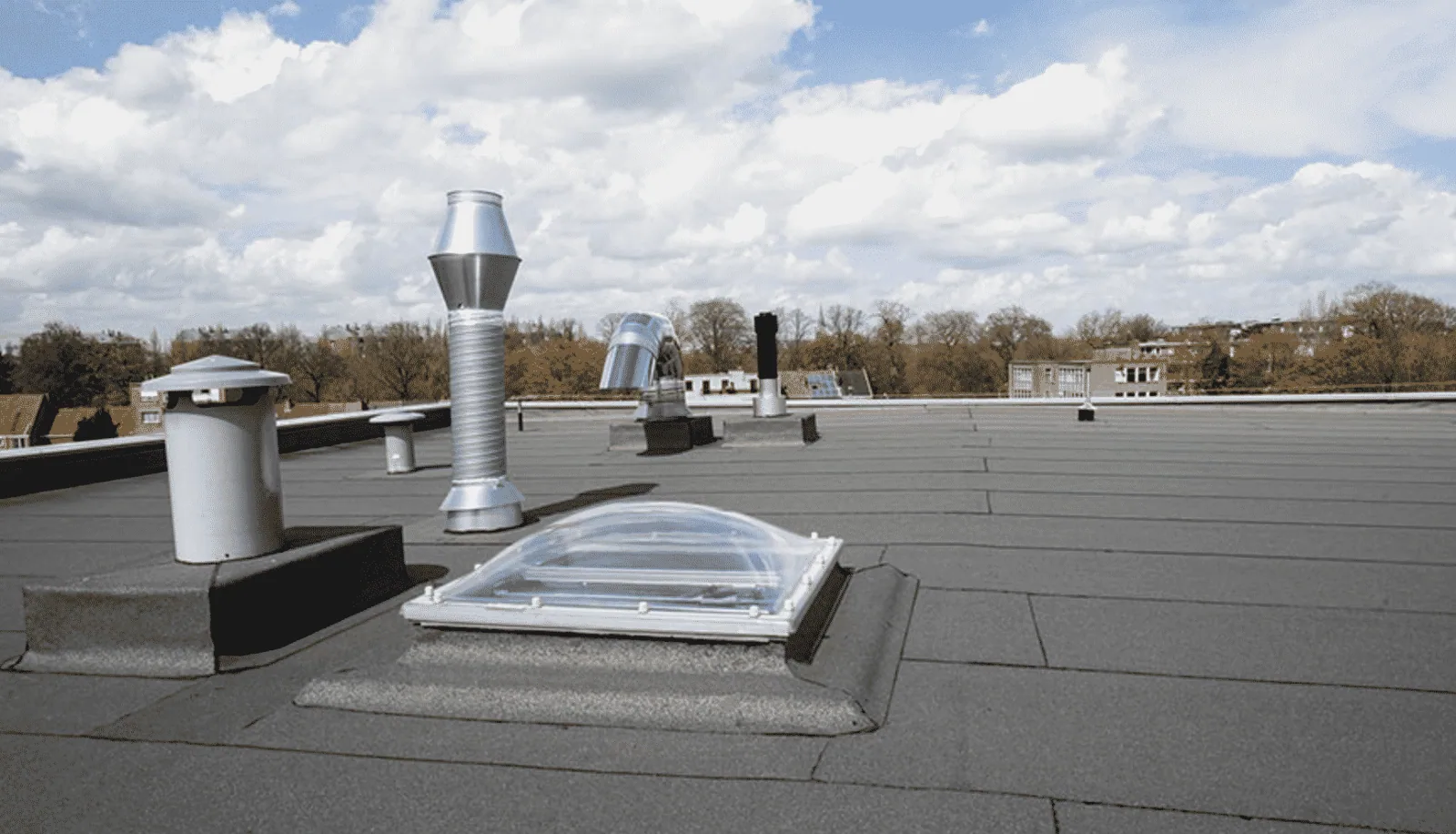
Its supports and openings require compatible closure as part of the work. Equipment staff handle the related equipment requirements. We examine the roof-side joint and the available return dimension. Changed loads or curbs may require design attention. The new field connection should be completed before the area returns to normal use.