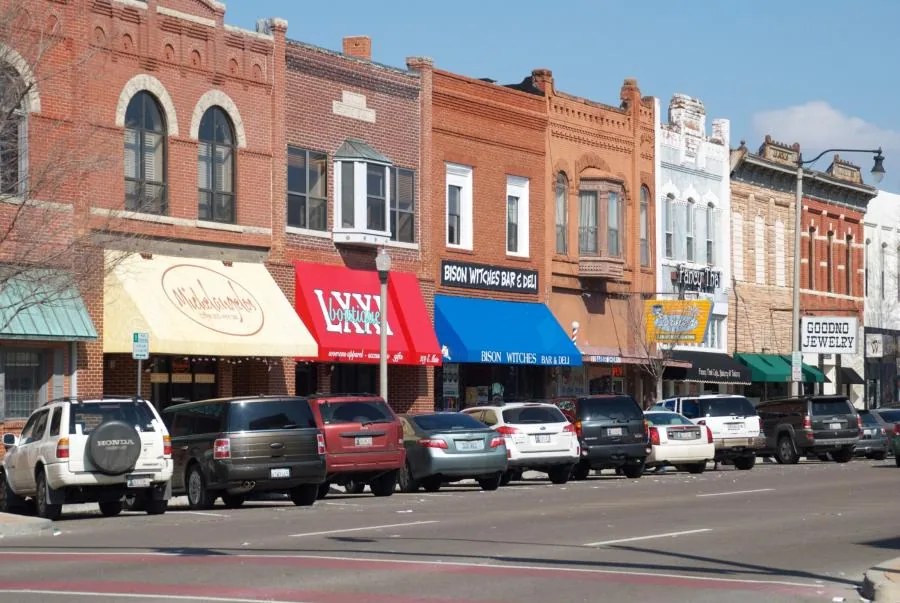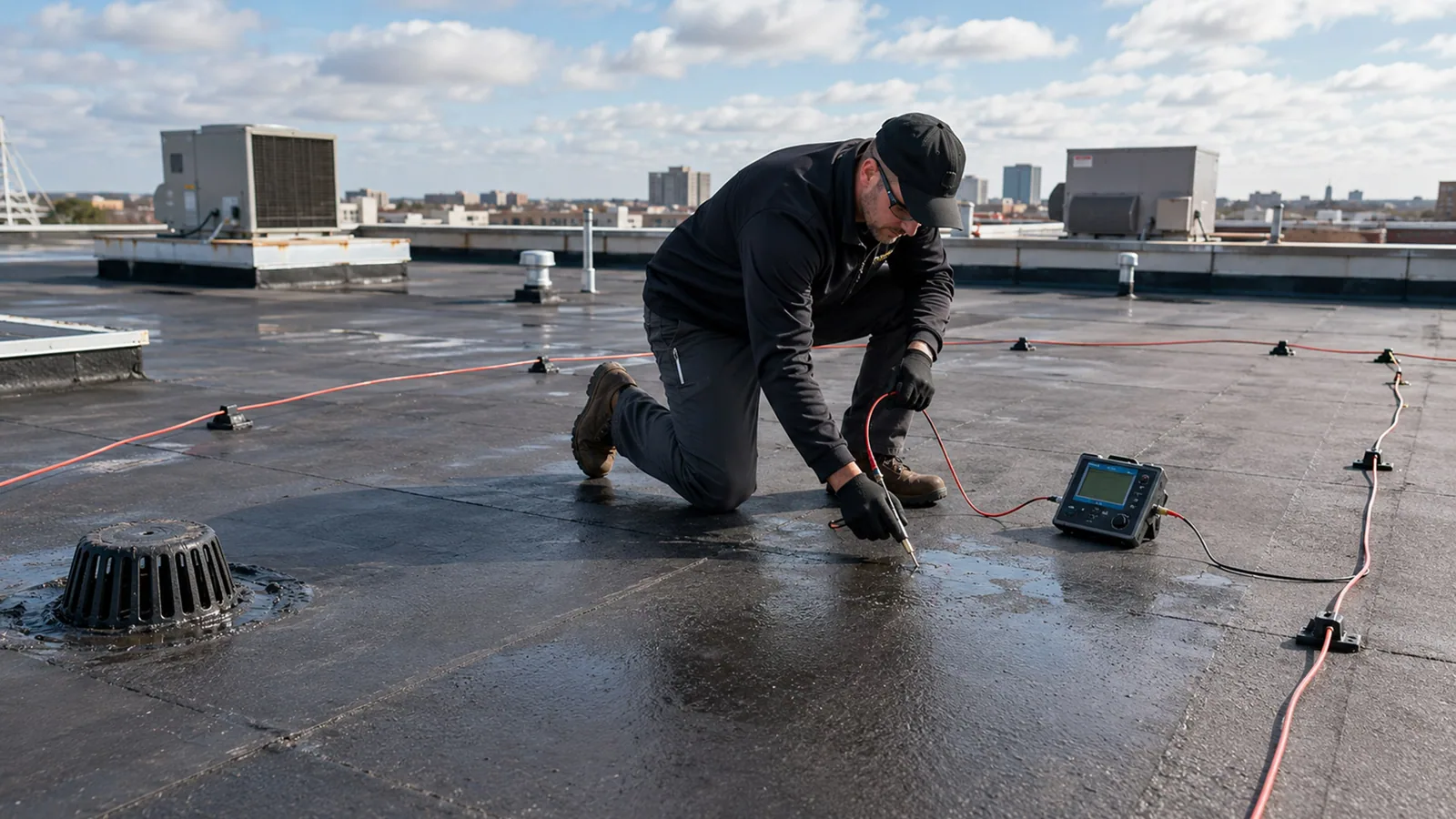

A distribution or service building in Newcastle needs a roof plan tied to its actual loading side. The town sits in McClain County in the South Canadian River valley between Oklahoma City and Norman. Interstates 35 and 44 and the H.E. Bailey Turnpike provide regional access. Newcastle’s commercial development priorities include retail, light manufacturing, distribution and business services. At each address, we confirm the current tenant, roof system and operating route before setting a work plan. A commercial roof inspection records the installed assembly, drainage, access and observed condition before scope or pricing.
Before approving work, a facilities contact can compare the access plan with the dock calendar. We note when a vehicle enters, where a lift may stand and which doors should remain clear. If the crew needs to cross a marked lane, the owner chooses a pause point and confirms who releases traffic. If a building has several roof heights, we note each access point and drainage transition separately.
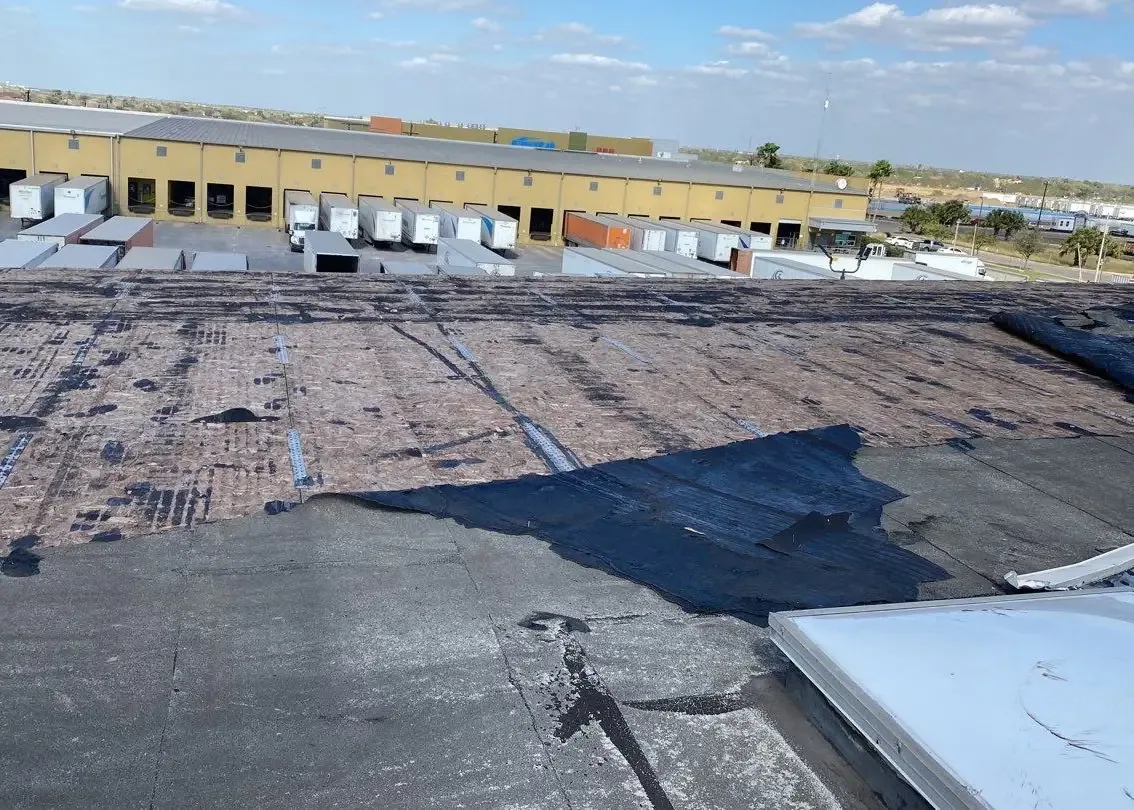
A distribution operation may need a receiving dock clear throughout a shift. We confirm the truck approach, overhead-door use, staging space and debris route before loading material onto the roof. The crew's access should not cross a yard movement without a designated pause point. If one door must remain open, the property contact chooses another route for debris. We photograph the access setup and note who can stop work when a vehicle enters. That brief coordination keeps the crew from guessing about an active lane or relying on a site map that has changed.
Newcastle's position between Oklahoma City and Norman places it along regional travel routes, but road access does not determine the conditions at a specific property. A Norman roof review or an Oklahoma City visit may help coordinate regional dispatch. Each address still needs its own contact, condition photos and authorization. If separate buildings share a parcel, we label them individually. The work plan should name the dock, roof access, protected area and daily stop time. The owner can then keep vehicle paths and roof tasks on one schedule without treating the entire site as a single work zone.
Light manufacturing, retail and distribution can use different roof assemblies. We identify the membrane or panel, visible insulation layers, fastening pattern and edge conditions. A test opening is considered only after the owner approves its location and protection below. The inspection also notes penetrations near production equipment and drainage outlets that could be blocked by construction debris. After the owner approves an opening and the area below is protected, we can inspect the concealed layers. Each observation is tied to a roof section rather than generalized across the parcel.
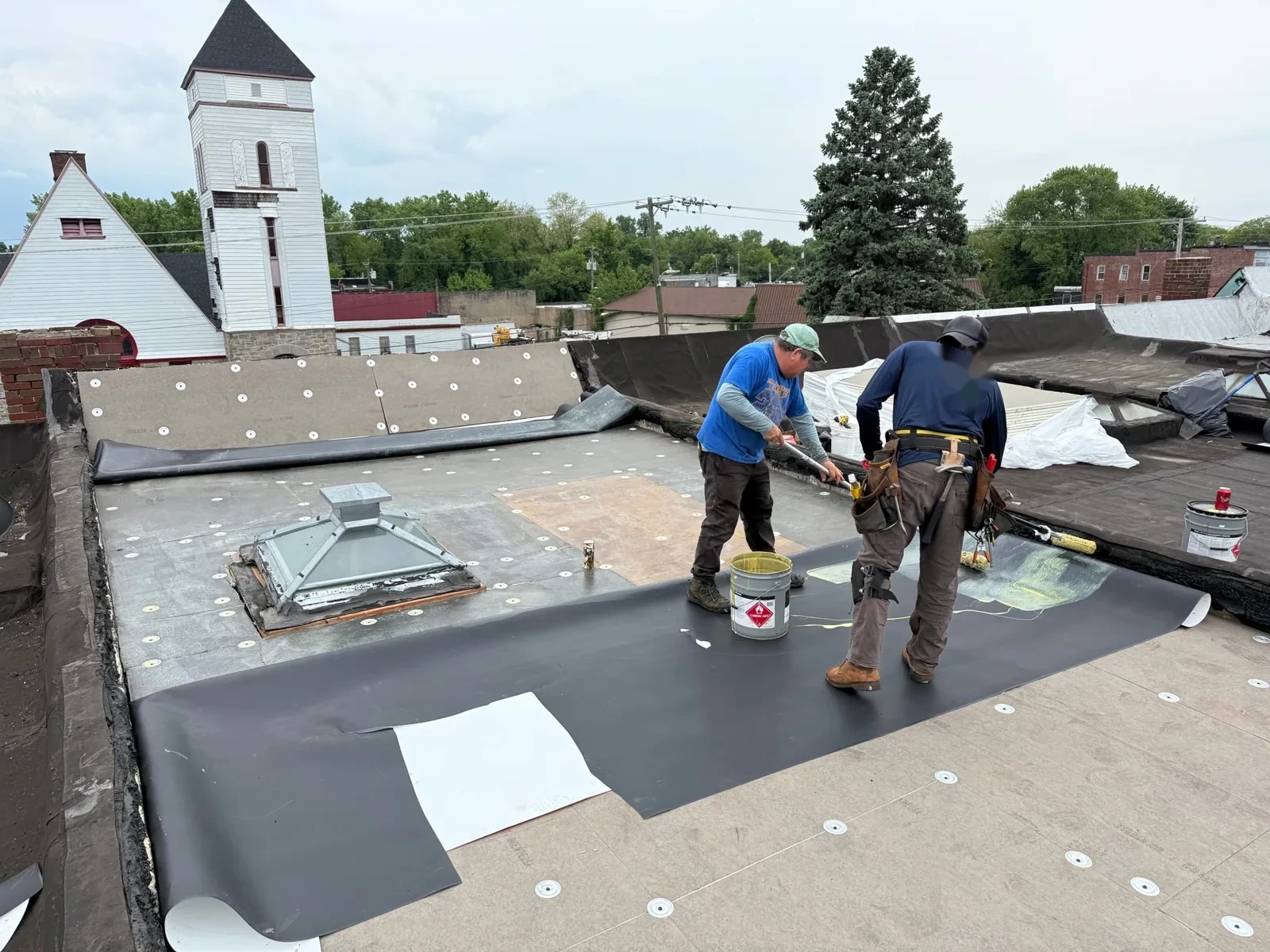
At a metal roof, the panel profile and supporting frame determine which fastener fits. A membrane seam requires clean preparation and a compatible weld or bond. Where two materials meet, the lap and transition detail need inspection before a patch is selected. A commercial roof repair scope names the failing connection, repair extent and finish. A TPO roofing recommendation belongs only where that system is verified. The crew photographs an exposed condition, pauses if the substrate differs from the plan, and asks the owner to approve any expansion before material is removed.
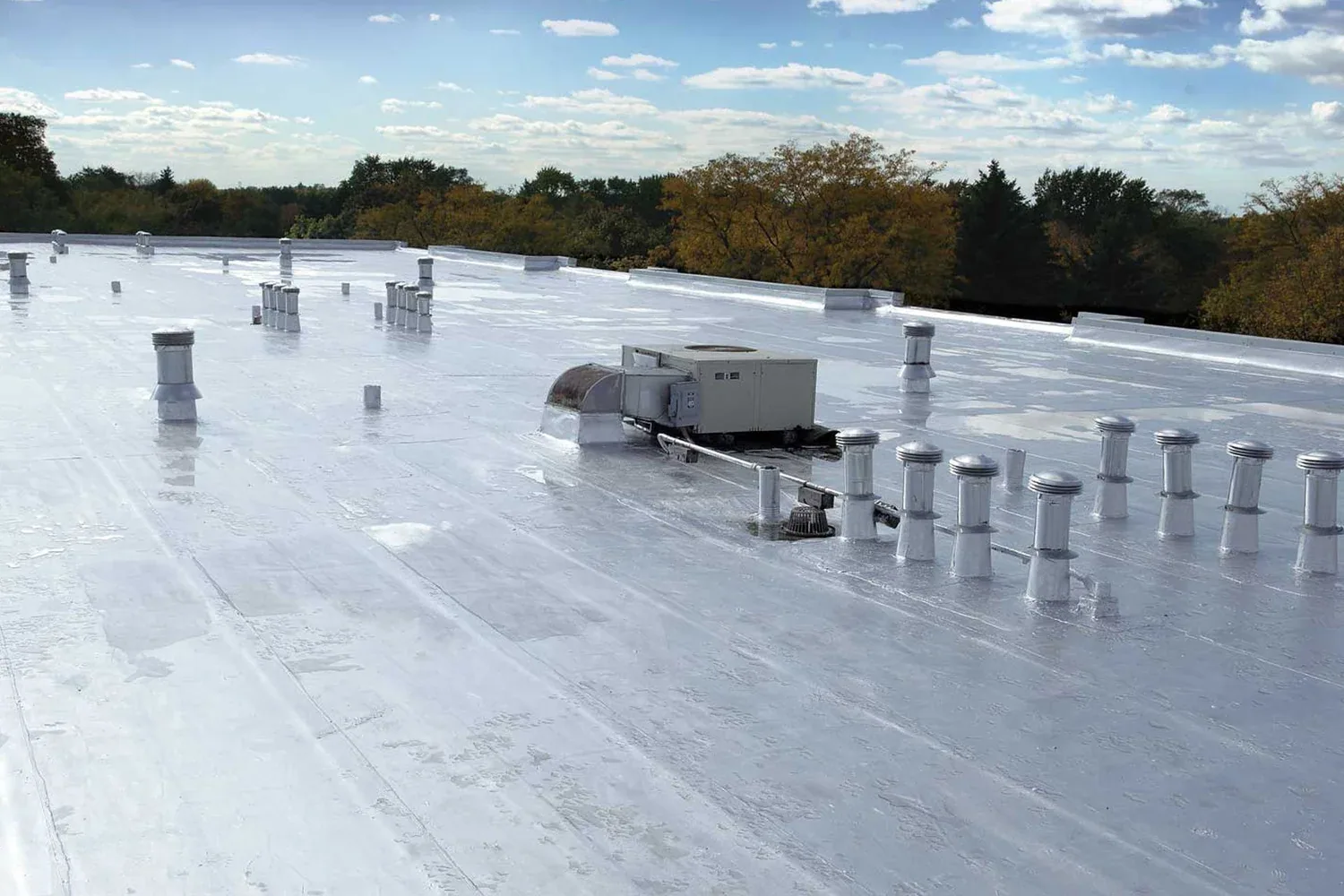
Low points and drains need a visible relationship on the roof plan. We locate the bowl, overflow, scupper and the areas where debris can collect. Before work begins, the crew checks whether a temporary cover is needed and records who will remove it at the end of the shift. Cutting debris and loose fasteners must stay away from the flow path. If water remains after the outlet is cleared, we measure the low area and note its boundary. A surface patch cannot correct a slope condition that has not been measured.
The closeout sketch marks the outlets cleared, the connections repaired and each item left for another visit. A drain and scupper repair may address loose flashing or a separated connection when inspection confirms it. Routine cleaning stays separate from construction. For a distribution roof with several elevations, we map each low point to its drain and label the adjacent dock or roof bay. A manager can then match a later ponding report to the right section without reopening the whole roof. The next service visit follows that map and checks only the connections named in the record.
Oklahoma spring severe thunderstorms can produce hail, damaging wind and tornadoes; autumn is another severe-weather period. We use those statewide patterns for scheduling, not as proof of a roof defect at a Newcastle property. Before opening a section, we agree on a stop time and inspect for observed damage. If rain approaches, the crew secures the exposed area, removes loose materials and records temporary protection. The owner should know which section is sealed for the day and what remains unfinished.
Heat also affects material handling and crew timing during long Oklahoma summers. The schedule can shift work to a suitable window, but the repair method still depends on the assembly. After a reported event, photos should show displaced metal, a puncture, open seam or water entry at the property. A storm-damage assessment separates those observations from regional weather history. It should not assign damage to neighboring properties. The report gives the owner a repair boundary and distinguishes temporary protection from permanent work. Any added area is priced only after the cause and extent have been inspected.
A closeout record should connect the work to a named roof area, not only a street address. We label photos with the dock, curb, drain or panel zone and mark where work stopped. The report lists material, attachment and any remaining observation. A roof condition report can help a facilities contact compare later inspections without implying that inaccessible areas were tested. Where the property has several buildings, the file identifies which one was inspected and which one was not.
Replacement decisions require a broader condition review. We document repairs that remain serviceable, recurring failures and areas needing additional testing. Replacement planning can compare phasing, occupied operations, access and tear-off. If the assembly is dry and attachment remains sound, a roof recover review may be an option after load and compatibility checks. We state the basis and limits of each option so an owner can compare scopes. Arrange a Newcastle inspection focused on dock access, roof-plane transitions and drainage. That visit can settle which repairs belong in the first approval and what evidence is still needed.
Arrange an inspection of the Newcastle property’s roof sections, dock approach and drainage. The visit helps set a safe work sequence and defined repair scope.
The property contact identifies the active approach, delivery windows and ground zone. We build the roof sequence around those limits and record the agreed route.
We verify the tenant, installed assembly and current condition at the property before preparing a scope.
If clearing debris restores flow, the work can be recorded as maintenance. A loose connection, split flashing or continued ponding needs a separate scope.
The owner should review current repairability, moisture, attachment and operating constraints. We document those findings before presenting replacement phases.
We record displacement, punctures, open seams and water entry at the building, then tie each finding to its location.