
A downtown shop needs its coping seated firmly over the wall top. A loose cover can expose both roofing and occupied space below. The cleat and supporting construction need examination before the metal is refitted. Commercial Roofing Edmond repairs edge metal, copings and gutters in Edmond, OK. We connect those components to the roofing and discharge arrangements they serve. Sheet-metal work should preserve movement while keeping the attachment secure. The director receives a defined treatment for the affected edge. A sealed-looking joint still needs a functioning construction underneath.
Downtown Edmond has businesses along walkable streets and designated outdoor dining areas. Overhead metal work there needs careful ground protection. Broadway Corridor contains commercial buildings and offices among its uses. Roof-edge repairs can affect their entries, parking and deliveries. We establish how the damaged component is reached and handled. The roof interface and occupied area below deserve attention together. A useful scope identifies the supporting repair as well as the visible replacement metal.
A coping screw that repeatedly loosens may be fastened into weak material. We examine the attachment line and its supporting construction. Deteriorated blocking cannot provide the intended hold for replacement components. The metal detail may need opening to establish that condition. We identify suitable repair backing before installing a new cleat or cover. Structural concerns require the appropriate review where the support is damaged. Secure metal begins with a fastening connection capable of carrying the assembly.
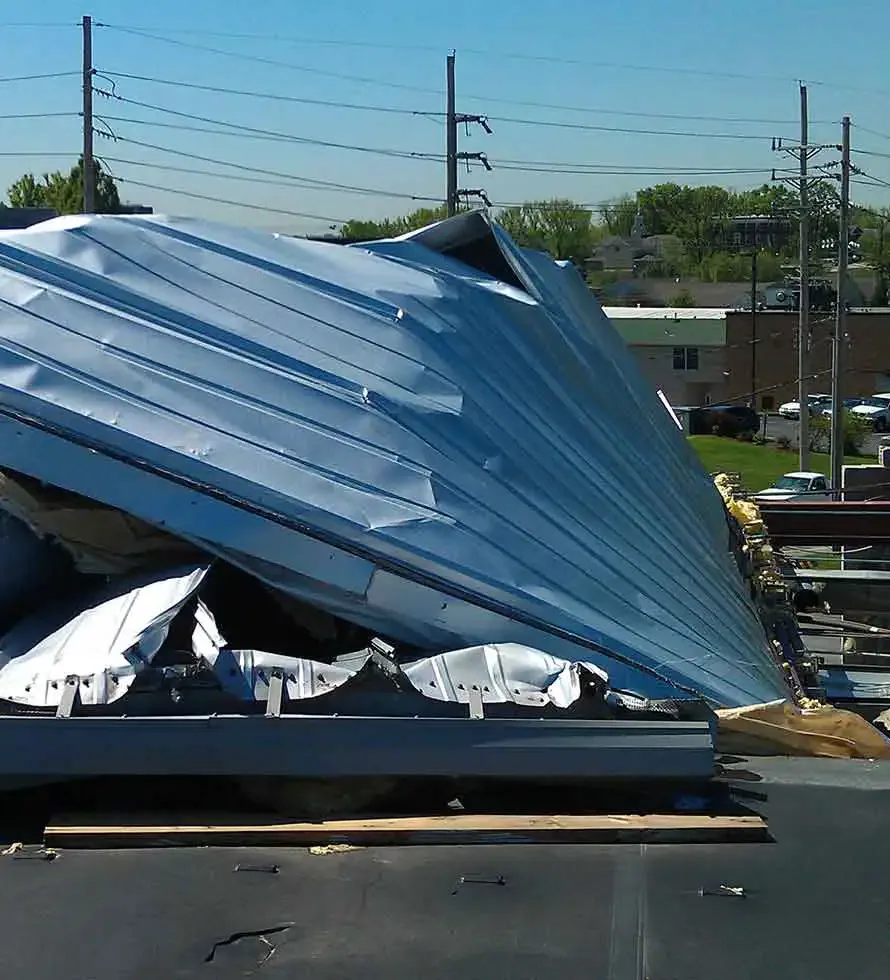
Perimeter details must suit the proposed roofing system and performance requirements. We examine existing cleats, fastener condition and the fit of the sections. A bent edge may no longer engage the retaining component properly. Additional exposed screws are not a universal solution for poor fit. Wind damage work may require rebuilding the edge assembly rather than resetting loose pieces. We explain which components remain and which need replacement. The attachment plan should match the actual substrate and detail.
A wall-top cover needs correct slope, joints and overlap for its arrangement. Water should shed toward the intended side without entering beneath the metal. Joint treatment must allow the movement expected along the run. Different coping assemblies use different connection methods at their intersections. We inspect splice components and existing seals where they are accessible. A cracked joint may need reconstruction rather than another surface smear. The metal run should perform as connected sections, not isolated caps.
Wall irregularities can complicate the fit of replacement coping. We measure the actual width and alignment before fabrication or installation. A piece forced into place may leave gaps or distort its attachment. Corners and changes in elevation need their own fitted components. The roof flashing connections nearby should remain compatible with the rebuilt metal. We examine how the membrane terminates beneath the cover. Water shedding at the wall top and roof closure below must work together.
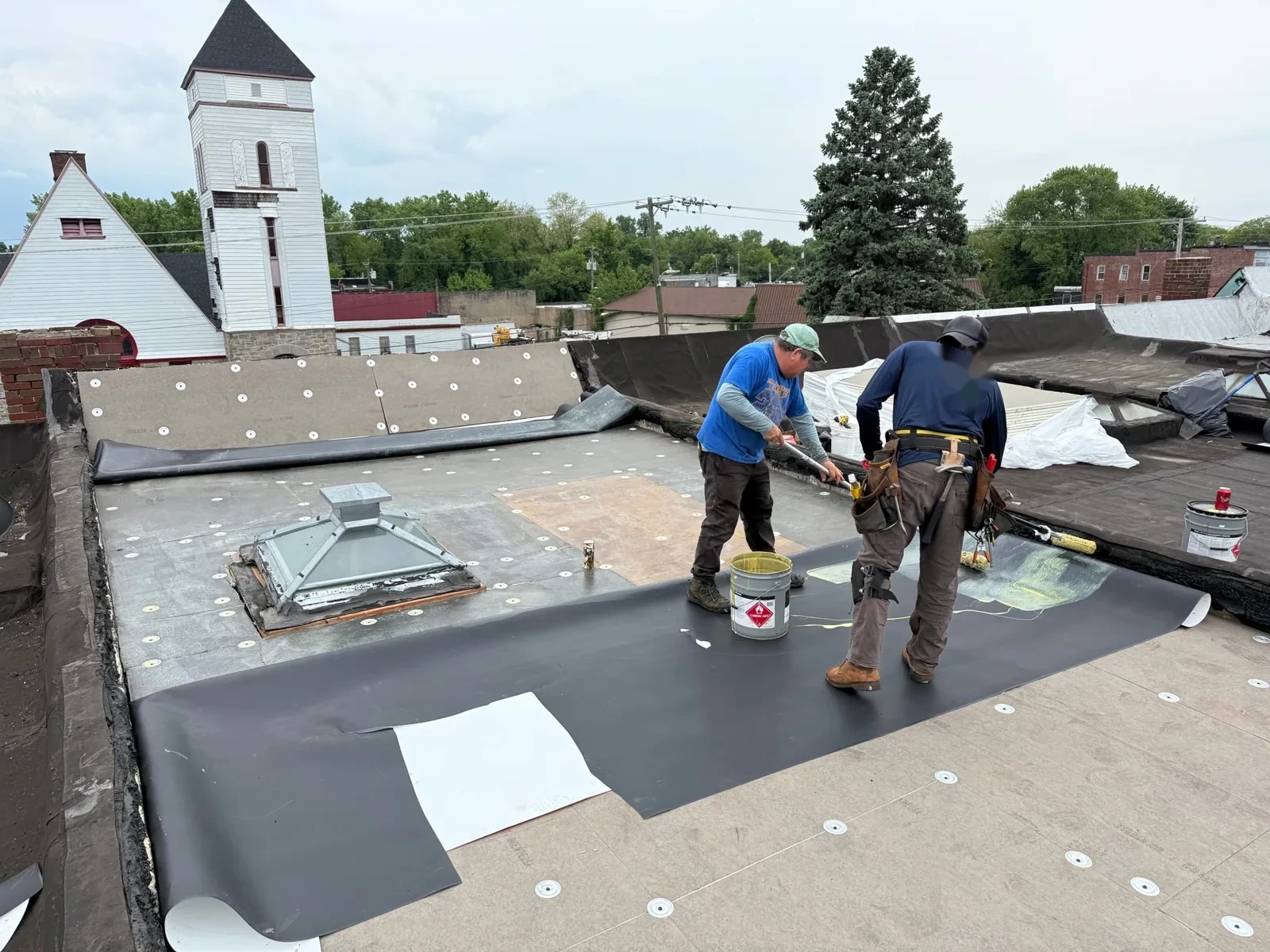
A drip edge meets the membrane differently from a parapet coping. Its flange and attachment must suit the selected roof assembly. We examine the underlying roof surface before rebuilding that junction. Damaged insulation or board can leave the flange unsupported. The repair membrane should meet the metal with the correct compatible treatment. An EPDM roof needs its own bonding and material details there. A treatment suitable for another membrane may not be appropriate.
Long runs of perimeter metal also need room for dimensional change. Fastening and joint design should preserve the assembly's intended behavior. A rigid closure across a movement point can split or distort. We inspect damage patterns to determine which connection needs attention. The repair scope may include a wider section than the visible separation. That allows the replacement to join retained components correctly. We explain how that boundary reaches suitable retained material.
A gutter sag can hold water even after debris is removed. We examine its slope, supports and connection to the roof edge. Loose brackets or corroded sections may need rebuilding before resealing joints. The outlet should receive water without an unnecessary obstruction. We inspect accessible downspout connections and discharge portions as agreed. Scupper and outlet repairs may be part of the same runoff route. A repaired roof edge should not feed a known failing collector.
Discharge near a public entrance needs attention beyond the gutter itself. Water released onto a walking route can affect building use. Changing outlet capacity or routing may require design and other trades. We distinguish those changes from localized sheet-metal repair. The facility director should know where the proposed work ends. On Downtown Edmond properties, outdoor dining and pedestrian activity influence access below that route. We coordinate repair handling with the people using the space.
Oklahoma spring storms can bring damaging wind, hail and tornadoes. Loose perimeter components deserve attention after severe weather. We inspect observed movement without assuming its cause from the season alone. Oklahoma's hot summers also produce changing metal temperatures during work. Fit and joint provisions must suit the specified assembly. Weather affects safe handling of long or loose metal sections. We plan removal where the exposed roof and wall can be protected.
Removing coping may expose the supporting construction to water before replacement. The work sequence needs suitable temporary closure if installation pauses. We coordinate deliveries so fabricated pieces arrive for the planned fitting. Unexpected deterioration can require a changed repair before covers are installed. The director receives that finding while the support remains visible. Roof repair work may be needed beneath the metal boundary. Each stage should leave a protected stopping point for the building.
A replacement cover should engage its intended retaining components along the run. We check joints, fasteners and changes in direction after installation. The adjoining roof membrane needs examination where the work disturbed it. Gutter outlets must remain clear after metal cuttings and packaging are removed. Sharp debris should not remain on the roofing surface. We inspect the final connection from more than its visible top. The director should know which affected edge sections have been completed.
Future care includes checking attachment changes and recurring debris near collectors. Scheduled maintenance can keep those details under observation. A repeated loose section warrants examination of its support or fit. Reapplying seal without that check may leave the underlying problem unchanged. We locate repaired sections for useful follow-up observations. New equipment or other roof work should preserve the rebuilt edge connection. A sound perimeter detail needs functioning support, fit and drainage over time.
Arrange a close check of the coping, edge or gutter run. We will identify the fitting, backing and discharge work needed for that connection.
Accessible fastening and sound support may permit a limited adjustment. We examine whether the cover still fits its retaining components correctly. Weak blocking or distorted metal can require removal and reconstruction. The treatment should address the reason for movement. Tightening alone is unsuitable where the assembly has lost its proper fit.
Movement or unsuitable joint construction may remain active beneath the seal. We examine the connection, support and material compatibility. A replacement splice or rebuilt joint can be needed. The proposed detail should accommodate the metal run rather than simply add a thicker exposed seal.
The entire collection and discharge route needs review. Outlet blockage, slope, pipe condition or capacity may contribute to overflow. We identify those issues before recommending a changed component. Proposed sizing or routing changes may require design coordination. A single larger piece cannot resolve every drainage condition.
Controlled ground space and material handling are necessary beneath overhead work. We coordinate the affected entrance or walkway with the facility contact. Loose components are secured before removal where safe. Deliveries and disposal follow the agreed route. The roof and wall receive protection while the replacement connection is rebuilt.