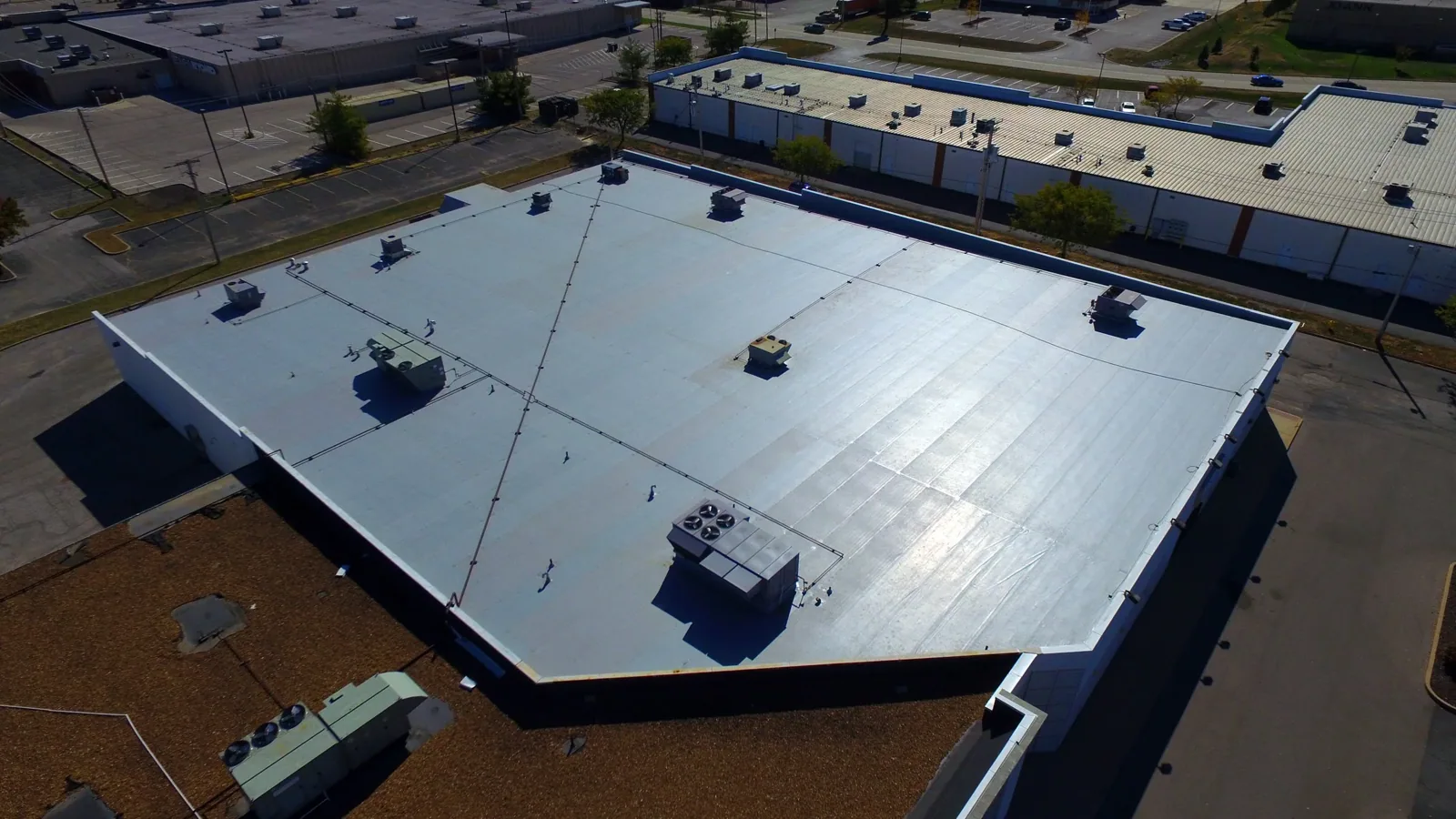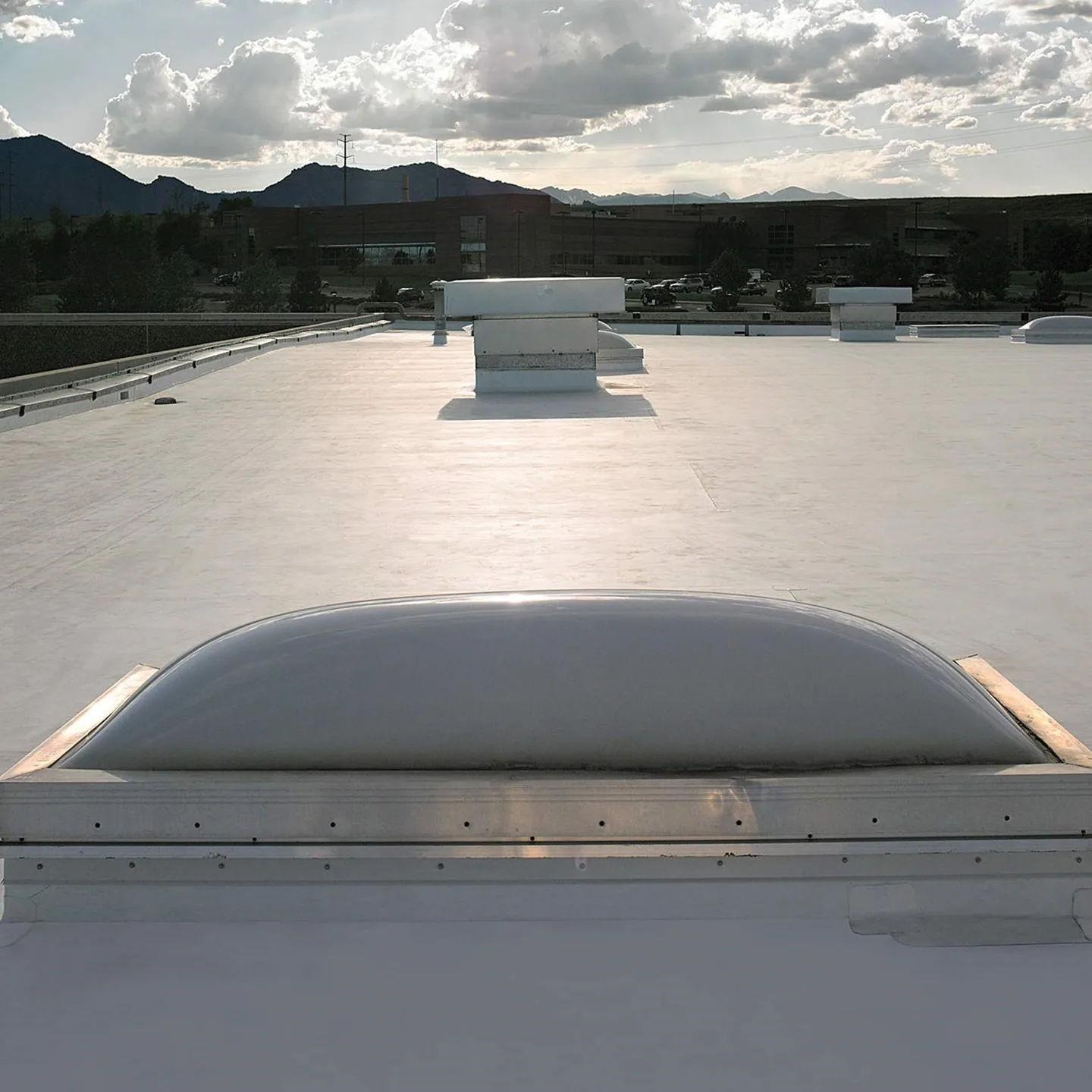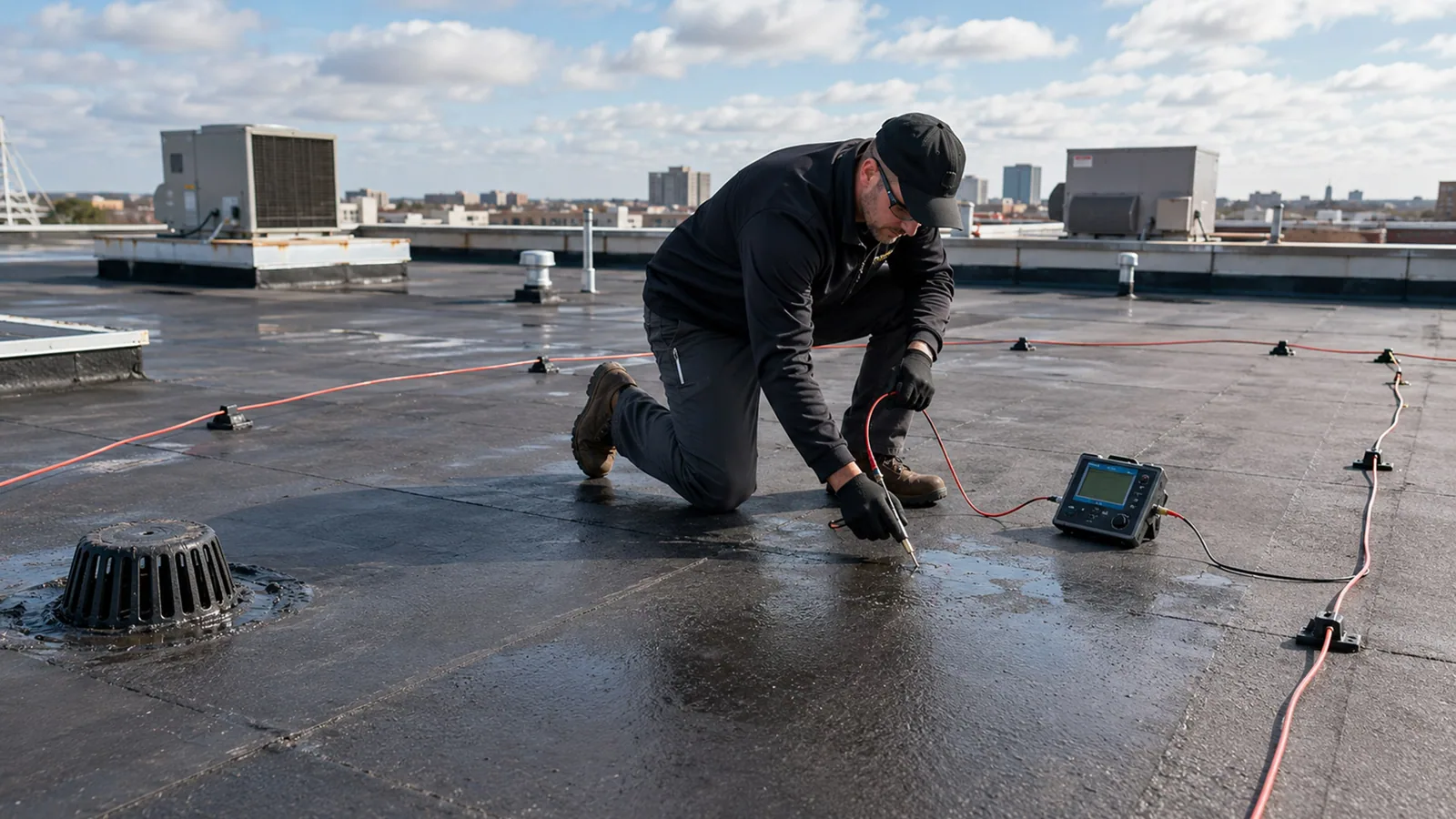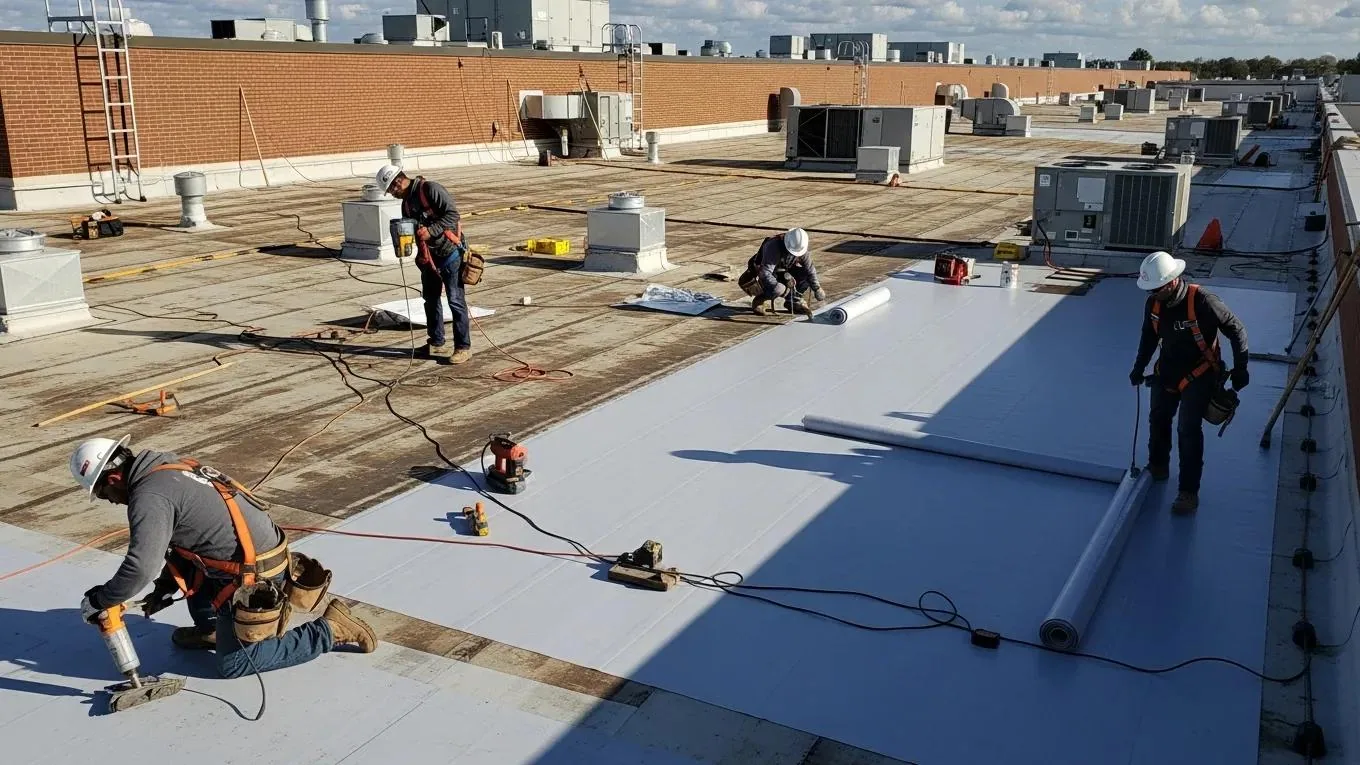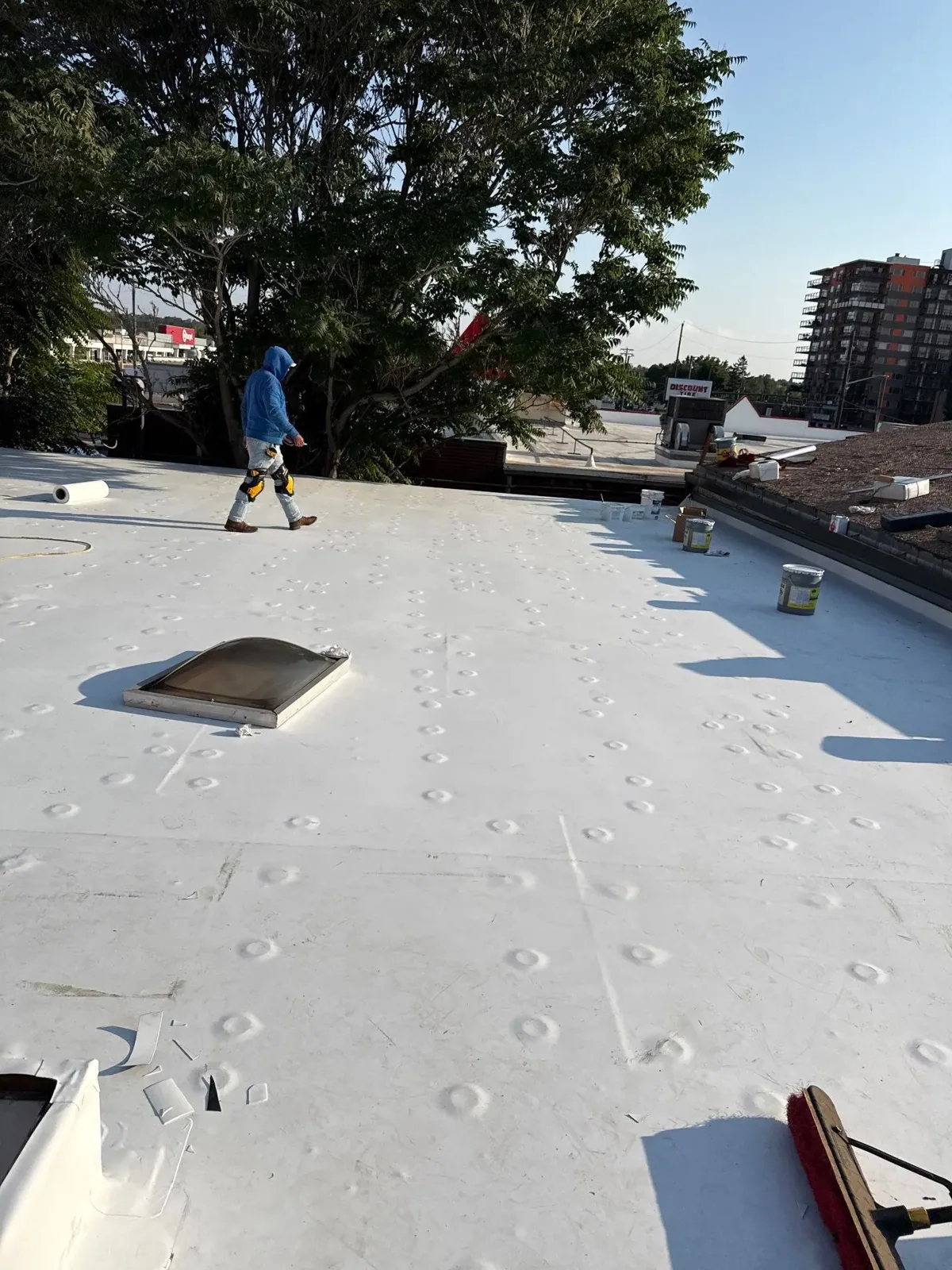
A university equipment return can retain Carlisle rubber roofing pulled tight at its corner. The new detail needs usable sheet and backing without stretching across a gap. Commercial Roofing Edmond handles Carlisle SynTec roofing in Edmond, OK. We inspect the installed material and the connection beneath the repair. Carlisle's commercial options include EPDM, TPO and PVC systems. Those coverings use different preparation and joining methods. The director receives construction tied to the actual assembly, not one detail applied across the full product range. Occupied rooms below also influence the protected opening available for that reconstruction.
University of Oklahoma buildings and incubator facilities are part of Norman's occupied building setting. Southern Nazarene University and Southwestern Christian University operate in Bethany. Edmond likewise includes education and medical uses. At an education property, a roof return can sit over classrooms or service equipment. We examine the actual component and interior footprint before deciding removal. Facility staff identify appropriate contents protection and operating restrictions. Material and backing establish the permanent roof detail above. The stage should allow those specified construction conditions while rooms remain within their required protections. Its useful boundary follows the installed assembly and available working space.
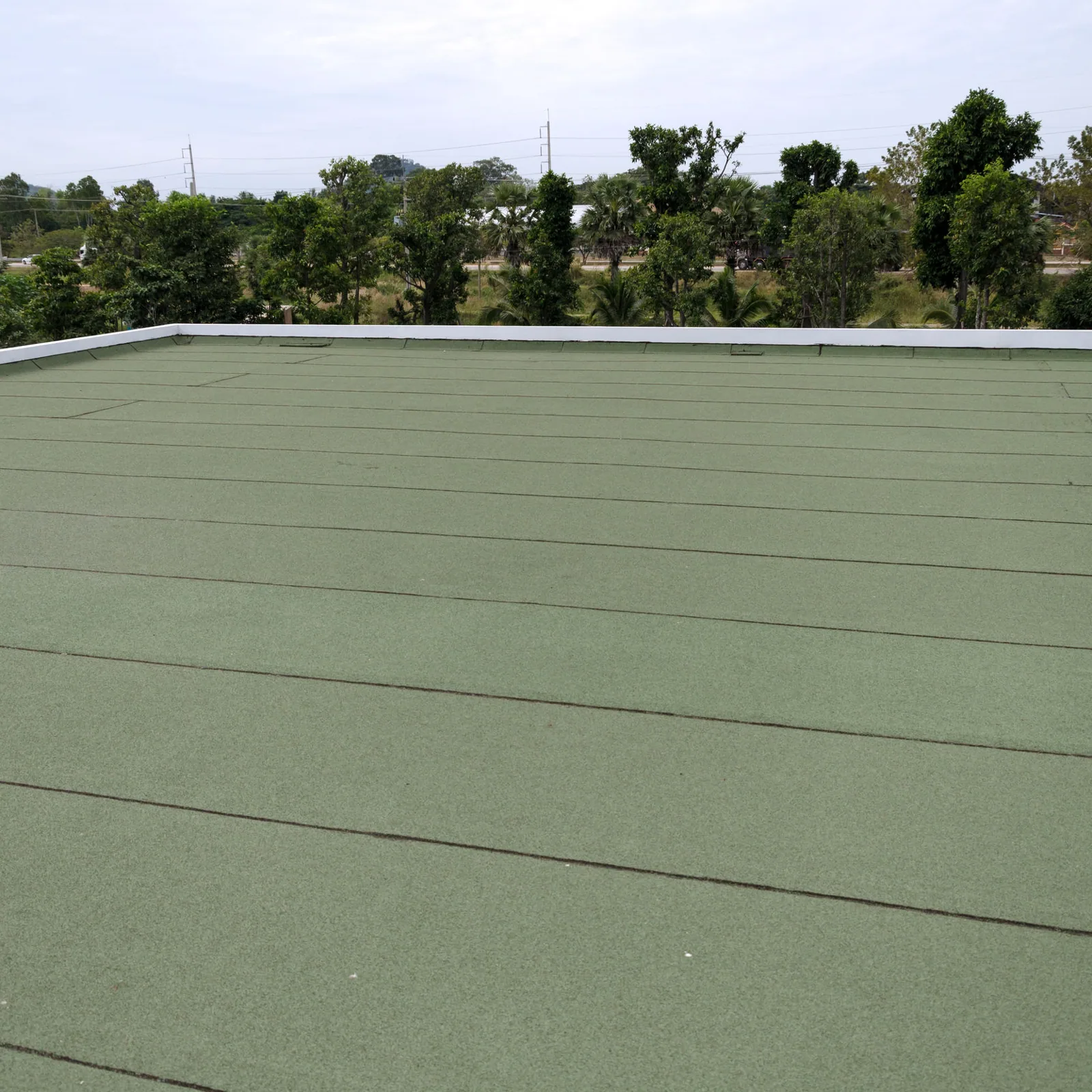
Carlisle Sure-Seal is an EPDM roofing family. EPDM seam and accessory reconstruction uses compatible primers and specified joining components. Rubber seams do not receive the same field welding treatment as thermoplastic material. We examine retained sheet condition before choosing preparation. Old repair compound or contamination can obstruct useful contact. Deteriorated material may require removal to another boundary. The selected accessory must fit the opening and intended joint dimensions. The director receives those physical tasks with the repair rather than an assumed bonding method assigned from the visible surface alone.
A strained rubber return may involve insufficient movement provision or loose support. We inspect the backing and actual accessory geometry before reconstruction. The replacement detail should lie through its intended shape without bridging an unsupported corner. Holding material must suit the required fastening pattern. A curb alteration can require another responsible trade first. We identify compatible roof closure after that task. Equipment clearance should remain usable when the detail is complete. The repair follows the actual interface rather than pulling more sheet across an unresolved support gap. Its permanent boundary includes the backing needed for a serviceable finish.
Carlisle Sure-Weld identifies its TPO membrane system. TPO accessory and field work uses the intended compatible sheet and specified welded connections. Carlisle also has Sure-Flex PVC roofing. The retained membrane must be established before choosing its preparation or accessory. A material label alone does not settle the complete roof build-up. We examine supporting layers and attachment condition where accessible. New field work needs the selected system's appropriate construction. The director receives a useful assembly scope that retains material differences instead of treating every single-ply field as the same repair surface.
GAF thermoplastic roof construction also relies on specified compatible field and accessory methods when that system is considered. Components should be chosen for their actual intended assembly. Similar sheet type does not make products interchangeable at a joint. We identify the covering and required detail before ordering material. Warranty-party or technical review may be needed for a proposed change. The physical finish must still use suitable retained surfaces and backing. The director can compare system options while preserving the joining and support tasks required by each complete construction.
A loose field can retain damaged insulation or uncertain attachment below the sheet. Carlisle assembly examination locates accessible covering and accessory defects before treatment is selected. Useful concealed checks may be needed to establish more layer condition. Wet material can extend the removal area beyond an isolated seam. Deck deterioration may require a professional or supporting construction response. We identify that task before roofing closes. Suitable retained backing should accept the intended assembly and fastening. The director receives the affected-layer implications alongside visible material reconstruction at the same location.
Carlisle seam repair examines the joining boundary and surrounding movement condition together. EPDM and thermoplastic fields require their respective methods. Contamination or stretched sheet can make a larger removal useful. We identify where compatible replacement can join serviceable retained covering. Damp supporting layers need corresponding treatment. The selected detail should not conceal unfinished backing or attachment tasks. The director receives preparation and physical removal separately from temporary protection. A permanent finish closes the useful whole connection, not merely the visible line where the covering first separated.
New insulation can change the field height beneath a retained equipment return. Carlisle flashing reconstruction examines available dimensions and suitable upper closure. Mechanical specialists may need to lift or alter the component. Supporting loads and changed attachment can require appropriate design review. We identify roof-side work after those tasks. The finished detail also needs its specified service clearance. Drain flanges should suit the resulting water approach. The renewal proposal retains those interfaces with the field covering so equipment and collection connections are not left as unfinished later corrections.
Versico EPDM detail work likewise follows the particular product and assembly requirements where that system is selected. We examine its intended components rather than infer compatibility from a similar material family. Each renewal option needs suitable retained support and applicable project review. Broad removal may be useful where wet layers or attachment prevent another finish. The director receives disposal and accessory implications as part of the comparison. Project permitting, design and inspection responsibilities receive confirmation for the actual scope. The new field should join a complete functioning assembly rather than conceal unsuitable retained construction.
Bethany Carlisle roof projects require review of the actual occupied and equipment footprint. Norman education or business settings also need their own protection arrangements. We describe preparation effects and material use for the facility's operating decision. Responsible staff handle necessary intake and equipment controls. Oklahoma hot summer conditions affect suitable application at the roof. Winter cold outbreaks can restrict material preparation or installation intervals. We assess current conditions before opening the stage. The director receives the usable construction area and secure stopping requirement before additional occupied space is exposed.
Carlisle warranty-related coordination retains actual notice and alteration provisions where available. The issuing party evaluates its applicable terms. We provide located findings and proposed roof construction separately. Appropriate completion checks follow the selected assembly and accessories. Installation waste is removed from reachable outlets and equipment routes. Later service changes need compatible closure within their sequence. New water observations should identify interior location and timing. We examine associated components against that information before recommending another treatment. Current material and support findings remain the basis for useful continued care and broader renewal decisions.
Identify the installed membrane and affected equipment or field connection. We will examine backing and compatible preparation before defining the reconstruction detail.
The actual membrane determines its compatible joining method. EPDM work uses its specified primer and seam accessories. TPO and PVC use their respective thermoplastic system requirements. We identify the covering and retained condition before preparation. The director receives a physical detail suited to that installed assembly.
We inspect the sheet, available shape and holding construction beneath it. Stretched material or loose backing can require reconstruction. Another trade may need a curb alteration before roof closure. The selected accessory should fit without an unsupported gap. The repair includes that supporting work at its permanent boundary.
Retained layers, attachment and applicable project requirements govern recovery suitability. We identify useful supporting checks before choosing the option. Added loads and changed dimensions need appropriate review. Outlets and curbs require complete connected details. The director receives those tasks with the proposed assembly instead of a field-only covering choice.
Its supports and openings require compatible closure through the actual system method. We examine the changed component dimensions and contact surfaces. Equipment specialists handle their respective operating requirements. Applicable warranty review may also be necessary. The new interface should finish within that service sequence.