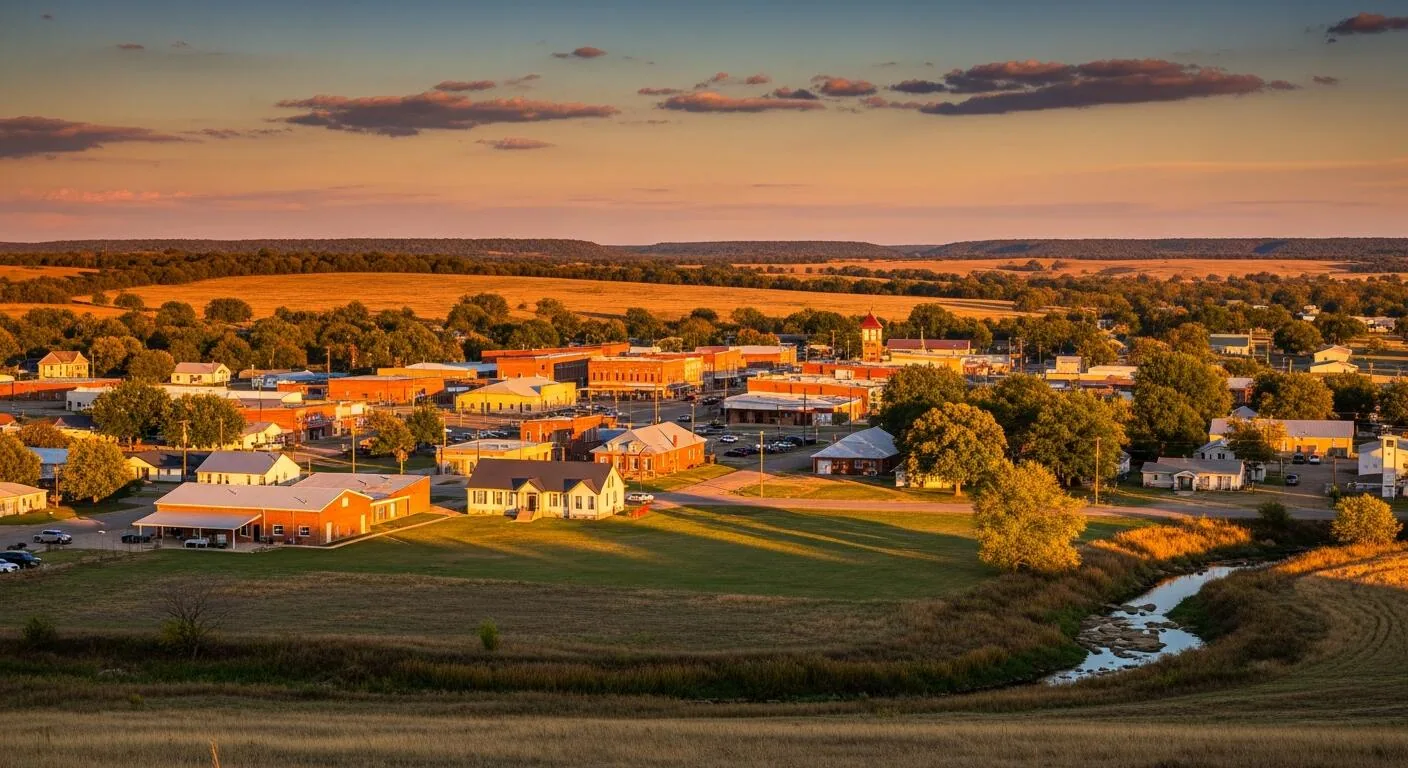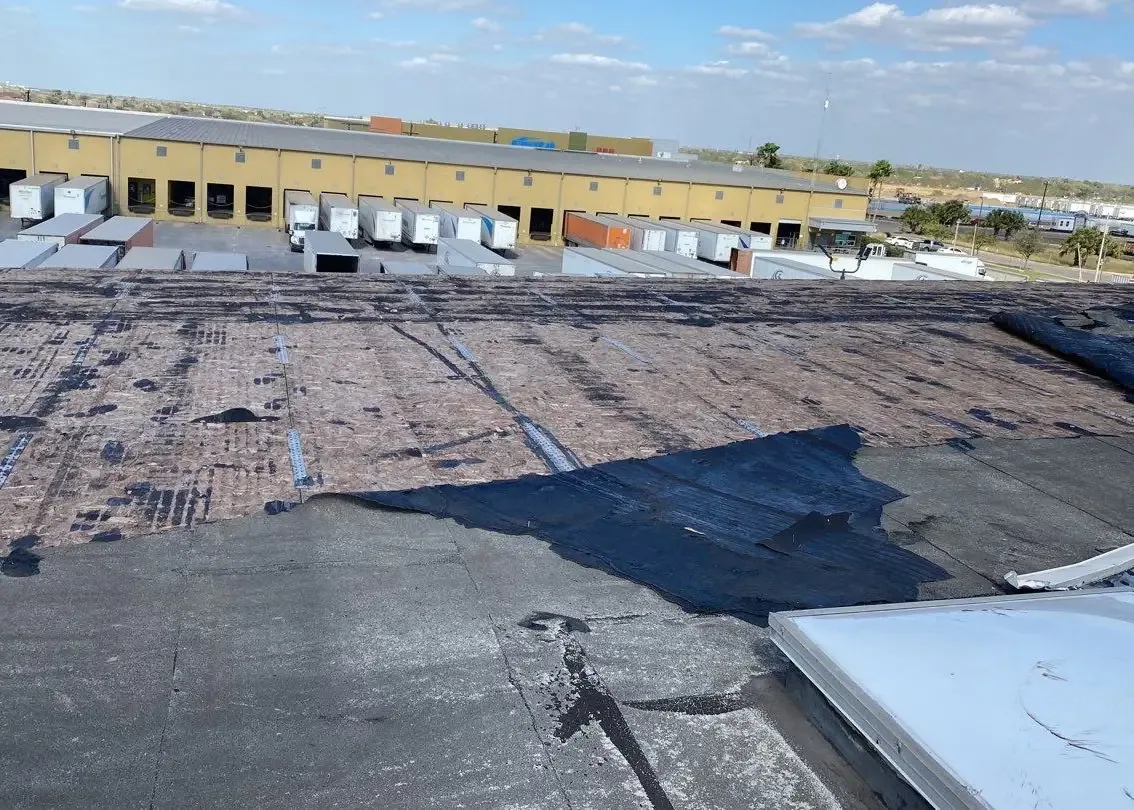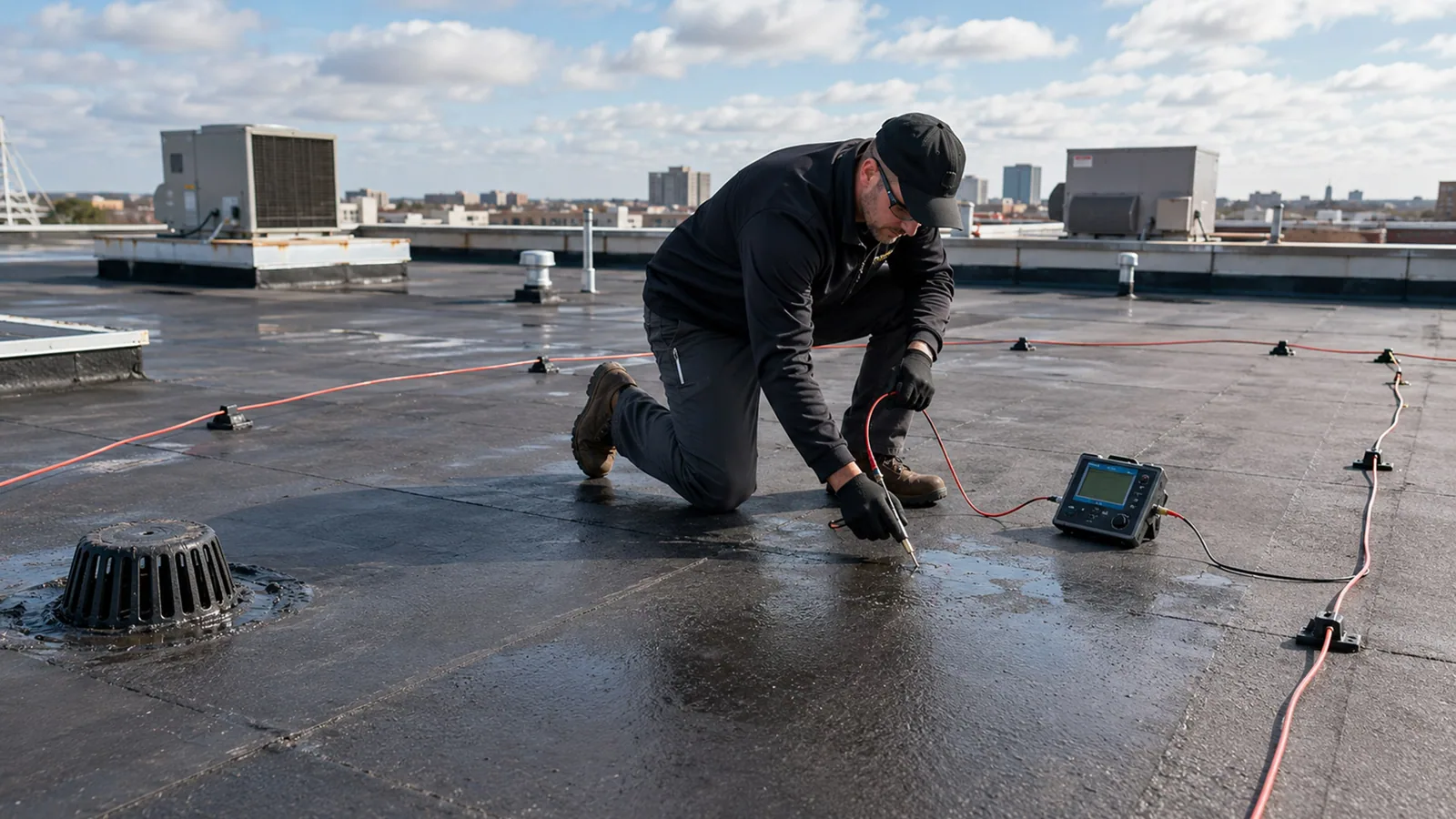

A rural commercial roof needs a repair plan that accounts for access and the building’s operating schedule. Luther is an agricultural town in far northeastern Oklahoma County, and State Highway 66 passes along its north side. For a shop, service property or agricultural building, we verify the roof covering, supports and water route before recommending work. The commercial roof inspection records the assembly, access points, penetrations and drainage. The owner receives a work boundary tied to the roof condition and a staging plan suited to the property.
Rural commercial and agricultural properties can have long drives, equipment lanes or limited turnaround space. The owner identifies which entrances and routes must stay available while roof work proceeds. We plan ladder placement, delivery movement and debris removal around those needs. Removed membrane and fasteners stay in designated containers instead of crossing public paths or vehicle lanes. The site contact knows when work starts, which section may close temporarily and who releases the area after the roof is secured.
State Highway 66 passes the north side of Luther, but the property entrance and approach must be checked directly. We confirm the gate, turning radius and staging surface before delivery. A Cashion roof visit or a Piedmont inspection can be coordinated regionally, with separate access sketches and records for each address. The crew notes when a roof section opens and closes. If occupied rooms lie below, the owner approves protection before any test cut. This sequence keeps repair work connected to the property’s operating needs.
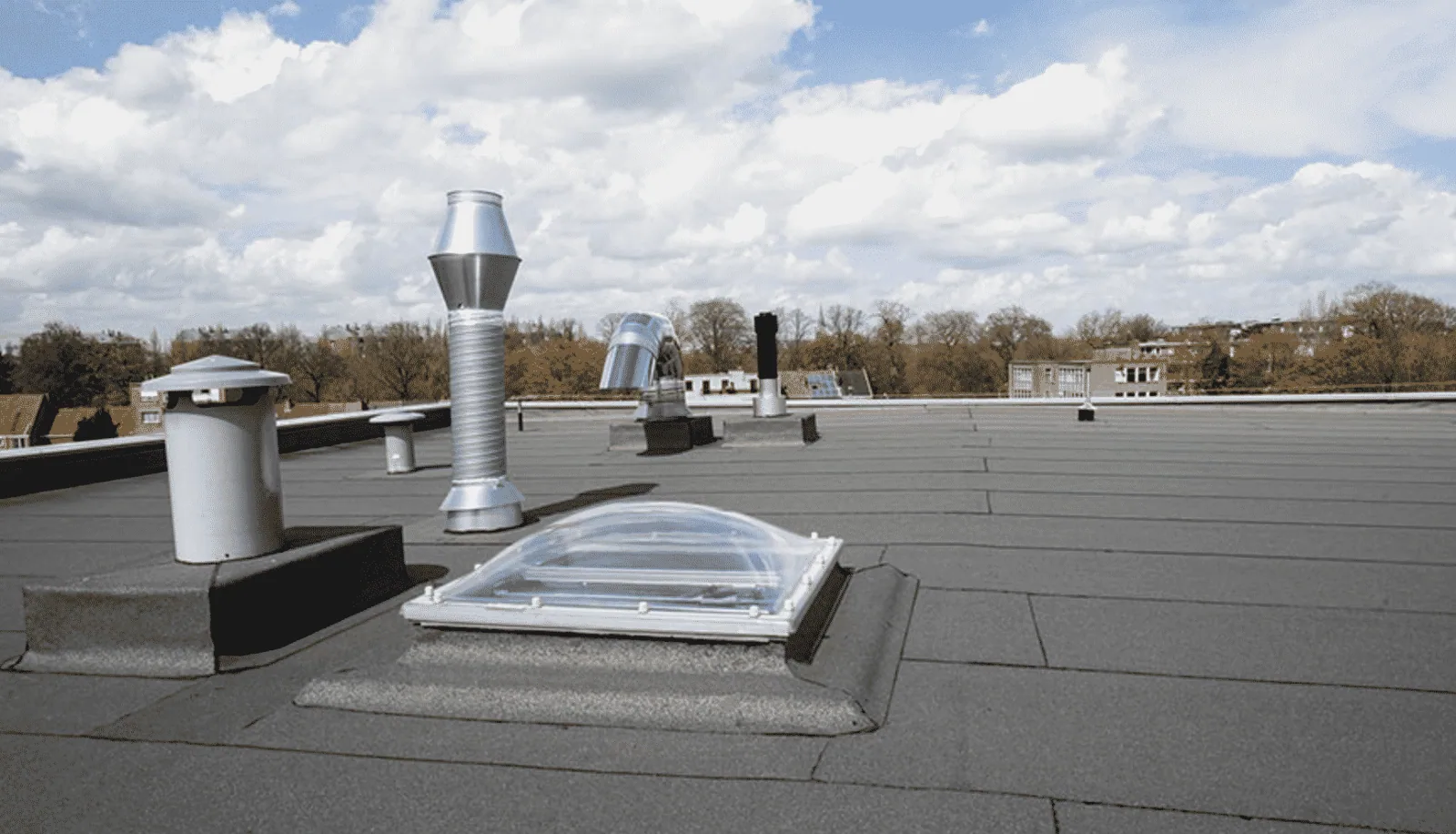
A vent, pipe or equipment curb interrupts the roof plane and needs a fitted flashing. We record its size, location, flashing height and maintenance clearance before selecting material. The membrane return needs sound backing, and its flange must hold without blocking future service. On metal roofing, we check the panel profile and fastening before choosing a repair. Equipment that must stay in operation is identified with the facility contact so the crew can protect intakes and keep the required service path open.
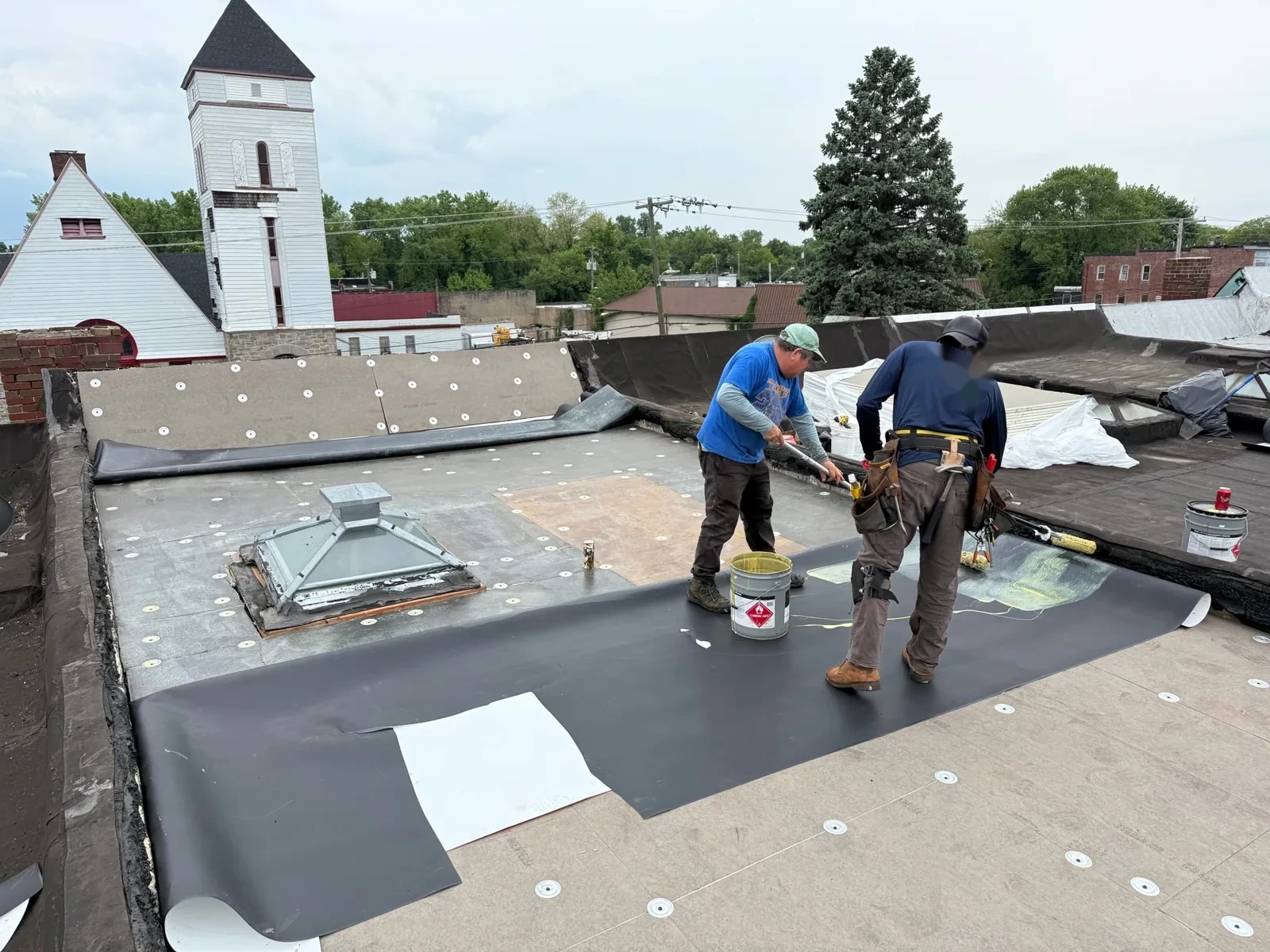
Surface residue may affect preparation, so the repair area follows the actual assembly requirements. A thermoplastic weld requires the compatible sheet and its prescribed procedure; another membrane may use a different connection. The scope names the product only after the roof material is identified. A commercial roof repair may address one penetration, while a roof condition report records the connection and any deferred item. Photos show the curb face and completed finish, separating work completed from a condition that remains unopened.
Oklahoma’s hot summers and severe-weather periods in spring and autumn affect the work window. Those statewide conditions do not establish damage at a particular Luther property. We check the forecast before cutting and agree on a point where the crew will close the area. Tools and loose material come off the roof before the crew leaves. The owner receives a location-specific note describing any temporary cover and the permanent work that still needs approval.
Before opening, the foreman confirms the dry-in material, fastening method and person responsible for the end-of-shift check. If weather prevents the planned work from finishing, the crew secures a defined temporary closure and sends the manager photos of what remains. Any larger opening or added removal waits for owner approval. When a roof has multiple adjacent planes, each receives a separate label so future reports point to the correct area.
After reported hail or wind, we inspect for actual punctures, lifted edges, displaced metal and water entry. A storm-damage review records each condition at the property rather than applying regional weather history to all roofs. For an occupied business, the interior route matters too. We ask whether a room needs a cover or a temporary move before opening the deck. If the condition is confined to one roof plane, the repair boundary stays there unless inspection shows a related connection. The owner approves any expansion before work continues.
Roof work produces small debris that can travel toward an outlet or overflow. We locate each drain bowl and its nearby low point before cutting or fastening material. Temporary covers are removed at the end of the shift, and the crew checks for loose pieces before leaving. If water is already standing, we measure the area and note the drain path. Clearing the outlet may restore flow; a split flashing, loose clamp or continued ponding requires a separate review. We measure the low area and outlet relationship before pricing drainage changes.
A drain repair can address a failed connection where the inspection confirms it. Routine debris removal belongs in the service record, apart from construction. An overlay evaluation should wait until the assembly is dry and attachment and load conditions are understood. The property contact receives a marked photo of the outlet and any remaining question. That record supports a later maintenance visit without implying that every roof area has the same slope or system. Ground access and roof outlets both need a defined plan before work begins.
Before a lift or access hatch is used, the property contact confirms the route and any occupied area below. We note where equipment, carts or deliveries require temporary clearance. The crew carries materials along the approved path and returns the area to its prior use after the roof section closes. A short photo record can show the ground boundary and the sealed curb above it. That coordination follows the inspected property and its current operating needs.
At closeout, we label images by roof area, penetration and access point. The record states which component was repaired, what material was used and whether any room protection remained. If more than one building shares a yard, each file stays separate. That helps a manager identify which entrance, room or work area was affected during the roof phase. The report lists completed tests and any follow-up examination still needed.
Repeated patching, wet insulation or unstable fastening can prompt a comparison beyond one detail. Replacement planning can review phasing, exposure, interior protection and the sequence for returning each section to service. A maintenance review can track drains and penetrations after repair. Arrange a Luther roof visit that focuses on the actual assembly, property access and occupied-area protection. The owner receives a defined scope and photos tied to the address. The building’s current roof and access determine the next repair decision.
Arrange a close inspection of the installed roof, shipping access and sensitive work areas. The visit helps define repair limits and protection needs.
The property contact identifies entrances, equipment, inventory and access that must remain available. We agree on protection and any temporary route before opening the roof.
We inspect the installed covering, support and condition at the property. Access, drainage and any occupied areas are recorded alongside the repair boundary.
At each opening, we check flashing height, backing, flange attachment, clearance and the surrounding membrane or panel. The scope follows the observed connection.
The forecast controls an exposed opening. We set a secure stopping point and schedule material work for a suitable weather window.
Repeated failures, moisture or unstable attachment may justify a broader comparison. We document the roof evidence and operating limits first.