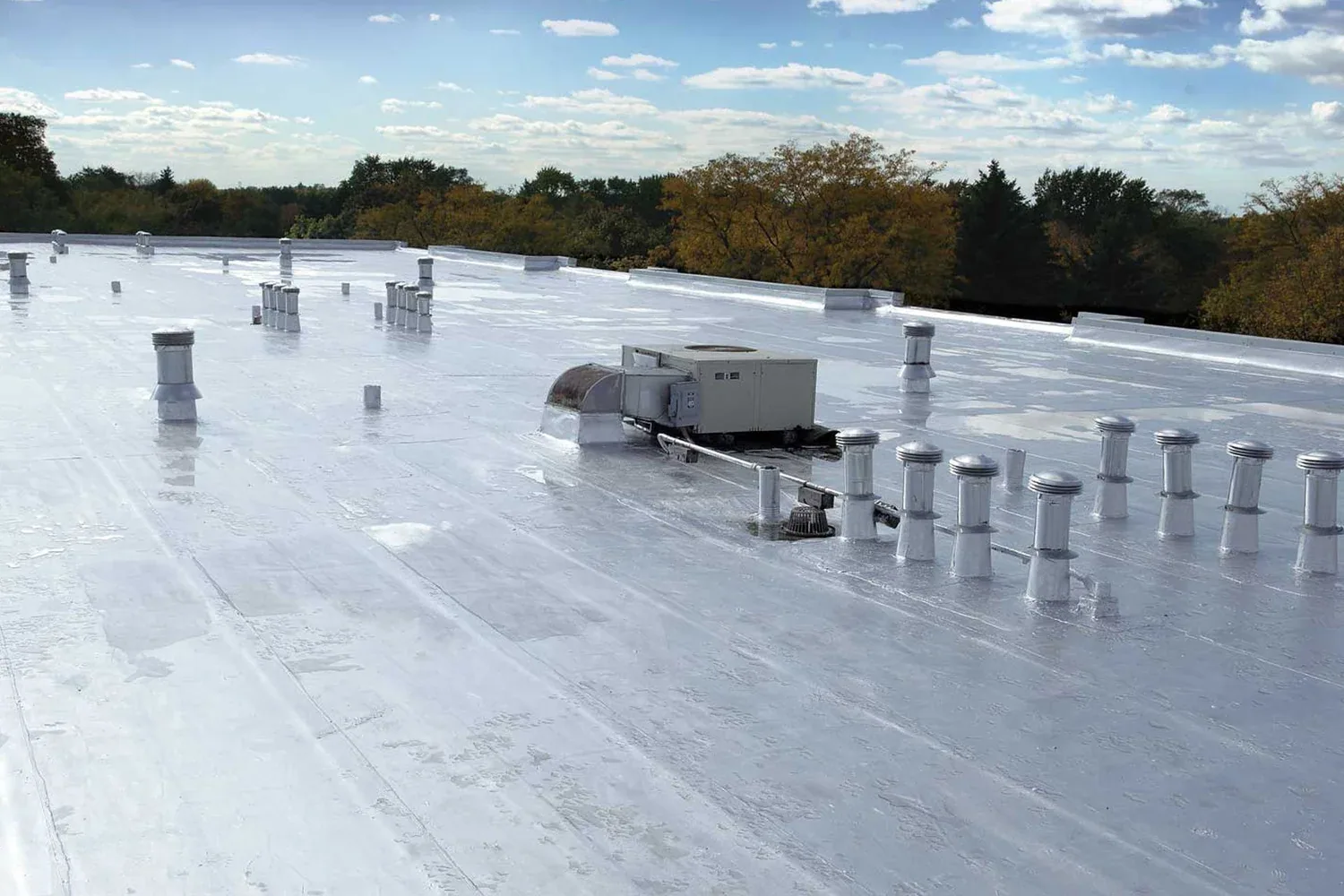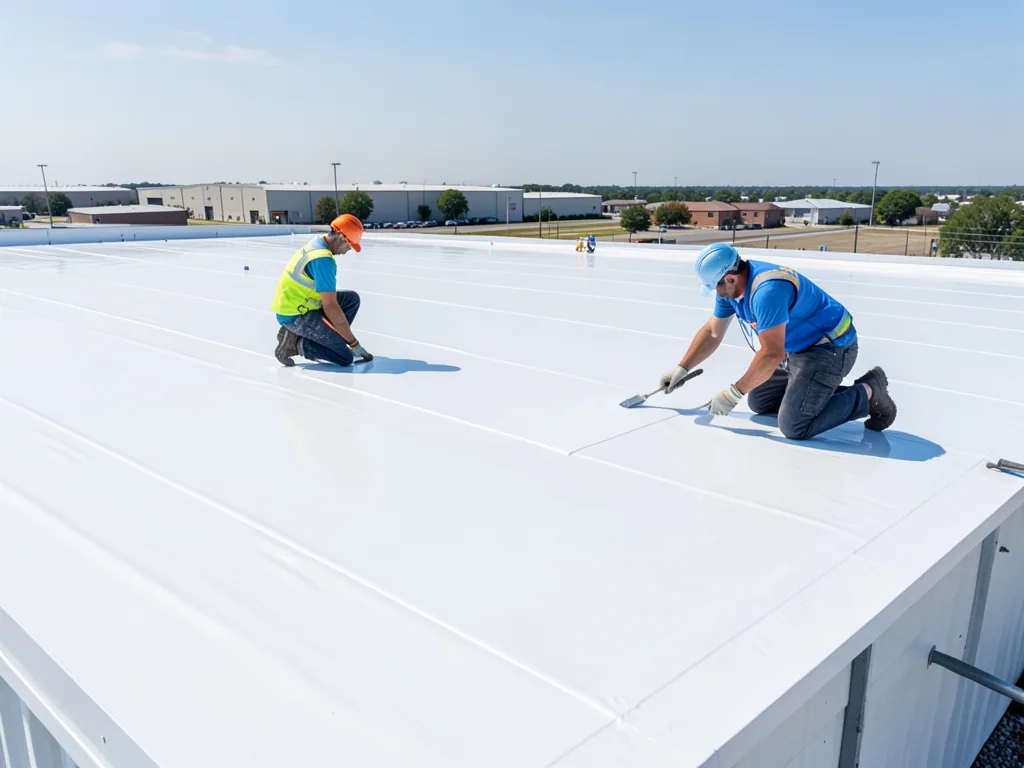

Shopping-strip roof restoration needs an acrylic film cured properly across its prepared surface. Rain before the treatment is ready can disrupt the application. The roof must qualify before that weather window is arranged. Commercial Roofing Edmond installs acrylic roof coating systems in Edmond, OK. The material can provide a protective reflective surface within a specified assembly. Its application and water-exposure requirements need close attention. The director receives the preparation, repairs and placement conditions involved. A coating choice should follow the roof's construction rather than its desired color.
Warr Acres has shopping districts that developed along MacArthur Boulevard and Northwest Expressway. Bethany includes small businesses, health-care institutions and churches. Those uses require property-specific access and ventilation coordination during roof application. We examine the operation beneath the proposed treatment. Oklahoma's hot summers and winter cold outbreaks affect regional roofing exposure. Actual weather at the building controls whether application is suitable. The proposed acrylic system needs usable retained material and a workable placement sequence.
A water-based acrylic application needs conditions that support its specified drying and curing. Temperature, humidity and rainfall can affect that process. We check the product requirements against the actual surface and weather window. A dry afternoon alone may not settle the available cure time. Nighttime moisture and expected conditions also need consideration. The planned work area should fit what can be appropriately treated. We do not force application simply to hold a calendar date.
Oklahoma summer thunderstorms can produce locally heavy rain. Winter cold outbreaks provide another reason to examine the usable work window. We select conditions for the proposed material rather than use a universal seasonal rule. Preparation and detail repairs may have different scheduling requirements. The director needs those dependencies clear before arranging occupied-room protection. Restoration work should include the application sequence as well as materials. Correct placement requires the film to form on a suitable roof surface.
A roof holding water after rainfall needs its runoff route examined first. Many acrylic coating systems have limitations around persistent standing water. We review the actual product specification and roof exposure. Outlet blockage or inadequate slope may require construction correction. Drain and scupper work can form part of preparing that route. The proposal should distinguish drainage correction from broad coating application. A new film should not conceal a known outlet problem.
Another material may have different suitability for the identified exposure. Silicone systems bring their own substrate and application requirements to comparison. The choice should address the roof rather than a generic ranking. Surface wetness and concealed moisture remain different conditions to investigate. Wet insulation cannot remain serviceable merely through a changed coating type. We identify which layer or route needs treatment. The director can then compare suitable complete systems. The roof requires both a functioning drainage path and usable construction.
A loose older coating can detach with a new application still bonded to it. We examine existing surface treatment and its condition before preparation. Failed material needs the removal required by the selected system. Metal corrosion or membrane residue may need separate handling. Cleaning should suit the substrate rather than damage retained roofing. Adhesion testing can help evaluate the proposed prepared interface. The roof needs suitable bonding conditions across the area being treated.
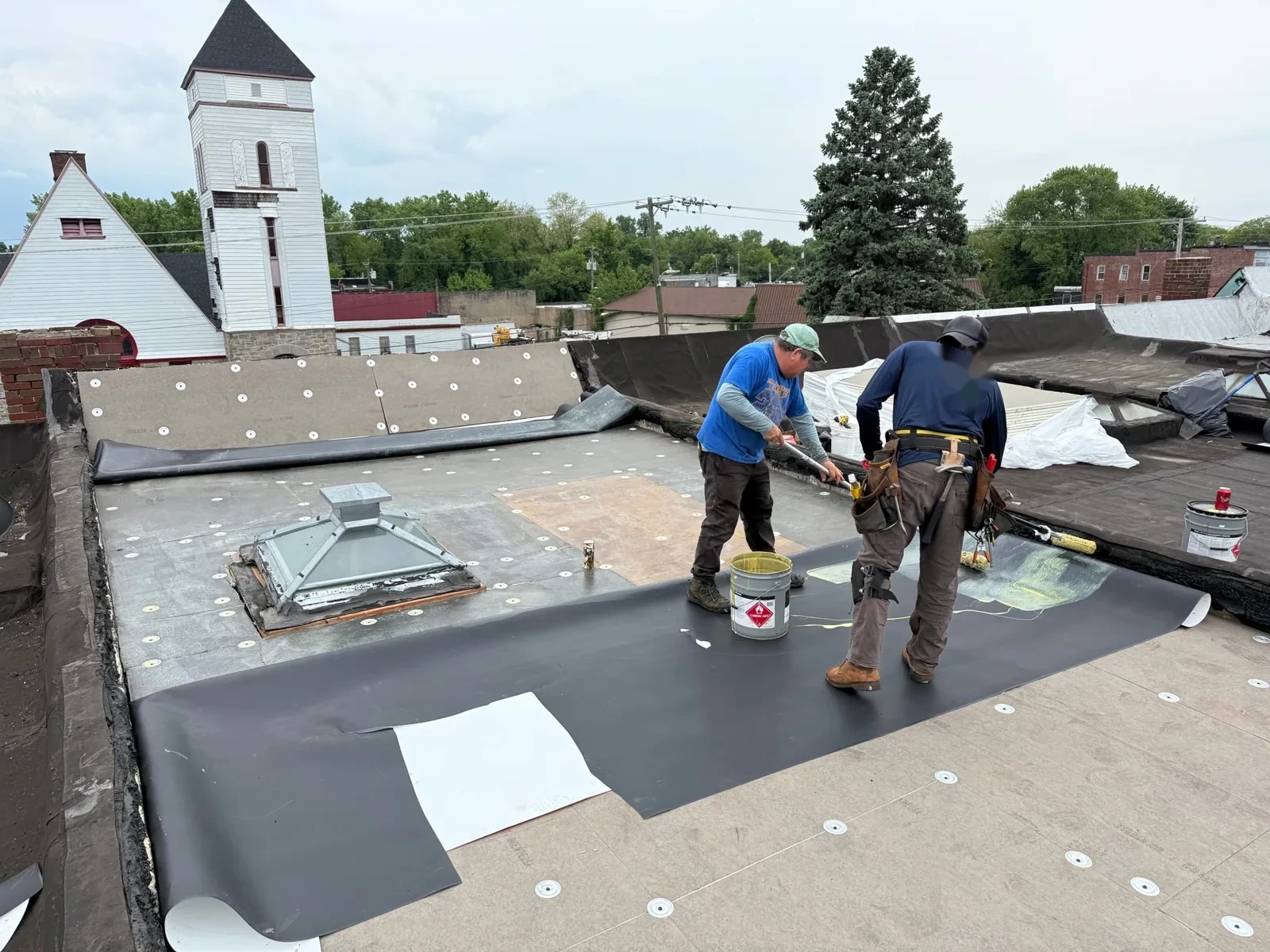
Primer may be required for particular substrates within the acrylic system. We follow the actual product requirements before field placement. Prior repair compounds can create localized incompatibility or different absorption. Those areas need examination rather than a uniform treatment assumption. Roof repairs may be necessary where the existing covering is damaged. A coating cannot replace missing attachment or deteriorated support. The director receives the preparation and repair boundaries separately. Their completion establishes a surface capable of accepting the selected treatment.
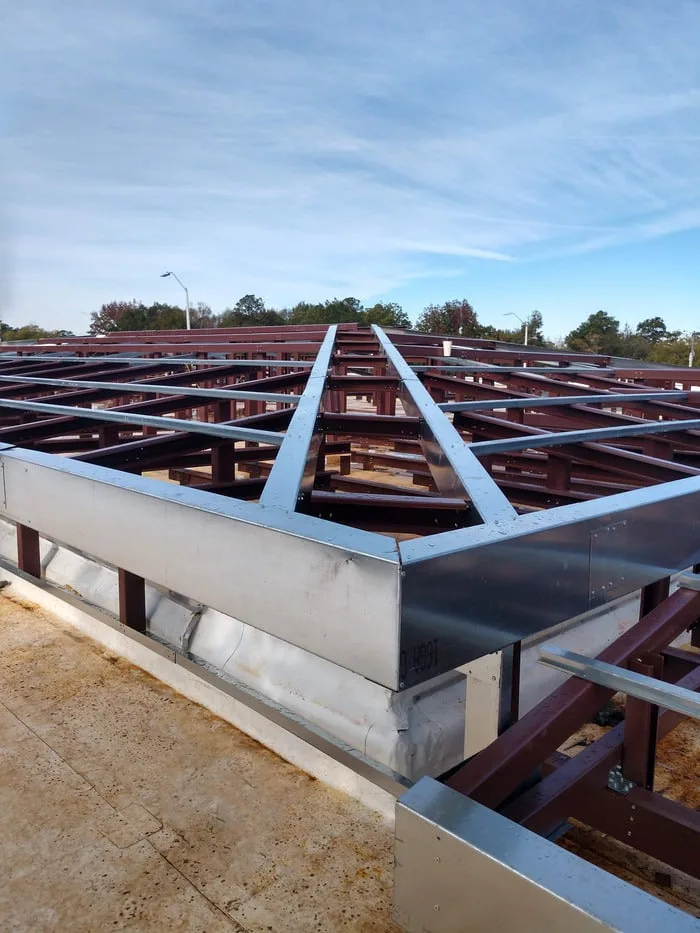
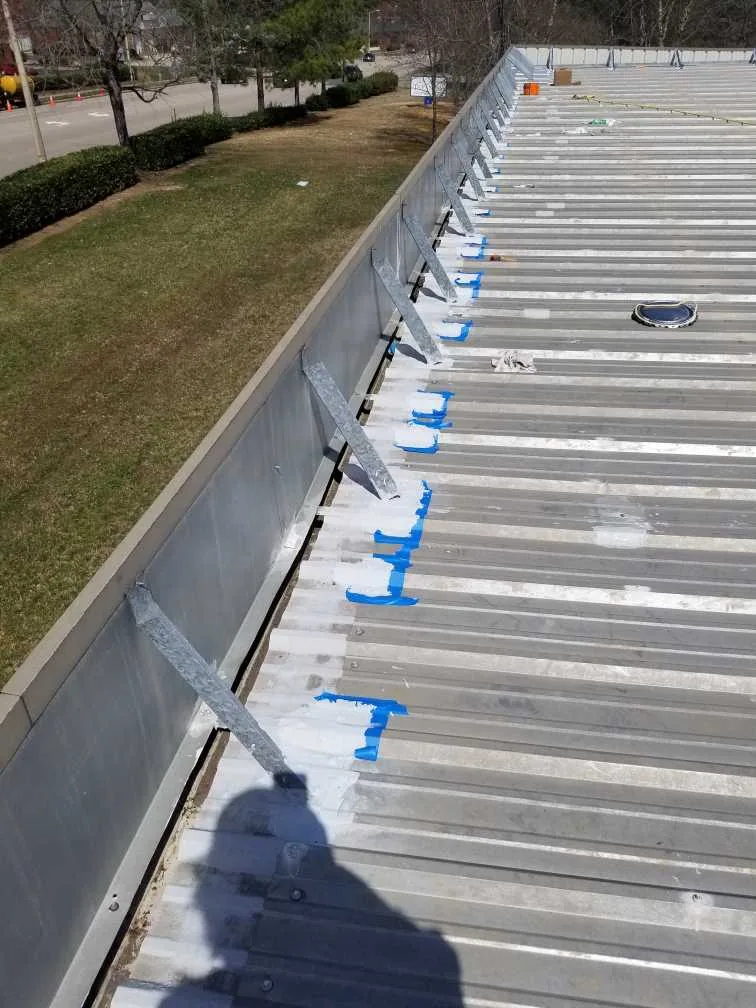
A metal fastener opening needs a sound attachment before coating reinforcement. The panel hole, washer and support require examination. Loose or damaged components may need replacement before the detail treatment. The selected system may use reinforcement at laps and other transitions. We place that treatment according to the specified construction. A moving joint still needs its appropriate physical arrangement underneath. The coating detail should fit that arrangement rather than hide its failure.
Curbs and penetrations need suitable flashing before their field transitions are treated. Sound backing and compatible components help establish that connection. Metal roof restoration may include reconstruction at selected panel and equipment interfaces. The material requirements depend on the actual existing assembly. We identify those differences before applying acrylic across the roof. Drains need protection from obstruction during application. The completed treatment must join prepared details without blocking the working openings. Every transition should remain accessible for inspection afterward.
A rough or porous surface can affect material distribution during placement. We control the treatment according to the proposed coating system. Required coats, thickness checks and detail work need their proper sequence. Missed surfaces or thin areas require correction before release. The next application stage must follow the material's cure requirements. We inspect the transitions as well as the open field. The director should receive an installed system rather than a merely uniform-looking surface.
Warr Acres commercial roof work may require coordinated staging near shopping and occupied businesses. Bethany buildings can have different intake and pedestrian-access needs. We discuss affected areas with the facility contact before preparation. Overspray or application material must not move into uncontrolled occupied space. Actual wind and equipment placement influence the suitable method. We arrange appropriate protection and a workable handling route. The coating sequence should preserve both application quality and the operating building.
A worn acrylic area needs assessment of the treatment and roof beneath it. Traffic, equipment activity and weathering may affect different portions unequally. Maintenance examination can identify locations needing repair or renewal. Recoating requires suitable preparation and compatibility with retained material. We do not add another film indiscriminately over loose or wet construction. The director should know which condition the proposed renewal addresses. Its boundary follows the actual surface and layer findings.
Located roof findings keep those changes connected to specific areas. Future equipment trades need the installed treatment identified before making new openings. Suitable walkway protection may help at repeated service routes. Repairs must restore the appropriate connection and protective film. Drains and terminations still need attention after renewal. A reflective acrylic surface remains part of a maintained roof assembly. Its care should preserve adhesion and working details, not focus solely on appearance.
Arrange a review of the roof surface, drainage and existing treatment. We will define the preparation and weather window a suitable acrylic system requires.
The selected material needs a suitable application and cure window. Expected precipitation can disrupt formation of the film before it is ready. We examine the actual roof and weather conditions against product requirements. A changed date may be necessary. Placement should not leave the treatment dependent on unsuitable curing conditions.
The product's water-exposure limitations need review. Many systems require conditions inconsistent with extended standing water. We examine drainage and the proposed coating requirements before selection. Correction or another suitable assembly may be necessary. The choice should follow the actual roof exposure rather than a general surface preference.
A weak interface beneath the new material remains a problem. We inspect the existing treatment and define the required preparation. Failed material may need removal before a suitable surface is available. Adhesion checks can help assess the prepared area. New coating should attach to serviceable retained construction.
Observed wear and system care requirements guide the examination. Different service areas may weather or suffer damage differently. We check film condition, joints and supporting roofing. Local repairs can be appropriate where the remaining surface is useful. Broader renewal requires suitable preparation rather than an automatic calendar-based application.